SPONSORS

Saturday, 31 March 2012

Facebook Timeline: What Are the Changes for Brand Pages?

Note from Lee: Please welcome this guest post from Sara Duane-Gladden, of TopRank Online Marketing’s copywriting team. 

Sara-Duane-Gladden

Facebook is changing again. That never happens, right? For regular users like me, it seems as if there is something new happening at the social network every day. Facebook Timeline is probably one of the most significant, though, and it’s coming to a brand page near you soon. Very soon.

Timeline is the newest change from Facebook, a social media network renowned for making “enhancements” to its much-beloved product that result in mixed criticism and compliments from users. Timeline is no different, as it has been both praised and panned in the blogosphere. There doesn’t appear to be a consensus on Timeline, which is typical of Facebook changes. Love It or hate it, users and brands alike will adjust to Timeline in order to continue participating in the Facebook community – just like they have in the past.

Every one and every brand on Facebook will be adjusting to Timeline soon, too. Any profiles or pages that have not already been converted to Facebook Timeline by this weekend will automatically transform. According to messages displayed at the top of pages and profiles that have not implemented Timeline, brand and business pages will convert on March 30th, 2012, while personal profile pages will switch over on April 1, 2012.

If you’ve been avoiding making the switch, now is the time to accept the change and take control of how your Facebook Timeline appears by previewing it now. Until this weekend, you still have a chance to preview your business page or pages, make edits, then publish it on your own terms. Making the changes yourself instead of allowing Facebook’s automated process to publish your new page for you will ensure that it truly reflects your brands standards and messaging. These changes can be initiated by visiting the Page while logged in as an admin and finding the instructions near the top to preview Timeline.

Perhaps you’ve already seen Timeline in action and are not quite sure what to think of it. What can you actually expect to see when your Facebook Page or Profile is converted over to Timeline?
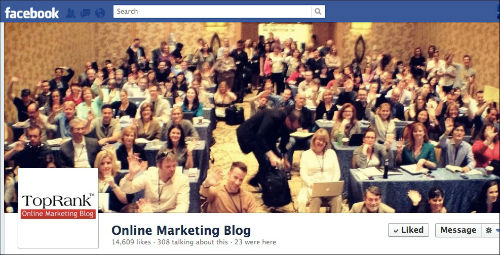
toprank facebook timeline

Cover Photo. A large banner image prominently displays at the top of a Timeline profile. There are some requirements and restrictions for the images: They must be at least 399 pixels wide and may not include price or purchase information, contact information, calls to action or even references to Facebook site features such as “Like” or “Share.” Covers also cannot be deceptive, misleading, or infringe on other copyrights. Wider images work better than narrow.

The cover photo feature is great because it offers the chance to customize the top of a Facebook page like never before. Prominently display a new product. Show a picture of your service in action. Splash your brand colors across it with a compelling image that makes Fans want to scroll down to see more. Within the restrictions listed above, there are vast opportunities for filling this newly available space.

jando fabrics facebookProfile Picture. While the Cover Photo display is rectangular in shape, the profile picture is changing to square. The acceptable size range for them is 180×180 to 32×32 pixels. That’s significantly smaller than the 4 MB photos allowed previously, but the cover photo size more than makes up for this change.

With the way they are arranged, the profile photo can be nicely coordinated to compliment the cover photo. The cover photo splashes across the top while the profile photo is an inset located on the left side. Some creative design here could tie the two images together for maximum visual effect.

chevy-volt-facebook

Navigation and Applications. Directly below these two features is a navigation bar and section for apps. On the left side directly below the profile picture is the section for your profile or page that contains location, contact and other information. To the right of this section one can choose other data to display, such as photos, events, Likes or custom applications.

Photos are automatically displayed in this bar and cannot be removed. In addition to the usual Facebook features of photos, events and Likes, applications can be displayed in this area. This can include weekly ads, charitable apps, geo-location apps and more.

Facebook Public Statistics

Public Page Insights. One of the features on the Navigation Bar is “Likes,” which displays more than just the people who are Fans of the page. With the old layout, users were able to get a glimpse at how many people liked the page and how many were talking about it. Now they can see more, such as insights into what geographic areas most fans reside, the most popular age groups, and what week was the most popular for activity.

One advantage for brands is that you can visit the page of a competitor, view its analytic insights, and use the information gleaned to make the most of your own Facebook social media marketing plan. The flip-side of the coin is that your competitors can also see your insights. What value it provides for fans is unclear and remains to be seen. This Facebook Timeline feature is something that we’ll all be learning about together!

coca cola facebook timelineThe Timeline. Ah, the main feature for which all these changes receives its name, the Timeline. Status updates, Likes, shares and other posts are now displayed in a visual aggregation on the Timeline. The Timeline will extend all the way to the first day a brand page was established. Milestones in your brand’s history can also be added as well to extend the Timeline, all the way to when a business was founded.

Unlike the old Pages, Admins can highlight specific posts by starring them or pinning them to be more prominently displayed. Images also appear much larger with the new update. Furthermore, new apps are being created every day for use with Timeline to enhance its usefulness, with more than 3,000 available to users already.

Timeline and all of the new features that surround it is one of the biggest new changes Facebook has ever undertaken. Since it began rolling out to users at the end of last year, there have been many conversations on the topic – more than a few probably bordering on arguments. Some people and brands really like the new Timeline, while others are concerned that it will negatively affect the way users interact with their Pages. So far, though, that doesn’t seem to be the case, as one recently released study shows Timeline can drastically increase fan engagement an average of 46% and as much as 161% for Toyota.

So what are you waiting for? If you’ve been avoiding Facebook’s Timeline feature, the end is near and the change is inevitable. Make the necessary adjustments now to make certain that your Timeline looks the way you want it to when other people view it after April – not how Facebook makes it look with its automatic conversion. Grab the bull by the horns and make the change on your terms today!

If you’ve made the switch to Facebook Timeline, what has your experience been so far? If not, what is holding you back? Share your story in the comments!


search engine marketing consultants search engine marketing consulting

Online Marketing News: Facebook Timeline is Here, State of the News Media, Google Cracks Down

Small Businesses Increase Online Marketing Efforts

This video from AT&T Business provides great insight into online marketing trends for small businesses.  What you’ll learn:

  • User preferences
  • Network Growth
  • Online Marketing Tactics

News You Can Use

“Don’t Dread Tomorrow’s Mandatory Switch to Timeline, Study Shows It’s Good for 95% of Facebook Pages”  March 30 marks the official rollout of Timeline for Facebook business Pages.  This change has many business owners and brands up in arms.  However according to a recent study 95% of Pages who have switched to the Timeline have seen an increase of likes and buzz about their business.  Via TechCrunch.

“Google Cracking Down on “Unnatural” Links, Deindexing Blog Networks”  Falling from Google’s graces, a position that no company wants to see themselves in.  Recent shifts in Google’s policies include the way that Google perceives inbound links.  Via Search Engine Watch.

“The State of the News Media 2012 – Pew Research Center”  This recent study contained some interesting findings about the current state of media and customers.  Mobile is a driving force for customer experience with news information.  Social media is still maintaining popularity, but is not an overwhelming means of driving traffic.”  Via State of the Media.

“Pining for Pinterest”  Should Pinterest be a key piece to your Internet marketing strategy?  This post provides some great information that is not only focused on getting started, but ways to create meaningful interactions with your audience which drive results.  Via ClickZ.

“8 Creative Ways to Use Embeddable Tweets” Embedded tweets allow users to take information from a tweet and share it on their website or even a blog post.  This new feature from Twitter will enable users to share their information with an audience outside of their direct Twitter connections.  Via Social Media Examiner.

TopRank Team News

Brian Larson- Even with a #1 Organic Ranking, Paid Ads Provide 50% Incremental Clicks
Google released a study that found that those who invested paid search received material increases in the number of clicks to their site. But the online marketers world needed more proof. Now, Google has provided that proof and more. For those who see paid and organic as 2 different worlds, I encourage you to give this a read.  Via Search Engine Land.

Shawna Kenyon- Beyond Likes:  How Google and Adobe Aim to Measure Your True Social ROI
Social Media has muddied the waters in terms of measuring traditional ‘marketing spending’. It is no longer about sinking money into an ad campaign and then looking to see if sales increased. Now we measure success in ways that go beyond tangible impact. Did a campaign add an increase in Facebook likes? And if so is that an effective use of your budget?  Google and Adobe want to answer that question by releasing tools that let marketers track their marketing spend through social media.  Via Mashable.

Sam Giehll – Mind Control: Neuroscience in Marketing
This article addresses a new field out there: neuromarketing. The idea of neuromarketing is that knowledge of neuroscience and the way the brain works from a scientific viewpoint is something that can be beneficial to marketers. Neuromarketing practices include studying consumers’ sensimotor, cognitive and affective responses to different marketing stimuli.  Via Psychology Today.

Alexis Hall – Keyword Not Provided Percentage to Grow:  Firefox Adding Default Encryption for Google Searches
Mozilla announced last week that they are testing defaulting encrypted Google searches from their Firefox browser.  Currently, about 25% of all searches are done from Firefox, so this change could have a big impact on the percentage of keyword encrypted searches we are seeing within Google Analytics. As this percentage continues to increase it will become increasingly important to examine the data that you do have, such as top content.   Via Search Engine Journal.

Jolina Pettice – What Happens in an Internet Minute?
In the time it takes you to pour your next cup of coffee, consider this activity happening on the Internet: 204 Emails Sent, 47,000 apps downloaded, 2+ million Google Search Queries, 6 million Facebook views.  Check this infographic from Intel explaining What Happens in an Internet Minute.  Via Intel.

Time to Weigh In:  Have the recent shifts made by Google had a noticeable impact on your online visibility?  Do you believe that Twitters new embed option will really make a difference, and how do you see your organization using this information?


search engine marketing management search engine marketing news

Five Huge Opportunities for Generating Traffic and Conversions to ecommerce Websites

Around half of the online marketing clients that I work with at GPMD are ecommerce, so we spend a lot of time thinking of new ways that they can generate more traffic / sales. I believe that the following five areas represent significant opportunities for online retailers as, in the vast majority of industries, there will still be an opportunity to be one of the early adopters.

Rich Snippets (Microdata, Microformats & RDFa):


One of the biggest developments in Google’s results pages in 2011 was the introduction of new rich snippets, which included apps, events, product pricing and author information.

Those who choose to implement the required markup to display rich snippets will be able to further entice users to click-through to their page by providing a more compelling indication of what can be found on the page.

Price is a particularly important one for ecommerce sites.

In addition to the current markup being actively used by search engines, there is a lot more that we should all be looking to implement – allowing us to outline more information about any given page.

There have been a number of good posts about this (including this one on SEOmoz), but by visiting schema.org you can find out exactly what code you can add to your site.

Mobile / Responsive Design:


Image source

Over the last couple of years, the amount of people using their mobile phone to browse the internet has increased significantly – resulting in lots of companies introducing responsive websites or mobile sites to facilitate for them.

I attended a Google seminar at the end of last year and one of their representatives referenced the following statistics:

  • 79% of online advertisers don’t have a mobile-friendly website
  • At the time – Amazon had recorded over four billion mobile sales
  • Over 10% of traffic in industries such as travel and finance is mobile
  • Over 30% of flowers sold on mothers day were from mobiles
  • At the time – there were over 23m mobile internet users

(read my blog post about the event for more statistics)

These statistics illustrate that mobile traffic is increasing – yet only 21% of online advertisers have mobile-friendly sites! We’re working on responsive designs for a number of our ecommerce clients, as research clearly shows that mobile users are far more likely to convert on a user-friendly site.

Now is the best time to invest in mobile as many of your competitors will still be dragging their heels.

I would recommend reviewing how much mobile traffic is coming to your website before deciding how much of an opportunity it represents for your business.

Rich Media:

Image source

Adding quality images and video content to your product pages is a great way to show customers how the product can benefit them. Video content is easier for users to view than text and you can add a voice over or subtle text to portray key messages and selling points.

A couple of years ago, Zappos began adding videos to their product pages, featuring real people outlining the benefits of the shoes that they sold. They are now one of the most commonly referenced case studies – reportedly increasing their conversion rate by over 6%.

Use Twitter for Lead Generation:


By using Twitter’s advanced search or tools like Topsy, you can filter tweets that are asking questions, looking for guidance or are generally relevant to your business. You can reply to these tweets and maybe direct them to a blog post or product on your website.

Whilst you’re pursuing leads and building your brand, you’re also engaging with customers and building relationships – adding to the benefits of doing so.

Pinterest:


Great example of creativity on Pinterest from Peugoet.

So, Pinterest is the network on everyone’s lips at the moment – generating over 13,000,000 unique visits in February 2012. As Pinterest continues to grow in popularity, so does the opportunity for online retailers!

This level of traffic on its own indicates why retailers should be taking action, but as this video states, Pinterest is an even bigger opportunity for luxury retailers for the following reasons:

  • The nature of the site
  • 60% of users are college educated
  • 70% of users are female
  • Majority of users aged between 25-44

You can also add price tags and descriptions to your pins, adding to the proposition for the user.

If you have any questions about any of these points, please feel free to address them in the comments below or on Twitter.

guaranteed top search engine ranking high search engine placement

Will Pending Layoffs Put Final Nail In Yahoo Search?

yahooWhatever is left of Yahoo Search — and, frankly, that’s unclear at this point — might be gone completely within the next couple of weeks.

At AllThingsD today, Kara Swisher is reporting that Yahoo is planning substantial layoffs as early as next week, with a company restructuring to be revealed the week after that. Swisher, who’s been correct on things like this in the past, mentions “a half-dozen sources” in reporting on Yahoo’s impending plans.

Of note for Search Engine Land readers is the discussion of what might happen to Yahoo Search. AllThingsD says that Yahoo has been in talks with both Google and Microsoft.

“[Yahoo CEO Scott] Thompson and others are still trying to figure out how to dispense with its ad technology org and, potentially, its search business. He has been in discussions with both Microsoft and Google about this, although there are other possibilities, too.”

One of those “other possibilities” appears to be Yahoo holding on to at least some of its search business, which AllThingsD says could be rolled into a “global media” division with Yahoo’s communications business.

Yahoo got out of the core search business when it outsourced its search results to Bing in August 2010. That 10-year agreement calls for Bing to power Yahoo’s search results and Microsoft’s adCenter to handle self-service search ads (while Yahoo continued to service “premium” advertisers).

Former Yahoo CEO Carol Bartz promised that Yahoo would “continue to innovate” on the user interface/experience side. While there have been a few changes here and there, Yahoo’s share of the U.S. search market has been sliding consistently.

So, while my headline asks if the final nail could soon hit the Yahoo search coffin, I’m sure Danny Sullivan would argue that it already happened three years ago.

Related Topics: Top News | Yahoo: Business Issues | Yahoo: Search


search engine marketing and optimization search engine marketing blog

Zenya Launches Searcher Intent-based Keyword Repository

During the SES New York event last week, categorical keyword repository Zenya announced its new database for search marketers. The new keyword database considers context to distinguish search intent. This will enable users to set positive and negative parameters, which provide marketers an opportunity to tweak datasets in just a couple of seconds before the purchase.

How Zenya’s Search Intent-based Category Works

Users can limit character count, eliminate invalid/adult/banned terms, incorporate negative terms, include brand names and specify categories when filtering the keywords list. Additionally, the keyword repository also has more than 170,000 unique brand-term filters for which marketers can either include or exclude. The User Intent section also allows them to dig deeper into their keywords list using the Include, Exclude and Only options.

Going Beyond Typical Keyword Search Tools

Zenya’s CEO Stephen Scarr shared with Search Engine Watch:

“We felt there were significant flaws in search tools available, primarily because they are too broad. We set about putting these keywords into categories. We’ve identified 6 million search terms that have been placed in 250,000 categories. We have about one million positive categories and about 20 million negative. Typically, with these types of projects, it’s difficult to go beyond 70% accuracy because it’s prohibitively expensive.”

However, they have to go further in terms of search marketing. Although 70% accuracy requires a lot of money, Zenya continues to build their database. Thus, they’re refreshing their data from multiple licensed third-party sources every day. It only includes actual search queries, letting users to access their keywords lists using a points system, ranging from single-use to enterprise level. Moreover, it is a web-based system that literally takes seconds to retrieve results—instant download and ordering included.

Marin Software’s Marketing Vice President Matt Lawson stated:

“Zenya’s keyword application addresses a persistent challenge for many search marketing professionals: Quickly identifying all of the relevant keywords for any given advertising campaign.

“Search technology as a whole has grown and developed dramatically over the past decade. It’s great to see innovative new approaches to solving for keyword generation that extend beyond the scope of traditional publisher and analytics tools. Building out keyword portfolios by tapping into categories of searcher intent takes a radically different approach to helping marketers remain relevant while scaling rapidly.”

Zenya’s database is composed of 1.4 billion keywords, 600 million of which are categorized by searcher intent such as Purchase, Compare, Question and Negative Intent. Furthermore, 75 million of it is audited by humans.


search engine optimisation cardiff search engine optimisation companies

Online Reputation Management Basics that You Should Know

Online reputation management, from the name itself, is monitoring your brand image on the Web. The fact that you’re managing your business’ reputation online makes it complex, as there could be a large reservoir of information attributed to your brand. That’s why it’s important that you know how to address false claims and to keep your positive image out in the open.

Plan Your Campaign

Before you head on to your online reputation management campaign, you should create a plan first. Brainstorm how your business will address false claims and how it will respond to negative issues. That way, you will be prepared in case it becomes an issue.

Be in Control of Your Online Presence

One way to manage your business’ image is to optimize your online presence. You can do this by having your own website, claiming your Google Places page and creating multiple social media accounts. It should be named after your business to minimize negative search results. Thus, you are in control of what would appear on search engine result pages.

Watch What People Say about You

Online reputation management requires you to constantly monitor what people are saying about your business. Although it could be tedious, this could help you know who to acknowledge for positive feedback, and who to address when negative issues arises. Moreover, monitoring what people tells about you or your brand can help you prevent false claims from spreading on the Internet.

Encourage Positive Reviews

Other than making sure that only authoritative sites will appear on SERPS, your business’ reputation can also benefit from positive reviews. Encourage your customers to share their experience with your business, and acknowledge and promote those who give positive feedback. Optimizing it can also make sure that only the good things about your brand will appear on the first page of SERPs.

Remember: You Can’t Please Everyone

There will always be someone that will say something negative about you. That’s fine, since you really can’t please everybody. Just make sure to provide a superb customer service so that your customer won’t fume madly and create havoc on your online reputation. Additionally, false claims should be addressed in a timely fashion. There could also be trolls who just want to bring out the worst in you, so remember to choose your battle.

Always bear in mind that whatever information you share on the Internet will remain there. It could also spread fast if you’re not careful enough. Hence, you have to make sure that only the positive feedback will prevail on the Web, and you should immediately prevent false claims from spreading.

outsource search engine optimization paid search engine marketing

Friday, 30 March 2012

Facebook Timeline: What Are the Changes for Brand Pages?

Note from Lee: Please welcome this guest post from Sara Duane-Gladden, of TopRank Online Marketing’s copywriting team. 

Sara-Duane-Gladden

Facebook is changing again. That never happens, right? For regular users like me, it seems as if there is something new happening at the social network every day. Facebook Timeline is probably one of the most significant, though, and it’s coming to a brand page near you soon. Very soon.

Timeline is the newest change from Facebook, a social media network renowned for making “enhancements” to its much-beloved product that result in mixed criticism and compliments from users. Timeline is no different, as it has been both praised and panned in the blogosphere. There doesn’t appear to be a consensus on Timeline, which is typical of Facebook changes. Love It or hate it, users and brands alike will adjust to Timeline in order to continue participating in the Facebook community – just like they have in the past.

Every one and every brand on Facebook will be adjusting to Timeline soon, too. Any profiles or pages that have not already been converted to Facebook Timeline by this weekend will automatically transform. According to messages displayed at the top of pages and profiles that have not implemented Timeline, brand and business pages will convert on March 30th, 2012, while personal profile pages will switch over on April 1, 2012.

If you’ve been avoiding making the switch, now is the time to accept the change and take control of how your Facebook Timeline appears by previewing it now. Until this weekend, you still have a chance to preview your business page or pages, make edits, then publish it on your own terms. Making the changes yourself instead of allowing Facebook’s automated process to publish your new page for you will ensure that it truly reflects your brands standards and messaging. These changes can be initiated by visiting the Page while logged in as an admin and finding the instructions near the top to preview Timeline.

Perhaps you’ve already seen Timeline in action and are not quite sure what to think of it. What can you actually expect to see when your Facebook Page or Profile is converted over to Timeline?

toprank facebook timeline

Cover Photo. A large banner image prominently displays at the top of a Timeline profile. There are some requirements and restrictions for the images: They must be at least 399 pixels wide and may not include price or purchase information, contact information, calls to action or even references to Facebook site features such as “Like” or “Share.” Covers also cannot be deceptive, misleading, or infringe on other copyrights. Wider images work better than narrow.

The cover photo feature is great because it offers the chance to customize the top of a Facebook page like never before. Prominently display a new product. Show a picture of your service in action. Splash your brand colors across it with a compelling image that makes Fans want to scroll down to see more. Within the restrictions listed above, there are vast opportunities for filling this newly available space.

jando fabrics facebookProfile Picture. While the Cover Photo display is rectangular in shape, the profile picture is changing to square. The acceptable size range for them is 180×180 to 32×32 pixels. That’s significantly smaller than the 4 MB photos allowed previously, but the cover photo size more than makes up for this change.

With the way they are arranged, the profile photo can be nicely coordinated to compliment the cover photo. The cover photo splashes across the top while the profile photo is an inset located on the left side. Some creative design here could tie the two images together for maximum visual effect.

chevy-volt-facebook

Navigation and Applications. Directly below these two features is a navigation bar and section for apps. On the left side directly below the profile picture is the section for your profile or page that contains location, contact and other information. To the right of this section one can choose other data to display, such as photos, events, Likes or custom applications.

Photos are automatically displayed in this bar and cannot be removed. In addition to the usual Facebook features of photos, events and Likes, applications can be displayed in this area. This can include weekly ads, charitable apps, geo-location apps and more.

Facebook Public Statistics

Public Page Insights. One of the features on the Navigation Bar is “Likes,” which displays more than just the people who are Fans of the page. With the old layout, users were able to get a glimpse at how many people liked the page and how many were talking about it. Now they can see more, such as insights into what geographic areas most fans reside, the most popular age groups, and what week was the most popular for activity.

One advantage for brands is that you can visit the page of a competitor, view its analytic insights, and use the information gleaned to make the most of your own Facebook social media marketing plan. The flip-side of the coin is that your competitors can also see your insights. What value it provides for fans is unclear and remains to be seen. This Facebook Timeline feature is something that we’ll all be learning about together!

coca cola facebook timelineThe Timeline. Ah, the main feature for which all these changes receives its name, the Timeline. Status updates, Likes, shares and other posts are now displayed in a visual aggregation on the Timeline. The Timeline will extend all the way to the first day a brand page was established. Milestones in your brand’s history can also be added as well to extend the Timeline, all the way to when a business was founded.

Unlike the old Pages, Admins can highlight specific posts by starring them or pinning them to be more prominently displayed. Images also appear much larger with the new update. Furthermore, new apps are being created every day for use with Timeline to enhance its usefulness, with more than 3,000 available to users already.

Timeline and all of the new features that surround it is one of the biggest new changes Facebook has ever undertaken. Since it began rolling out to users at the end of last year, there have been many conversations on the topic – more than a few probably bordering on arguments. Some people and brands really like the new Timeline, while others are concerned that it will negatively affect the way users interact with their Pages. So far, though, that doesn’t seem to be the case, as one recently released study shows Timeline can drastically increase fan engagement an average of 46% and as much as 161% for Toyota.

So what are you waiting for? If you’ve been avoiding Facebook’s Timeline feature, the end is near and the change is inevitable. Make the necessary adjustments now to make certain that your Timeline looks the way you want it to when other people view it after April – not how Facebook makes it look with its automatic conversion. Grab the bull by the horns and make the change on your terms today!

If you’ve made the switch to Facebook Timeline, what has your experience been so far? If not, what is holding you back? Share your story in the comments!


internet search engine placement learn search engine optimization

Daily Search Forum Recap: March 30, 2012

Here is a recap of what happened in the search forums today, through the eyes of the Search Engine Roundtable and other search forums on the web.

Search Engine Roundtable Stories:

  • Video: Google Panda 3.4, Blog Network Eliminated & Bing Yahoo Update
    I sped through this week's recap, just in a rush, sorry. There was a new Panda rollout, this is version 3.4. Google penalized blog networks...
  • Google Search Graphs Now Animated & Interactive
    In December Google released a graphing calculator in the search results.  Google has just stepped that up by adding an animated and interactive version of their graphing calculator. If you search for [sqrt(x*x+y*y)+3*cos(sqrt(x*x+y*y))+5 from -20 to 20]...
  • Traffic Data Now Back In Google Maps
    Google has officially brought back the traffic data to Google Maps driving and transit directions. Back in July 2011...
  • Google's New Ad Format: Consumer Surveys?
    Yesterday Google launched a new program called Google Consumer Surveys - it is basically taking an expensive thing to do, market research surveys, and making it fast and cheap. Will it last - I am not sure...
  • Video: Google Bowling Alley
    We posted on this before but now we have a very clear picture of the Google Bowling Alley from Chris Chabot, Google+ Developer Relations. I also found a video of the bowling alley on YouTube. Now, e

Other Great Search Forum Threads:

free search engine optimization free search engine optimization tool

Basic SEO Techniques that You Should Know

Although it’s popular to web developers and online marketers, search engine optimization can be one tough cookie to swallow. Boosting an online content to search engines is important, especially if it’s meant to generate leads or revenue. That’s why it’s important to learn the basics of SEO and make sure that each of its components will work together.

Search and Use the Right Keywords

It is always advised that you start your SEO campaign with proper keyword researching. Depending on the market that you want to target, you should be more specific with your keywords instead of using the generic keyword approach.

It should target a more appropriate market that’s relevant to what your website is offering, used by few websites to lower the competition, and it should be the actual search term that people use. When you already found the right keyword for your content, it’ll be easier for you to incorporate it on your web pages.

Optimize Your Site URL and Web Page

Search engine bots first determine your site’s URL and title tag whenever they index content for a relevant search term. That’s why you should include your keyword in your URL if possible. If not, you can add your keywords into the title of your web pages. That way, it will also be incorporated in your domain name. It’s also better if you put your keyword at the beginning of your page’s title, since bots usually index the first word that they read.

Incorporate Keyword on Title Tags and Content

Nowadays, it seems that Title or <H1> Tags have been depreciated by style sheets. They are no longer often used, when in fact it indicates to search engine bots that the texts between the tags are very important.

Another way to optimize your site is incorporating keywords on your content. However, you should consider your keyword density. SEO practitioners advised that only 7%-10% of your content should be made of keywords. That would be one keyword for every one hundred words.

Create Quality Backlinks

Creating backlinks or inbound links is considered by many online marketers as the toughest part of SEO. Overlooking this can’t help your search engine page rank, but overdoing it can also be detrimental for your website.

Backlinks occur when content from another website connects to any part of your page. The more website connects with you, the higher your pages will be ranked. That’s because bots will consider that you always provide high-quality and relevant content. However, backlinks should come from reliable websites too, and should be done in a natural manner. Otherwise, search engines will flag you as link spammer.

Although SEO can be cumbersome, doing it properly can help your online presence go places. Just bear in mind that it should be human- and search engine-friendly at the same time.

search engine marketing software search engine marketing solution

SEO Featured In National Car Rental Commercial

National Car Rental has been running a TV campaign named “Go Like A Pro” where they feature certain professionals in different industries that use their car rental service as part of their business.

In February they featured an SEO named Lindsay in one of the videos. National Car Rental informed me today on Twitter that the commercial is available in high quality. Here it is:

The narrator is Patrick Stewart and here is the transcription:

[Patrick Stewart]
You are a Business Pro. Monarch of Marketing Analysis. With the ability to improve ROI through SEO all by COB. And you rent from National. Because only National lets you choose any car in the aisle and go. You can even take a full-size or above, and still pay the mid-size price.

[Lindsay]
I’m going B-I-G.

[Patrick Stewart]
Good Choice Business Pro. Good Choice. Go National! Go Like a Pro!

Related Stories:

Related Topics: SEM Industry: General


search engine optimisation link building search engine optimisation london

Online Reputation Management Basics that You Should Know

Online reputation management, from the name itself, is monitoring your brand image on the Web. The fact that you’re managing your business’ reputation online makes it complex, as there could be a large reservoir of information attributed to your brand. That’s why it’s important that you know how to address false claims and to keep your positive image out in the open.

Plan Your Campaign

Before you head on to your online reputation management campaign, you should create a plan first. Brainstorm how your business will address false claims and how it will respond to negative issues. That way, you will be prepared in case it becomes an issue.

Be in Control of Your Online Presence

One way to manage your business’ image is to optimize your online presence. You can do this by having your own website, claiming your Google Places page and creating multiple social media accounts. It should be named after your business to minimize negative search results. Thus, you are in control of what would appear on search engine result pages.

Watch What People Say about You

Online reputation management requires you to constantly monitor what people are saying about your business. Although it could be tedious, this could help you know who to acknowledge for positive feedback, and who to address when negative issues arises. Moreover, monitoring what people tells about you or your brand can help you prevent false claims from spreading on the Internet.

Encourage Positive Reviews

Other than making sure that only authoritative sites will appear on SERPS, your business’ reputation can also benefit from positive reviews. Encourage your customers to share their experience with your business, and acknowledge and promote those who give positive feedback. Optimizing it can also make sure that only the good things about your brand will appear on the first page of SERPs.

Remember: You Can’t Please Everyone

There will always be someone that will say something negative about you. That’s fine, since you really can’t please everybody. Just make sure to provide a superb customer service so that your customer won’t fume madly and create havoc on your online reputation. Additionally, false claims should be addressed in a timely fashion. There could also be trolls who just want to bring out the worst in you, so remember to choose your battle.

Always bear in mind that whatever information you share on the Internet will remain there. It could also spread fast if you’re not careful enough. Hence, you have to make sure that only the positive feedback will prevail on the Web, and you should immediately prevent false claims from spreading.

organic search engine optimization services organic search engine placement

Customer Centric Content Optimization (Say That 3 Times Fast) – Presented by Lee Odden

The final day of SES New York wrapped up with a series of the top rated sessions from other SES conferences. One of those sessions was a presentation on “Content & Customer Optimization” by my boss TopRank Online Marketing CEO Lee Odden (@leeodden).

I for one was impressed that on the final day of the conference and the last session of the day the room was packed and people were ready to learn.

Lee began by polling the audience to see what mix online marketing expertise was present in the room.  There were a smattering of SEO practitioners, copywriters, agency marketers (like myself), and those working client side.  Below I’ve included what I considered to be some of the highlights from Lee’s presentation.

What Would You Do if Google Disappeared Tomorrow?

If Google were to cease existing tomorrow do you know how it would affect your marketing and your business? Now many of you may say that’s ridiculous, Google is going to be around forever. However, should you allow Google dominate your marketing?

Lee recommends that Google should be used to empower marketers do what they really want which is to: attract, engage, and motive customers to purchase products or services.  So instead of focusing strictly on optimizing for Google what should you focus on?

Optimize for Customers, Experiences, & Outcomes

Taking a thoughtful approach to the wants and needs of a target audience will go a long way. Customer-centric content planning will inspire customers throughout the sale cycle and give you a leg up over the competition.

Key Questions All Marketers Should Ask:

How do my customers discover information?

  • What are their interests?
  • What needs and pain points are specific to my customers?
  • What search engine(s) are they using to find my company?

What means are used to consume information?

  • What are my customers content preferences?
  • What media sites do they read or follow?
  • Which social sites do they frequent?
  • What sort of device is being used to consume this information?

What are the sharing preferences of my customers?

  • How do they share information?
  • What is their referral process?
  • What steps do they take after purchase?

After determining more information about your customers it’s important that you focus on optimizing all of your content to meet their needs.  Examples of content that can be optimized include:

  • Products & Services
  • Corporate Info
  • News, PR
  • Help, FAQ
  • Knowledgebase
  • Job Listings
  • Landing Pages
  • Fulfillment Pieces
  • Curated/Aggregated
  • Media: Video, Audio, Images
  • Blogs
  • Tweets
  • Status Updates
  • Comments
  • Tags
  • MS Office Docs
  • PDF Files

Building an Optimized and Socialized Framework

Throughout the different stages of the buying cycle it is imperative that your strategy is aligned with your customers needs.  By creating an optimized and socialized framework optimizing for where your customers are at you can better pinpoint what they are “feeling or thinking” at that given stage.  What are the stages to consider?

Stage #1 – Building Awareness: research, customer segments

Stage #2 – Peeking Interest: keywords, topics, messaging

Stage #3 – Consideration to Purchase: content, promotion plan

Stage #4 – Purchase: optimize, socialize, promote

Remember, not everyone is ready to purchase your product or service.  However, they may be willing or happy to refer you to someone else who is in the purchasing stage of the sales cycle.  Every audience member that you interact with opens up an opportunity to network with additional audience members.

For those of you who are interested in learning more about creating an Optimized and Socialized online marketing strategy be sure to check out Lee’s new book “Optimize” which will be released on April 17, 2012.


guaranteed search engine ranking guaranteed top search engine placement

Thursday, 29 March 2012

#MNAMA Optimize Your Online Marketing – Customers Over Keywords

Optimize MNAMA Lee Odden

Photo Credit: @azeckman via Instagram

The word “optimize” has been a staple concept for SEO professionals and online marketers for many years. While SEO is one of the most effective online marketing tactics for customer acquisition, there’s a lot of misinformation and outdated opinions about the role of optimization with internet marketing.

Our CEO at TopRank Online Marketing, Lee Odden, is helping to change the way marketers think about and implement optimization as a holistic approach to content marketing online.

At a Minnesota American Marketing Association (MNAMA) event in Minneapolis last night, he shared that the premise of optimization – and sometimes SEO in general - can be overly keyword-driven and not entirely focused on customer experiences or business outcomes.

As an SEO practitioner, it’s easy to get caught up in links, title tags and keywords vs. focusing on the customers you’re actually trying to connect with. How can we teach ourselves to step back and take a more holistic approach to optimizing content while keeping the target audiences and how they behave online in mind?

As an example, Lee shared a story about asking for kid-friendly recommendations in NYC a few years ago via Twitter. Many people, even those that he did not know personally tweeted recommendations. He Googled people’s recommendations to check out the websites and used that information to make his travel plans. Then he shared his experiences during the trip through social media channels like Flickr, Twitter, Facebook and a blog so those that helped plan the journey were able to follow along. That same experience of using social media for recommendations and search engines to validate information has become the norm for the customer journey online from awareness to interest, to consideration and then purchase.

The creation of content,  and the channels which marketers have to pay attention to, has increased exponentially even in the few years since the story above played out. There is a lot happening on the search and social web, the amount of content created and shared every 60 seconds can be daunting. What does this mean? It means that we need to view optimization holistically, to bring content to the world in a way that attracts and engages customers vs. a reliance on KPIs like rankings and followers.

The recipe for making this happen is different for each company, and being adaptable is an important part of any online marketing and content marketing strategy.

Think about this: What is the top referring source to your website? Is it Google? What would happen if Google were to disappear tomorrow, or maybe it’s your site disappearing from ranking on page 1. What effect would that have on your marketing? Your business?

If you focus on the end customers, and optimize for more than Google you are setting your company success related to longer-term outcomes.

Next, Lee transitioned to talking about optimizing for customers, experience and outcomes. This will help position your brand beyond dependence on any one channel.

Step #1 – Know Your Target Audience

  • How does your target audience search for information
  • How do they consume information
  • What are their preferences in terms of content types and devices

Step #2 – Ask Why When Reviewing Your Marketing

  • Why are we creating a certain type of content?
  • What types of content will motivate them to share, progress in a buying cycle and ultimately become a customer

Understanding audiences will enable you to optimize for various stages of the buying cycle and across different audiences personas.

To get started on understanding audiences, leverage the framework below:

  • Research Customer Segments
  • Define Keywords, important topics and messages
  • Outline content creation and promotion plans
  • Optimize, socialize and promote

Let’s look at an example, which we all wish was real: Z Robots, robots to clean your home.

Who doesn’t want a robot zooming around your house, picking up after you? This girl does!

In the example Lee shared, Z Robots has 3 segments of customers including a small business owner, single guy and a tech-savvy mom.

The profile Lee talked about was “Maria”, the tech-savvy mom.  To optimize content for a great customer experience that results in achieving business outcomes, Lee recommends formulating a plan that spans the buying cycle and across channels including search, social and content consumption.

Understanding how Maria searches and consumes content in different stages of the buying cycle, allows us to create a content plan which speaks to the varying keyword phrases and different levels of engagement that occur as she continues to consume and progress toward a purchase.

Creating an optimized editorial plan can help structure the information in a way that you can be sure to create content for different stages of the buying cycle, across keyword topics and content types.

Next is execution. At TopRank Online Marketing, we like the hub and spoke model, which features a core of themed and optimized content which is surrounded by the channels used to promote, such as Facebook, Google+ and a newsletter.

If you take a step back and think about, ‘how can I make this scale’? Think about the different customer segments you are targeting and create different hub and spoke models for each audience group. In addition, companies need to look beyond social for marketing and rather look at evolving as a social business. Or in short, say no to silos!

What would be at the center of your hub and spoke publishing model? Think through this, as you want the center of your hub to be a place where content is being created and the audience can continue the conversation. A company website might not be the best choice for a hub vs. a blog, YouTube Channel or microsite where visitors can engage in dialog and interact with the brand as well as with each other.

In conclusion, as you consider what and how and who to optimize for – try to evolve beyond KPIs and look at business outcomes. Business outcomes include items like share of voice, improve services, shorter sales cycles, more referrals, lower marketing costs and of course revenue and profits.

Lee’s presentation ended with some audience Q&A:

Q: You talk a lot about planning. How do you get buy-in?
LO: Play on ego, show how the competitor is doing it/doing it better. Share a case study or a slice of what we could implement quickly and quick milestones, to get folks excited about an outcome that perhaps they are more familiar with.

Q: How do you build into a contract, the continual flux and change of things? i.e. Pinterest comes along
LO: When we are working from a customer-centric standpoint, we have a dynamic mix that can account for changes which are necessary to achieve results.

Q: As you are building your content marketing strategy – with limited resources and budgets – what are the things you would get started first?
LO: Start with understanding as much about your customers as possible. What are the referring sources now or a survey of customers? Try and find a hook that makes you stand out and create content to share that story.

Q: What frequency are you making changes to your editorial calendar?
LO: Love to have an editorial calendar which is high-level and thought out at least a quarter in advance. Have placeholders within the plan though, for trending, industry or competitive topics. Based on social media and web analytics monitoring, it’s going to depend on what you find and what you can create to help further influence the sources driving traffic to your destinations.

The folks at MN AMA reported that this was the most people to attend an event as part of their Digital Series – thank you to everyone who attended!  Be sure to pre-order your copy of Optimize, which is deep dive into the topics discussed in the presentation above. Optimize will be shipping mid April and you can get it at Amazon, Barnes & Noble and many other on/offline booksellers in hardcover and digital formats.

Lee will be speaking next at the PRSA Digital Impact conference in New York April 2nd at 2:30 pm: “Content Marketing & Public Relations: Optimize and Socialize to Persuade Your Audiences to Act.  Lee and I hope to see you there!


search engine optimisation cardiff search engine optimisation companies

Daily Search Forum Recap: March 29, 2012

Here is a recap of what happened in the search forums today, through the eyes of the Search Engine Roundtable and other search forums on the web.

Search Engine Roundtable Stories:

  • Live Blogging Is Stealing From Speakers
    A Search Engine Land Column is a good piece of content, but if you skip it and go to the comments, the discussion, you will see a really interesting debate going on about live blogging conference sessions...
  • Google: Want More Organic Traffic? Buy Search Ads
    My title is a bit extreme in summarizing the research study Google published named Impact Of Ranking Of Organic Search Results On The Incrementality Of Search Ads. In short...
  • Google Retired Geo Sitemap Support
    We reported this about a week ago but it seems to have gone unnoticed. Google has officially retired support for Geo Sitemaps. Google's Susan Moskwa said this a week ago: Google has retired support for the Geo Sitemaps format...
  • Google Maps For Android Gets A Nice Update
    Google has made some big changes to the Google Maps for Android app...
  • Google's Rick Klau With Star Trek's Spock
    Rick Klau posted on his Google+ page a picture of him and Star Trek's Leonard Nimoy (aka Spock) from 12 years ago. The other day, March 26, was Leonard Nimoy 81st birthday. Who wouldn't want to have

Other Great Search Forum Threads:

guaranteed search engine optimization guaranteed search engine placement

Google Retired Geo Sitemap Support

Google Geo SitemapsWe reported this about a week ago but it seems to have gone unnoticed. Google has officially retired support for Geo Sitemaps.

Google's Susan Moskwa said this a week ago:

Google has retired support for the Geo Sitemaps format. You can continue to submit your Geo content to us using the standard Sitemaps format (just listing the URL of the file(s), without -specific tags).

This explains why the geo sitemap XML files were returning errors in Google Webmaster Tools in February. The invalid tag is invalid because Google quietly stopped supporting them.

A Google Places Help thread has Vanessa from Google a bit confused as to why or when this happened but it did.

Google still does support the KML Files format, which you can learn about over here but not the geo sitemap format.

Forum discussion at Google Places Help.

search engine marketing news search engine marketing optimisation

Google's Rick Klau With Star Trek's Spock

Google's Rick Klau With Star Trek's Leonard Nimoy

Rick Klau posted on his Google+ page a picture of him and Star Trek's Leonard Nimoy (aka Spock) from 12 years ago. The other day, March 26, was Leonard Nimoy 81st birthday. Who wouldn't want to have a chance to meet Spock?

I don't think he ever visited Google but maybe he should be invited?

This post is part of our daily Search Photo of the Day column, where we find fun and interesting photos related to the search industry and share them with our readers.

search engine marketing news search engine marketing optimisation

#MNAMA Optimize Your Online Marketing – Customers Over Keywords

Optimize MNAMA Lee Odden

Photo Credit: @azeckman via Instagram

The word “optimize” has been a staple concept for SEO professionals and online marketers for many years. While SEO is one of the most effective online marketing tactics for customer acquisition, there’s a lot of misinformation and outdated opinions about the role of optimization with internet marketing.

Our CEO at TopRank Online Marketing, Lee Odden, is helping to change the way marketers think about and implement optimization as a holistic approach to content marketing online.

At a Minnesota American Marketing Association (MNAMA) event in Minneapolis last night, he shared that the premise of optimization – and sometimes SEO in general - can be overly keyword-driven and not entirely focused on customer experiences or business outcomes.

As an SEO practitioner, it’s easy to get caught up in links, title tags and keywords vs. focusing on the customers you’re actually trying to connect with. How can we teach ourselves to step back and take a more holistic approach to optimizing content while keeping the target audiences and how they behave online in mind?

As an example, Lee shared a story about asking for kid-friendly recommendations in NYC a few years ago via Twitter. Many people, even those that he did not know personally tweeted recommendations. He Googled people’s recommendations to check out the websites and used that information to make his travel plans. Then he shared his experiences during the trip through social media channels like Flickr, Twitter, Facebook and a blog so those that helped plan the journey were able to follow along. That same experience of using social media for recommendations and search engines to validate information has become the norm for the customer journey online from awareness to interest, to consideration and then purchase.

The creation of content,  and the channels which marketers have to pay attention to, has increased exponentially even in the few years since the story above played out. There is a lot happening on the search and social web, the amount of content created and shared every 60 seconds can be daunting. What does this mean? It means that we need to view optimization holistically, to bring content to the world in a way that attracts and engages customers vs. a reliance on KPIs like rankings and followers.

The recipe for making this happen is different for each company, and being adaptable is an important part of any online marketing and content marketing strategy.

Think about this: What is the top referring source to your website? Is it Google? What would happen if Google were to disappear tomorrow, or maybe it’s your site disappearing from ranking on page 1. What effect would that have on your marketing? Your business?

If you focus on the end customers, and optimize for more than Google you are setting your company success related to longer-term outcomes.

Next, Lee transitioned to talking about optimizing for customers, experience and outcomes. This will help position your brand beyond dependence on any one channel.

Step #1 – Know Your Target Audience

  • How does your target audience search for information
  • How do they consume information
  • What are their preferences in terms of content types and devices

Step #2 – Ask Why When Reviewing Your Marketing

  • Why are we creating a certain type of content?
  • What types of content will motivate them to share, progress in a buying cycle and ultimately become a customer

Understanding audiences will enable you to optimize for various stages of the buying cycle and across different audiences personas.

To get started on understanding audiences, leverage the framework below:

  • Research Customer Segments
  • Define Keywords, important topics and messages
  • Outline content creation and promotion plans
  • Optimize, socialize and promote

Let’s look at an example, which we all wish was real: Z Robots, robots to clean your home.

Who doesn’t want a robot zooming around your house, picking up after you? This girl does!

In the example Lee shared, Z Robots has 3 segments of customers including a small business owner, single guy and a tech-savvy mom.

The profile Lee talked about was “Maria”, the tech-savvy mom.  To optimize content for a great customer experience that results in achieving business outcomes, Lee recommends formulating a plan that spans the buying cycle and across channels including search, social and content consumption.

Understanding how Maria searches and consumes content in different stages of the buying cycle, allows us to create a content plan which speaks to the varying keyword phrases and different levels of engagement that occur as she continues to consume and progress toward a purchase.

Creating an optimized editorial plan can help structure the information in a way that you can be sure to create content for different stages of the buying cycle, across keyword topics and content types.

Next is execution. At TopRank Online Marketing, we like the hub and spoke model, which features a core of themed and optimized content which is surrounded by the channels used to promote, such as Facebook, Google+ and a newsletter.

If you take a step back and think about, ‘how can I make this scale’? Think about the different customer segments you are targeting and create different hub and spoke models for each audience group. In addition, companies need to look beyond social for marketing and rather look at evolving as a social business. Or in short, say no to silos!

What would be at the center of your hub and spoke publishing model? Think through this, as you want the center of your hub to be a place where content is being created and the audience can continue the conversation. A company website might not be the best choice for a hub vs. a blog, YouTube Channel or microsite where visitors can engage in dialog and interact with the brand as well as with each other.

In conclusion, as you consider what and how and who to optimize for – try to evolve beyond KPIs and look at business outcomes. Business outcomes include items like share of voice, improve services, shorter sales cycles, more referrals, lower marketing costs and of course revenue and profits.

Lee’s presentation ended with some audience Q&A:

Q: You talk a lot about planning. How do you get buy-in?
LO: Play on ego, show how the competitor is doing it/doing it better. Share a case study or a slice of what we could implement quickly and quick milestones, to get folks excited about an outcome that perhaps they are more familiar with.

Q: How do you build into a contract, the continual flux and change of things? i.e. Pinterest comes along
LO: When we are working from a customer-centric standpoint, we have a dynamic mix that can account for changes which are necessary to achieve results.

Q: As you are building your content marketing strategy – with limited resources and budgets – what are the things you would get started first?
LO: Start with understanding as much about your customers as possible. What are the referring sources now or a survey of customers? Try and find a hook that makes you stand out and create content to share that story.

Q: What frequency are you making changes to your editorial calendar?
LO: Love to have an editorial calendar which is high-level and thought out at least a quarter in advance. Have placeholders within the plan though, for trending, industry or competitive topics. Based on social media and web analytics monitoring, it’s going to depend on what you find and what you can create to help further influence the sources driving traffic to your destinations.

The folks at MN AMA reported that this was the most people to attend an event as part of their Digital Series – thank you to everyone who attended!  Be sure to pre-order your copy of Optimize, which is deep dive into the topics discussed in the presentation above. Optimize will be shipping mid April and you can get it at Amazon, Barnes & Noble and many other on/offline booksellers in hardcover and digital formats.

Lee will be speaking next at the PRSA Digital Impact conference in New York April 2nd at 2:30 pm: “Content Marketing & Public Relations: Optimize and Socialize to Persuade Your Audiences to Act.  Lee and I hope to see you there!


affordable search engine optimisation affordable search engine optimization

How to Convert Any Standard Webpage to a Quasi-Blog Post by Adding a Commenting System Like Disqus [Tutorial]

Quasi-Blog Post

We all know that blogging can be extremely powerful.  One of the reasons that blogging can be so powerful is that it opens up a two-way communication channel with an audience.  This can lead to higher engagement, more sharing, increased traffic, etc.  It can also lead to a good amount of user-generated content, which can be great for SEO.  That said, not every piece of content owned by a company is part of a blogging platform.  Some older pieces of content might be sitting outside of a blog or CMS, which unfortunately doesn’t leave much room for conversation. To add insult to injury, there are times that older content cannot be migrated to a system that has commenting enabled.

Sometimes those older pages are static html files and other times they are dynamic pages, such as asp.net or php files.  Regardless, those pages are often isolated, like islands, with no way to start a dialogue.  And that can be frustrating, especially when the content is unique, valuable, and could very well spark a passionate discussion.

Say Hello to the Quasi-Blog Post
So, what can a company to do when they have valuable content sitting on isolated pages with no way to migrate that content to a blog or CMS?  One tactic I’ve been advocating is to add a commenting system to those standard webpages.  Not only can commenting add the ability to hear from readers, but it can also yield a good amount of user-generated content (which again, can be great for SEO).  This solution is perfect for a company that cannot migrate static content to a CMS, or for a company that simply doesn’t have the resources to do so.  And by the way, it’s fast… really fast.

No, They Aren’t Just Blog Plugins
Some of you might be asking, “which tools are needed to socialize standard pages?”  That’s a great question, and there’s an easy answer.  The tools that you can use to socialize your standard webpages are the same tools you can use with your favorite blogging platform (like WordPress or Blogger.)  For example, you could implement Facebook Comments (a social plugin from Facebook) or Disqus, which is also a popular commenting system.  I’ve used both and I think you’ll be surprised how quickly you can get each commenting system up and running on standard webpages.

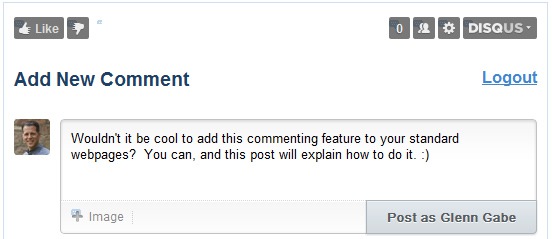
In addition, Google confirmed in late October that Googlebot was in fact indexing some dynamic comments (like Facebook Comments and Disqus).  This was great news for JavaScript-based commenting systems.  And by the way, it was reported this week that Google will be rolling out its own commenting system.  And yes, it will be search engine friendly. :)

With just a few lines of code, you can quickly transform your standard pages into quasi-blog posts.  In the next section of this post, I’m going to walk you through adding Disqus to a static webpage.  Again, you can also add Facebook Comments just as quickly.  Let’s dig in.

How To Add Disqus to a Static Webpage

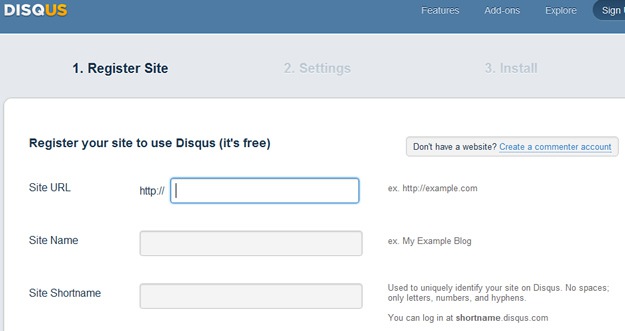
1) Visit the Universal Code Page on Disqus.com
The universal code is a generic JavaScript snippet that can be added to any webpage.  The first thing you need to do is register your website with Disqus.  You will need to enter your Site URL, Site Name, and Site Shortname.  Note, your Shortname uniquely identifies your website and cannot contain any spaces.

Register website with Disqus

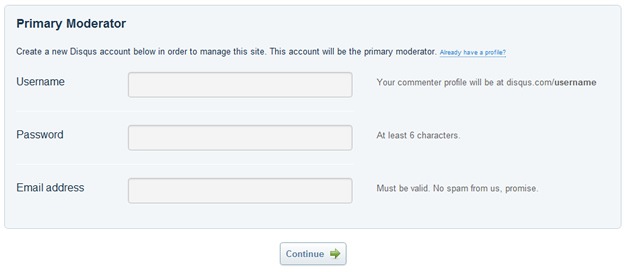
2) Enter Your Primary Moderator Information
You can use an existing Disqus login or you can create a new one.  In case you are wondering, the moderator will be the person administering the Disqus account, approving comments, etc.

Primary moderator in Disqus

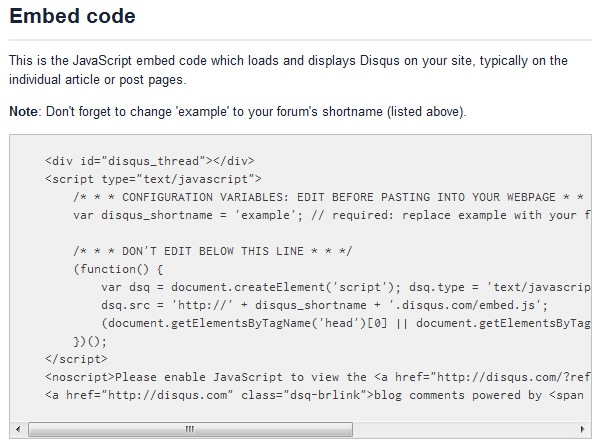
3) Grab the JavaScript Code
This is the code that will be dropped in your webpage where you want the commenting system to be installed.  Note, you’re not done yet, so don’t just drop the default code into your page and think it’s ready.  You need to configure a few variables first.

Disqus JavaScript Snippet

4) Edit Configuration Variables
Now you need to configure variables in the code so Disqus can function properly.  The embed code includes a commented line with capitalized text saying, “CONFIGURATION VARIABLES: EDIT BEFORE PASTING INTO YOUR WEBPAGE”.  In case you didn’t figure it out yet, that’s where you need to edit and/or add variables. :)  There are several variables you can add and you can view the JavaScript configuration variables page to learn more.  At a minimum, I would include the following lines in your Disqus code:

a) disqus_shortname – this is the shortname you entered while registering your website with Disqus.

b) disqus_identifier – this is a unique identifier that you can tailor (for the URL at hand).  You can use any format you want, and I typically keep it very close to the actual URL.  For example, /how-to-socialize-static-webpages/ could be used for this post.  As you can guess, this needs to be changed for each page you add the Disqus code to.

c) disqus_url – this is the actual URL of the file you are adding Disqus to.  Similar to disqus_identifier, this needs to be changed for each page you add the Disqus code to.

5) Add the Code to Your Webpage
Now that you’ve edited the code for the page at hand, you can add the code where you want Disqus commenting to show up.  For most situations, that’s below the main content of the webpage.

6) Upload and Test
That’s it!  You can upload your file and you should see Disqus commenting in the page.  That was pretty easy, right?  Now it’s time to prepare for comments to roll in.  :)  Also, you can edit your Disqus settings after logging into Disqus.com.  For example, you can edit settings for email notifications, moderation, appearance of the comments, etc.

Some Points to Consider:

  • If you are adding Disqus to a dynamic page (asp.net, php, etc.), then you can write server-side code to dynamically tailor the Disqus configuration variables. This will enable you to automatically assign the unique identifier and the URL.
  • Don’t forget to add links to your newly socialized content once a commenting system is added.  For example, if you have a new(er) blog that receives a lot of traffic, make sure you link to your new blog-like pages.
  • Don’t forget to add these reinvigorated pages to your xml sitemaps.  There are times that older pages get left out.  Don’t let that happen now that you’ve socialized them.  Link to them and make sure the engines know about them.

Summary – Social Doesn’t Have to Mean a Blog
Hey, who said older webpages can’t be social too?  If you can’t migrate older content to a newer CMS or blog platform, there’s no reason your high quality, valuable content has to be left out in the cold.  You can easily add a commenting system like Disqus or Facebook Comments to spice up the conversation.  The best part is you can try it out today… I’m sure you’ll find it easy and effective.  And that’s a great combination for any digital marketer. :)

improving search engine ranking increase search engine ranking

Wednesday, 28 March 2012

450 Videos & 7 Million Views On Google Webmaster YouTube Channel

Almost every day, Matt Cutts and his Google team put out a new short video clip on webmaster related topics on the Google Webmaster YouTube Channel. In about 3 years, they have posted over 450 videos and have over 7 million views!

Google Webmaster YouTube Channel On March 28, 2012

It is an amazing number. I started doing my weekly (not daily) video recaps on search about a year before and my YouTube channel has just under 5 million views with 450 videos as well and most are from some videos that went viral and not the search videos. Of course, I am me and Matt Cutts is Google, plus he provides short video tips and my videos are dry recaps and summaries of the previous week in search. I should note, I also publish my videos on iTunes as a podcast.

RustyBrick Channel On March 28, 2012

But to reach 7 million views with just 450 videos is a really nice number. This is a great way to help people in masses and love that they keep this going on a daily basis.

The video man behind the camera is a Google Product Quality Operations named Michael Wyszomierski (aka Wysz). He and Matt Cutts do the videos, Matt Cutts gets virtually all of the face time, which is likely how the SEO community wants it but Michael puts in a tremendous amount of time with the videos and publishing them on YouTube for everyone.

Great work!

Forum discussion at Google+.

search engine marketing consulting search engine marketing expert

Linkbuilding Like a Nerd #SESNY

Linkbuilding EssentialsLinkbuilding has to be one of my favorite aspects of SEO. All too often people use the analogy of linkbuilding being a popularity contest. As someone who views linkbuilding in a somewhat different light – and as someone who was considered by only his parents as ‘cool’ – I think it’s time to put that analogy to bed. Yes, being the sexy-fun brand will undoubtedly drive links for your site. But in my opinion, it’s the quality of the information on the page that will not only help you succeed in proactively acquiring links, but will also inspire others to link to your page. Or to return to the analogy, the cool kid might start out with the lead, but it’s the smart kid (see nerd) who ends up winning in the long run.

It is that passion for linkbuilding that drove me to put Linkbuilding Essentials as one of my can’t miss SES New York sessions…and it didn’t disappoint. Debra Mastaler, President of Alliance-Link, presented solo and here are just some of the highlights.

Create Quality Content

At the end of the day links represent another sites ‘vote’ for your page. To earn that vote you need to offer content that can’t be found on just any site. Provide resources, include imagery and ensure your headline grabs the reader’s attention. If you want to inspire sharing, give them something worthy of sharing.

4 Linkbuilding Considerations

1. Quantity - The number of links pointing to an individual page.

Take-away: Because the quality of links strongly influences the links value, link quantity can be dangerous to view in a silo. Use this number along with link quantity to evaluate your linkbuilding success and identify new opportunities.

2. Quality - Different search engines have different names for the metric used to evaluate link quality. For Google that is known as PageRank. PageRank – wisely titled – ranks a page based on the PageRank number for all pages linking to it.

Take-away: Online marketers learned many Google updates ago that Google places a strong emphasis on the quality of a link. That is, a link from Forbes is more powerful than a link from bookmarking site, although both may deserve a place in your linkbuilding strategy.

3. Relevance - The context or relationship between the page linking out and the page receiving is an important aspect of linkbuilding. The pages should likely have some similarities in order for link to be of value to either web property.

Take-away: If you’re a business that sells high-end IT software and yet most of your links point to your site from a site that sells boiled peanuts, there’s something wrong. As you consider what sites to target in your linkbuilding efforts, ask yourself is it reasonable for your audience to want to visit that page? If the answer is yes, it is likely a good link to acquire from both a SEO and UX standpoint.

4. Anchor Text - Links that leverage text to link to another page. When done right, the text of the link should provide insight as to what information will be found on the linked page.

Take-away: From a SEO perspective, anchor text links can be more powerful than a spelled out URL link. Why? For the same reason it is more powerful from a UX perspective. The text of the link provides the search bot with information about the page being linked.

No-No’s for Linkbuilding

Now with an understanding of some of the key aspects to consider when developing and maintaining a linkbuilding program, let’s switch gears and discuss a few practices that every marketer should avoid.

  1. Building Links in Bulk – Seems counter-intuitive, right? If link quantity is factored by search engines, why not acquire as many as possible at once? The reason is simple: with exception to major announcements, product roll-outs or big advertising, it’s unnatural for most pages to suddenly have a burst in the number of inlinks. In addition, the types of tactics that lead to a sudden surge in links are likely against Google’s Terms of Service.
  2. Not Linking Out – There is an old belief that linking from your page to a 3rd party property is a bad thing and hurts your PageRank score. In reality, linking to other sites offers far more pros for cons. The only caveat is that you take a strategic approach to how you link out. For starters, don’t use an important keyword in your anchor text and don’t link to sites that you don’t want associated with your brand
  3. Talking Like a Robot – Using the exact phrase in each anchor text link you acquire is not ideal. Although it’s difficult to quantify how this approach can impact the SEO value of your links, think of it this way: no two people talk the exact same way, so it’s unreasonable that the only language relevant to your page is X. Consider mixing in long tail derivatives to strike a healthy balance.

One thing that I especially enjoyed in Mastaler’s presentation was the way she broke down the large world of linkbuilding into neat little segments that allows you form an action plan. Get nerdy and start your linkbuilding initiative with a commitment to provide better content than your competition. Next, evaluate your current inlink situation against the 4 key considerations. Identify your opportunities and be sure not to violate the linkbuilding no-no’s.

While we’re talking linkbuilding, what’s the best linking tool? Make your case with a comment below.


best seo company uk better search engine placement

Google Testing Toggle For Search Options & Tools In Search Results

Google is testing a new user interface feature for the search results where they hide the search tools and options from the left hand side and let you toggle them open and close with a click of a mouse.

Michel Wester spotted this and posted a video and screen shots of how it works.

Here are screen shots of it first closed and then opened after clicking on it:

Here is a video of it in action:

Google often tests user interfaces and sometimes those tests are rolled out to everyone using Google search.

Related Stories:

Related Topics: Google: User Interface | Google: Web Search


improved search engine ranking improving search engine ranking

Linkbuilding Like a Nerd #SESNY

Linkbuilding EssentialsLinkbuilding has to be one of my favorite aspects of SEO. All too often people use the analogy of linkbuilding being a popularity contest. As someone who views linkbuilding in a somewhat different light – and as someone who was considered by only his parents as ‘cool’ – I think it’s time to put that analogy to bed. Yes, being the sexy-fun brand will undoubtedly drive links for your site. But in my opinion, it’s the quality of the information on the page that will not only help you succeed in proactively acquiring links, but will also inspire others to link to your page. Or to return to the analogy, the cool kid might start out with the lead, but it’s the smart kid (see nerd) who ends up winning in the long run.

It is that passion for linkbuilding that drove me to put Linkbuilding Essentials as one of my can’t miss SES New York sessions…and it didn’t disappoint. Debra Mastaler, President of Alliance-Link, presented solo and here are just some of the highlights.

Create Quality Content

At the end of the day links represent another sites ‘vote’ for your page. To earn that vote you need to offer content that can’t be found on just any site. Provide resources, include imagery and ensure your headline grabs the reader’s attention. If you want to inspire sharing, give them something worthy of sharing.

4 Linkbuilding Considerations

1. Quantity - The number of links pointing to an individual page.

Take-away: Because the quality of links strongly influences the links value, link quantity can be dangerous to view in a silo. Use this number along with link quantity to evaluate your linkbuilding success and identify new opportunities.

2. Quality - Different search engines have different names for the metric used to evaluate link quality. For Google that is known as PageRank. PageRank – wisely titled – ranks a page based on the PageRank number for all pages linking to it.

Take-away: Online marketers learned many Google updates ago that Google places a strong emphasis on the quality of a link. That is, a link from Forbes is more powerful than a link from bookmarking site, although both may deserve a place in your linkbuilding strategy.

3. Relevance - The context or relationship between the page linking out and the page receiving is an important aspect of linkbuilding. The pages should likely have some similarities in order for link to be of value to either web property.

Take-away: If you’re a business that sells high-end IT software and yet most of your links point to your site from a site that sells boiled peanuts, there’s something wrong. As you consider what sites to target in your linkbuilding efforts, ask yourself is it reasonable for your audience to want to visit that page? If the answer is yes, it is likely a good link to acquire from both a SEO and UX standpoint.

4. Anchor Text - Links that leverage text to link to another page. When done right, the text of the link should provide insight as to what information will be found on the linked page.

Take-away: From a SEO perspective, anchor text links can be more powerful than a spelled out URL link. Why? For the same reason it is more powerful from a UX perspective. The text of the link provides the search bot with information about the page being linked.

No-No’s for Linkbuilding

Now with an understanding of some of the key aspects to consider when developing and maintaining a linkbuilding program, let’s switch gears and discuss a few practices that every marketer should avoid.

  1. Building Links in Bulk – Seems counter-intuitive, right? If link quantity is factored by search engines, why not acquire as many as possible at once? The reason is simple: with exception to major announcements, product roll-outs or big advertising, it’s unnatural for most pages to suddenly have a burst in the number of inlinks. In addition, the types of tactics that lead to a sudden surge in links are likely against Google’s Terms of Service.
  2. Not Linking Out – There is an old belief that linking from your page to a 3rd party property is a bad thing and hurts your PageRank score. In reality, linking to other sites offers far more pros for cons. The only caveat is that you take a strategic approach to how you link out. For starters, don’t use an important keyword in your anchor text and don’t link to sites that you don’t want associated with your brand
  3. Talking Like a Robot – Using the exact phrase in each anchor text link you acquire is not ideal. Although it’s difficult to quantify how this approach can impact the SEO value of your links, think of it this way: no two people talk the exact same way, so it’s unreasonable that the only language relevant to your page is X. Consider mixing in long tail derivatives to strike a healthy balance.

One thing that I especially enjoyed in Mastaler’s presentation was the way she broke down the large world of linkbuilding into neat little segments that allows you form an action plan. Get nerdy and start your linkbuilding initiative with a commitment to provide better content than your competition. Next, evaluate your current inlink situation against the 4 key considerations. Identify your opportunities and be sure not to violate the linkbuilding no-no’s.

While we’re talking linkbuilding, what’s the best linking tool? Make your case with a comment below.


internet search engine optimization internet search engine placement