http://www.toprankblog.com Grow your business with TopRank Online Marketing tips, articles, & expert information on social media, content marketing & search engine marketing. Mon, 25 Feb 2013 11:35:20 +0000 en-US hourly 1 http://wordpress.org/?v=3.4.2 http://www.toprankblog.com/2013/02/content-curation-best-practices/ http://www.toprankblog.com/2013/02/content-curation-best-practices/#comments Mon, 25 Feb 2013 11:35:20 +0000 Lee Odden http://www.toprankblog.com/?p=14882  Creating original content is resource intensive and while some companies that have all the copywriting resources they need (that’s an exception not the rule) it makes sense to curate content in addition to publishing original articles and media.
Curation is the cornerstone of being useful on the social web by finding, filtering and adding insight to content online and sharing with social networks.
Qualitative curation over time helps associate the topics being curated with the company or person doing the curating. When a company does a good job of defining its unique selling proposition and what it stands for, those key concepts help define editorial themes in everything from a content calendar to topics that drive curated social media content.
In combination with original content and industry participation, curation can be very powerful for creating awareness and credibility.
Due to it’s importance, content curation is a topic I cover in Optimize and to dig a little deeper, here’s an excerpt from Chapter 9 to help you get a better idea of what content curation can do for your business and some best practices.
Content Curation Facilitates Many Content Marketing Objectives:
- Efficient, topically focused collection of information that appeals to customers looking for a “single source” on a particular topic.
- Grows awareness of your brand as a topical authority based on adding insight to industry commentary.
- Facilitates networking into spheres of influence in your industry. Collecting and sharing content from influential members of your community can get you on their radar resulting in being mentioned, links or even referrals.
- Attracts links from social sources like Facebook and Twitter. Social links can send traffic, influence social and standard search visibility.
- Attracts links from other web sites which can also send traffic and influence better visibility on search engines like Google and Bing.
- Keeps prospects engaged as part of your lead nurturing efforts.
Blending a mix of new content with the filtering and management of other useful information streams is a productive and manageable solution for providing prospective customers a steady stream of high quality and relevant content. There are several good free services that facilitate curation tasks like Storify. Paper.li, Silk, News.me, Scoop.it and many more. Software can help, but on it’s own, isn’t the answer.
Pure creation is demanding. Pure automation doesn’t engage. Curating content can provide the best of both. Here are several best practices to help you with curation sources, types of content and where to publish.
1. Sources of News to Curate:
- Industry specific newsletters sent to you via email
- Links to content and media shared on Twitter, Facebook, StumbleUpon, Reddit and other social sharing websites
- Google Alerts, Google News or Google+ Search
- Curation tools: Flipboard, Scoop.it, Storify.com
- Real-time search engines: Topsy, socialmention.com
- Niche topic blogs
- News aggregators: Alltop, popurls, Techmeme
- Bookmark and or subscribe to updates from industry news, magazine and blog websites
- Press Release Distribution Services like PRWeb, PRNewswire or Marketwire
- Review competitor websites and monitor for mentions of their brand terms in though Google Alerts and social media monitoring tools like Trackur or Radian6 to see what kind of curation tactics they’re using
2. Types of Content to Curate:
- Useful resources relevant to your target audience: blogs, news, training, tips, networking and industry events.
- Content created by influential people of importance to the target audience
- Statistics, research and reports
- Compelling or provocative industry news
- Videos: YouTube, Vimeo, Viddler
- Slideshare presentations or search Google.com for .ppt file types
- Whitepapers, eBooks and case studies
- Infographics and other data visualizations
- Tips, How To’s and best practices
- Create short lists of tips according to keyword themes
- Compile large collections of resources according to topical theme
- Aggregate the best comments from other blogs or your own blog
- Run surveys, polls & contests that result in content
3. Where to Publish Curated Content:
- Company Blog
- eBooks
- Email Newsletter
- Social Media Channels
- Contributed Articles or Blog Posts to Industry Sites
- Niche Microsite Dedicated to a Specific News Category
These are just a few suggestions and the best ideas for content creation and curation will come from a specific analysis of your own customer groups and industry. The key is to do the homework of understanding what motivates your community and to assemble a compelling mix of curated, repurposed and original content to inspire them to engage and buy. Be thoughtful about the usefulness of the content you assemble, create and promote. Empathize with your customers’ interests and goals so you can properly optimize content for both search engines and social media sharing.
Still not convinced? Check out what Brian Solis, David Meerman Scott, Ann Handley, Joe Pulizzi, Rebecca Lieb and Paul Gillin have to say about content curation.
Excerpt from Optimize: How to Attract and Engage More Customers by Integrating SEO, Social Media and Content Marketing, published with permission from Wiley.
How are you adding content curation to the content marketing mix?
 Gain a competitive advantage by subscribing to the
TopRank® Online Marketing Newsletter.
© Online Marketing Blog, 2013. | 3 Essential Content Curation Best Practices to Boost Content Marketing Performance | http://www.toprankblog.com
]]> http://www.toprankblog.com/2013/02/content-curation-best-practices/feed/ 2 http://www.toprankblog.com/2013/02/online-marketing-news-feb222013/ http://www.toprankblog.com/2013/02/online-marketing-news-feb222013/#comments Fri, 22 Feb 2013 11:00:45 +0000 Miranda Miller http://www.toprankblog.com/?p=14875
Google Analyzes Consumer Device Preferences: Insight Into Mobile Purchasing Journey
Google has just released a blog post and infographic sharing insights into consumer shopping behavior over the recent 2012 shopping season. In many cases, Google said, consumers discovered a business on one device, for example on their smartphone while in a store, and would then engage further with that business on another device at a later time.
It is critical that companies understand the various entry and touchpoints during their customers’ buying journey, then optimize existing and new content to fulfill needs at each point. Your own data will always be most valuable, though the industry trends companies with access to as much relevant data as Google has can be helpful, as well. For example, they found that smartphones were the preferred device for contacting or navigating to a business with 71% of shoppers using a store locator on their phone, while 82% of shoppers used a larger device like PC or tablet for making online purchases. Is your content, whether written, visual or video, currently optimized for mobile formatting and consumption?
Samsung Has a Surprise Viral Video Hit, Shows Appliance Makers How It’s Done
Let’s face it, washing machines are pretty dull fodder for YouTube. Samsung released a brilliant video on February 14th the eschews the typical product feature-demonstration-paid actor commercial format and it paid off big time. As in, over 13 million views in one week, big time. In the video, a film crew set the scene for a wintery video shoot for an EcoBubble washer commercial. The premise is that they’re out in the wilderness on a frozen lake, thanks to the EcoBubble’s ability to perform at cold temperatures using bubbles. The team are interrupted by the arrival of a brown bear and… well, check it out:
Twitter Announces Advertising API for Promoted Products and Accounts
In an effort to make it easier for advertisers to manage campaigns, Twitter has announced the upcoming release of their Twitter Ads API. They’ve been testing with a select group of partners since January, according to the announcement. What does this mean for marketers?
Twitter’s April Underwood, Revenue Product Manager, explains: “You’ll soon have the ability to work with our initial set of Ads API partners to manage Twitter Ad campaigns — and integrate them into your existing cross-channel advertising strategies. Equally important, users will continue to see the most relevant Promoted Tweets from advertisers. With the Ads API, marketers now have more tools in their arsenal to help them deliver the right message, to the right audience, on the desktop and on mobile devices — all at scale.”
The first five companies able to offer Twitter advertising features to their clients are the beta partners: Adobe, HootSuite, SalesForce, SHIFT and TBG Digital.
Study Reveals Brand Marketers “Mostly Clueless and Inept” at Localization
Say it ain’t so! Greg Sterling at MarketingLand reports this week that national marketers have a lot of work to do in tying brand campaigns to offline stores and sales efforts. The study, written by the CMO Council for Balihoo, a local marketing automation company. One might think that because a local marketing company commissioned the report, it would be prone to bias; however, brand marketers actually lent their insights through a survey and this is the frightening tale they told:
- Only 8% of brand marketers will make the development of a comprehensive mobile relationship marketing strategy a priority this year. Thirty-three percent are “still investigating the mobile opportunity.”
- A whopping 57% of brand marketers said they lack the resources and bandwidth to stay on top of constant content needs.
- Despite 59 percent of national marketers noting that local demand generation was essential to their business growth, only 7 percent feel they have highly evolved campaigns and measures in place that can activate consumers at a local level.
- While 30 percent of marketers execute local campaigns within eight to 20 days of a national launch, 31 percent require in excess of 30 days to distribute local marketing materials.
- Only 8 percent of the 296 brand marketers surveyed were extremely satisfied with the way new product, pricing or promotional campaigns are executed and leveraged by local field sales, reseller, franchise or partner networks.
Download the full Brand Automation for Local Activation report from CMO Council (registration required).
This Week in the @TopRank Social Community
We have a fantastic and active social community across a number of platforms including Twitter, Facebook, Google+ and LinkedIn. What were @toprank tweeps talking about this week? The top ten topics you mentioned in tweets to our account were:
@TopRank Tweets We Loved
We read every single tweet you send us… some even make their way through the office email chain. Here are just a few of our favorite mentions from this week:

(Thanks, Arianne! We’re glad you enjoyed the session. Linkdex did a fantastic job grabbing the highlights of this SES panel with Andy Mihalop, Ammon Johns, Norm Johnston and Judith Lewis in the post you shared.)

(We completely agree. Attracting new customers is important, but engaging existing fans creates loyal customers and advocates for life and NASA’s event this week was a prime example of how it’s done.)
Facebook Content YOU Loved
This week, the post that engaged more people than any other and also generated the most conversations was our content optimization visual. Our handsome wee TopRank Marketing Tips Line caller asks, “What type of audits should I run to determine if my content is optimized?” Facebook fans found the answer here.

Online Marketing News Briefs from the TopRank Team
Brian Larson: Who Do You Trust? Social vs. Search
Edelman recently released their annual Trust Barometer study and while it revealed a multitude of interesting findings, perhaps the most eye-opening results relate to social. Social usage continues to grow at a staggering rate across the globe, but that doesn’t mean that consumers trust all social information. Edelman found that those surveyed trusted search results over information shared in social. To read the whole study, get the 2013 Edelman Trust Barometer report.
Sam Giehll – Taco Bell, ESPN See More Than 225K QR Code Scans for Recent Mobile Campaign
Who said QR codes are a trend that’s already had its day? They’re becoming more and more relevant while tacos are becoming tastier and tastier. Where those two meet is here, with this update on a successful QR code campaign involving ESPN and Taco Bell. They worked together to encourage football fans to scan QR codes found on Taco Bell packaging to receive special online content and previews. Their success teaches us a few things: find out what your consumers like other than you – and work to bring them tacos. Wait, no, that’s not right.. work to bring them the things they want from multiple angles to increase engagement all the way down the line.
Mike Odden: Multi-Format Web Designer’s SEO Checklist Release
Learning SEO can be a daunting task. To help with this process, webdesign.tuts. has provided A Web Designer’s SEO Checklist as part of their 18 part series SEO Fundamentals for Web Designers. They have even created a number of versions of this checklist, including an HTML version, Markdown, PDF and Evernote for downloading. This checklist may be a great help for designers with little SEO experience and may help take care of the basics if SEOs are to be brought into the process at some point during development (hopefully sooner than later!).
Susan Misukanis: Much to be Learned from SES London
This past week, European and international marketers converged in London for three days of intense training, professional networking and expert advice on digital marketing. TopRank Online Marketing CEO Lee Odden presented his Creative Content Marketing: Winning Hearts, Minds & Wallets session and moderated other panels of experts, including one on Content-Driven SEO on a Shoestring.
WordTracker compiled as excellent resource for marketers consisting of their 214 top tips and takeaways from the event. Linkdex liveblogged Integrated Marketing: What Does It Really Mean? and Andrew Girdwood published his collection of over 60 helpful tips for digital marketers. As always, those in attendance shared freely with one another and with their social communities through publishing these resources during and after the event. Check them out!
Have Your Say
Have you seen an interesting digital marketing story in the news? Share yours in the comments or stop by and see us on Twitter!
Gain a competitive advantage by subscribing to the
TopRank® Online Marketing Newsletter.
© Online Marketing Blog, 2013. | Online Marketing News: Google’s Look at the Buying Journey, Brand Marketers Failing at Localization | http://www.toprankblog.com
]]> http://www.toprankblog.com/2013/02/online-marketing-news-feb222013/feed/ 0 http://www.toprankblog.com/2013/02/inside-nasasocial-social-media-advocates/ http://www.toprankblog.com/2013/02/inside-nasasocial-social-media-advocates/#comments Thu, 21 Feb 2013 11:00:42 +0000 Miranda Miller http://www.toprankblog.com/?p=14864
Astronauts Tom Marshburn, Kevin Ford and Chris Hadfield chat live from the International Space Station with #NASASocial participants.
February 20th, NASA hosted a special event at their Washington headquarters in which a group of their social fans attended a day of tours, expert talks and even a livechat with astronauts on the International Space Station. My son and I are fortunate to have participated and on top of the insider look we had at NASA research, we learned a great deal about the power of social media advocacy, as well.
So what happens when an organization puts 150 of their loyal social media fans in one room for a fantastic, exclusive experience? Brand building and social reach magic, judging by the results of yesterday’s #NASASocial.
Preparing for a Real-World Social Event
Participants and social fans were asked to tweet on the hashtag #NASASocial; the NASA Social Team also have a Twitter account at @NASASocial. We were encouraged to tweet the @ISS_Research (International Space Station) account, as well. Each of the astronauts and researchers featured in in-person presentations or live chats also have Twitter accounts. Some, like Canadian Space Agency’s Commander Chris Hadfield, are already wildly popular; at last count, Hadfield had well over 400,000 Twitter followers. We received all of the information we needed to promote the event across Twitter, Facebook and Google+ in a series of emails prior to the event.

150 social fans awaiting the start of #NASASocial at NASA Headquarters in Washington, D.C.
Even before that, each applicant was asked to supply their social media profile URLs in their application. Once the 150 participants were selected, NASA added participant Twitter handles to a list they had created for this event.
During registration, each participant received a lanyard with their name and Twitter handle, as well as @ISS_Research and #NASASocial printed on the front. Overall, we were well prepared to come armed with our devices and socialize with NASA, our networks, and each other throughout the event.
Takeaways for preparing for successful real-world social events:
- Know your participants. Connect with them in advance and make sure they are connected with one another. This is a huge help on the day of the event, as they can chat through their social profiles and retweet one another.
- Establish a hashtag and notify participants as early as possible to encourage social promotion in advance of the event.
- Invite your loyal social followers. From conception, this idea was a brilliant one from the NASA Social Team. They guaranteed a socially successful event by including followers they already knew to be socially active and tech-savvy.
- Offer participants an experience. Give fans a behind-the-scenes look at how your company or organization operates. Make key people in your organization accessible to fans.
150 Social Fans = Over 172,000 Accounts Reached in Minutes
Incredibly, the chart below shows activity from only the latest 50 tweets at the time it was retrieved, just after lunch the day of the event. Though just 150 people were able to physically attend, their tweets (and those of their followers) reached over 172,000 Twitter users in the span of 50 tweets.
To add more context, at the height of the event, participants and social followers were sending nearly 4,000 tweets per hour on the #NASASocial hashtag.
This social activity was also incredibly effective at driving traffic back to NASA web properties, as illustrated below. Participants and their networks tweeted links to at least six different NASA sites or subsections of their main site in the 1500 tweet selection from which this chart drew data.
At every turn, we were encouraged to participate in the social activity happening online around the event.
Takeaways for making your real-world events more social:
- Encourage attendees to tweet, Facebook, or update their other profiles throughout the event. Incredibly, I’ve attended a tech/marketing event and been asked to turn off my phone and not publish anything the speaker said. Don’t do that.
- Remind users of hashtags, URLs and handles throughout the event. After each speaker, NASA shared a slide with this information as a subtle reminder to participants to get social.
- Allow photos and video. It would be well within NASA’s rights to restrict photography or videography at their events; they had their own team there to document the event. However, social users love sharing videos and images. Let us snap pics and we’ll share them, giving your brand exposure, all day long.
Creating an Experience That Converts Fans to Advocates
You may not think your product or service is quite as exciting as the opportunity to chat live with astronauts. Yet there are people in your social sphere who think you are absolutely fascinating… do you know who they are?

Astronaut Don Pettit (@astro_Pettit) explains the water recycling systems in space to #NASASocial participants.
Actively listen to your fans, especially those vocal and influential in your space. Brand advocates can sway public perception about your brand, quickly spread the news of a new launch or update, and defend your brand from detractors. These are incredibly valuable people to have on your side in social channels.
Offering fans an experience outside of the usual consumer/company or organization/spectator relationship can help convert them from loyal fans to staunch advocates. Physical events offer so much opportunity to “wow” your fans, by way of behind-the-scenes access, face-to-face chats, networking with other fans and more. Add to that the photo opportunities and the power of social media and real-world events are a real winner for your social presence.
It is important to note that NASA did not pay for participants airfare, accommodations, or meals. Yet when we met attendees at the event, they had come from all over the country at their own expense to participate. Converting fans to advocates does not mean you are buying their love. Instead, you have built such a mutually beneficial relationship that they will go to bat for you online just as much as drive across the state for an opportunity to connect with you.
Thank you so much to NASA and their partners at the Smithsonian Air & Space Museum for a once in a lifetime opportunity at #NASASocial. Kudos to Jason Townsend, John Yembrick and the rest of the NASA social team for organizing this fantastic event!
Gain a competitive advantage by subscribing to the
TopRank® Online Marketing Newsletter.
© Online Marketing Blog, 2013. | Inside #NASASocial: How Real-World Events Build Social Media Advocates | http://www.toprankblog.com
]]> http://www.toprankblog.com/2013/02/inside-nasasocial-social-media-advocates/feed/ 2 http://www.toprankblog.com/2013/02/5-content-sourcing-ideas-through-word-visualization/ http://www.toprankblog.com/2013/02/5-content-sourcing-ideas-through-word-visualization/#comments Wed, 20 Feb 2013 13:36:09 +0000 Lee Odden http://www.toprankblog.com/?p=14859
One of the most common problems marketers have with content is ideation. This is especially true with companies that have relied on just a few individuals for things like blogging and social promotions. Eventually, people will run out of their own ideas. It is inevitable and a certainty in most cases.
The solution for business content ideation is to be connected to the interests, goals and purchasing journey of the consumer. By knowing the customer lifecycle, content can be planned for each customer segment according the information needs of buyers as they discover, consume and act on content.
Besides that customer centric approach to content planning, there are a variety of opportunities to get ideas in order to be more creative or to surface concepts and stories that are unique. Here are 5 sources that can give marketers useful and practical ideas for serving their customer content marketing needs:
1. Visualize

Using a tool like Wordle, content marketers can tap into different data sources that reflect frequency of interest related to customer interest. Some of those data sources include:
- SEMRush - Look at the organic keywords for your own site, competitors and industry leading publications. Export those phrases as a CSV file and import to Wordle for a visualization of organic search phrases most associated with those sites’ visibility on Google.
- Google Keyword Tool - Take a keyword research list and all the variations, permutations discovered and import to Wordle for a visualization.
- Majestic SEO Anchor Text – Run an inbound link report and filter by anchor text from the most authoritative links. Scrape that text into a text file and import into Wordle to visualize the most often used anchor text that’s boosting competitor search visibility.
- socialmention – Search for concepts or competitor names and download the social keywords displayed in the search results (as a CSV file). Import those words into Wordle for a visualization of the most popular phrases in a social context.
- Ubersuggest – Google auto suggest provides search phrases that are arguably most popular. This tool helps with such research for Google.com, Google News, Image and Video search. Import to Wordle for a visualization.
- Tweet-Cloud – Take any Twitter handle and run it through Tweet Cloud to automatically create a word cloud based on the past X number of tweets. It enables visualization of what you, your competitors or industry influentials are posting most often on Twitter.
2. Your Website
Looking at internal data is not only convenient but can also be quite insightful.
- Onsite search (logged queries) – If your site has an internal search engine, those queries should be logged. Review the search phrases visitors use most often on your site to inspire future content creation.
- Form text area analysis – When users fill out content forms on your website, analyze the text area forms for word frequency to get an idea of topics that most often get mentioned when prospects make inquiries with your website.
- ? Queries in analytics - Even though not provided is dominating keyword referrers for many websites, there’s still some keyword insight to be gained, especially when it comes to queries that come in the form of a question. Filter referring organic keywords according to words like “how” or “what”. You can also just look for queries that have a “?” in them to reveal the kinds of things customers want answers for.
3. Frontline Staff
Gaining insights from team members directly connected to your buyers and customers can reveal priceless ideas for effective content marketing. Tapping into frontline employees is particularly useful. A few ideas on that:
- Sales – What are the most common objections and counters that work?
- Customer Service – Common product or service issues, product feature ideas and both complaints and kudos can provide really useful ideas.
- BCC – To make the process efficient for everyone, ask frontline staff to BCC FAQs to the content team as they answer them.
4. Become a Publisher
Publications have been tackling the “topic ideation” problem for over 100 years. Tap into what successful publications in and out of your industry are doing to approach topics and content, then leverage those models for your own content marketing. Some publications to consider include:
- Magazines: Recurring features, themes, short form, long form
- Newspapers: Timely, objective, sensational
- Television: Storytelling, recaps, previews
5. Map the Customer Journey

Understanding the customer journey from awareness to interest to consideration to purchase, marketers can analyze data to surface insights on social topics, search keywords and media types that can guide content planning.
There are many ways to come up with new ideas for more effective content marketing. Hopefully you’ve found these to be useful.
What are some of your best ideas to energize your content marketing?
Gain a competitive advantage by subscribing to the
TopRank® Online Marketing Newsletter.
© Online Marketing Blog, 2013. | 5 Content Sourcing Ideas Through Word Visualization | http://www.toprankblog.com
]]> http://www.toprankblog.com/2013/02/5-content-sourcing-ideas-through-word-visualization/feed/ 5 http://www.toprankblog.com/2013/02/social-media-interaction-tips/ http://www.toprankblog.com/2013/02/social-media-interaction-tips/#comments Tue, 19 Feb 2013 11:00:11 +0000 Ashley Zeckman http://www.toprankblog.com/?p=14849 After a long and stressful week at the office it’s time to kick back, relax, and make the most of your weekend. The easy option might be to stay in, order take-out, or watch Golden Girls reruns. However, you might also be ready to blow off some steam. Let’s face it, as attractive as a lazy night on the couch sounds, you know once you put in the extra effort a night out will be much more fun.
 Comparatively, there are two ways to plan a social media strategy.
- Plan 1 consists of a lazy and solo mission where you simply share a few things here and there that are just a regurgitation of social media stories and promotions that your readers have already heard.
- Plan 2 is based on learning from others and creating an informed and structured social strategy to attract and engage your audience.
If you really want to optimize your social media strategy, some discovery, planning, and measurement must take place. Below you will find eight tips for making the most of your social media interaction as if it were a night out on the town.
1. Mapping Out Your Evening
If you’re planning an evening out you likely have a few favorite spots in mind. You might also text some friends, post a Facebook message asking for suggestions, or run a Google search to find reviews. A well-informed plan will keep you from wasting precious time bouncing from one bad club to the next.
In the quest to be innovative, many marketers jump on social platform bandwagons before doing their due diligence to determine if a particular platform is a fit for their audience.
If you have a killer Google+ strategy but all of your customers are on Twitter, where does that leave you? The answer, square one. If you work with enterprise level customers you can easily run a query on many social platforms to determine how many of them are utilizing that particular site, and with what frequency.
Maybe your target is B2C? Companies spend thousands of dollars a year gathering information and creating reports on consumer social media trends and benchmarks. Take advantage of what is available to you (for free!).
2. Dress To Impress
You wouldn’t show up to one of the hottest nightclubs in town dressed in dirty sweats and Birkenstocks would you? Whether you’ve been to a club before or not, chances are you have an understanding of the dress code. Look at those around you, are you dressed to impress or dressed to turn off?
Understanding who your customers are and type of interaction they prefer will set you up to impress or engage them on an ongoing basis. Identify your best customers as well as your top prospects and monitor the way that they interact on social networks. This will give you insight into creating appealing messages and engagement.
3. Accessories Make the Outfit
Ask any woman and she’ll likely tell you that the accessories make the outfit. A killer handbag, bracelet, or any type of bling will add that little extra sparkle that you’re looking for.
Social media monitoring and listening tools aren’t essential to running a social campaign, but they provide a tremendous advantage. While you may not be ready to jump headfirst into paying a subscription of $50-$3,000 on a monthly basis to begin monitoring and measuring social interaction, there are many free and inexpensive tools available.
- Social Mention: Good for finding how many times a topic or company has been mentioned within a specified period of time.
- Commun.IT: This relatively new platform is made strictly for Twitter and has free and paid versions. Commun.IT groups people by the number of times they’ve mentioned or interacted with you and ranks them based on influence and subject matter. You can also setup a series of key phrases and receive a notification each time those keywords are used.
- HootSuite: With HootSuite there is just so much that you can monitor. The key to using HootSuite is keeping your streams organized. It’s great for topic, user, and event hashtag tracking. One thing to watch out for is using the posting features for some of the social networks (e.g., Facebook doesn’t always display properly).
4. Should You Be Early, On Time, or Fashionably Late?
If you arrive too early to the club or party, you’ll find yourself sitting at the bar twiddling your thumbs and killing time until the rest of the crowd arrives. Arrive too late and you might not make it in – or you’ll miss all the fun.
Keeping in mind industry standards and best practices are key when determining the optimum point for listening and sharing on social media channels.
For example, you may already know that the biggest spike on Facebook usage generally occurs around 3 p.m. on weekdays while Twitter engagement is best on the weekends. So while you note these engagement opportunities when sharing your company message, are you also using those times as an opportunity for better social media listening?
5. Is the Cover Charge Worth It?
A cover charge no matter the price creates a sense of value for those looking to break into a crowded nightclub. If you’re going to pay to play, you had better get your money’s worth.
In the case of social media your “cost” is time, resources, or tools needed to properly execute a social strategy. If you’re just beginning to tackle the social web your time is best spent listening or being a voyeur if you will.
This information gathering will arm you with the insight you need to begin rocking the social web. Studies have found that a whopping 77 percent of B2C companies and 43 percent of B2B companies have acquired new customers from Facebook alone!
6. Quiet Amid Chaos
If you’ve ever been to a nightclub you know the majority of your conversations consist of yelling at each other and catching every other word (if you’re lucky). Similarly, you don’t want to attempt to yell at your social media fans and friends over all of the other “noise” on the Internet.
If you have something meaningful to say to some of your social media connections send them a direct or private message. This tactic will ensure that they’ll hear what you have to say and that you’ve identified a message just for them.
The social web is flush with white noise. There is a lot out there, but you can neither absorb nor differentiate the majority of it. With thousands of tweets, posts, shares, and likes each day, how can you find the nuggets of information that are actually helpful to your strategy?
Simple, get organized. Many social networks including Twitter, Facebook, and Google+ enable users to create lists, favorites, or circles in order to customize what appears in your feed. Taking a few extra minutes to segment your social channels will save you hours in the long run.
7. Shoot The Breeze With Old Friends
Bumping into an old friend unexpectedly on a night out is cause for celebration. You may talk for a few minutes and then share an adult beverage (or two) while catching up. This time spent is valuable because you can pick right back up where you left off and who knows, they may even be able to introduce you to some new friends.
In the same manner, your existing customers can prove to be a valuable resource when figuring out how to attract and engage new customers. There are a variety of ways that you can tap into the minds of your current customers. You could try:
- Sending out a customer survey and include questions about their social networking habits.
- Spend a portion of your monthly or quarterly meetings asking what sort of things they’re interested in learning more about on social networks.
- Asking their opinion on a new campaign you’re running internally to determine if they would find it useful and engaging.
8. Make Some New Contacts
Have you ever woken up after a night out with new numbers in your phone under names like “Ryan from concert”, “Sarah Cute Dress”, or “April Sam’s Friend”? When you let your guard down and begin talking to people you might not otherwise spend time getting to know, chances are you’re more likeable.
In order to make new friends either online or offline, you must be friendly. A little extra effort or help solving a problem can go a long way.
Perhaps you’re scouring Twitter for users talking about a topic related to your business and find a question from someone looking for insight. You can either send them a link to your company website with no explanation, or answer their question and provide them with resources on where they can learn more.
Building trust with new online connections does not happen overnight, which is why you need to give a little before expecting something back in return.
While you may be tired (or even exhausted) after a long night on the town, you will likely experience a sense of satisfaction that you made it through, found some new friends, and kept the ones you had. Keep in mind that anything worth doing is worth doing right.
If you truly want to engage and retain your online social networks, it’s essential that you be likeable, offer value, and put in the extra effort to identify what your prospects and customers care about most.
Image via Shutterstock.
A version of this post originally appeared on Search Engine Watch, Social.
Gain a competitive advantage by subscribing to the
TopRank® Online Marketing Newsletter.
© Online Marketing Blog, 2013. | Social Media Night Out: 8 Tips To Get You Through The Evening | http://www.toprankblog.com
]]> http://www.toprankblog.com/2013/02/social-media-interaction-tips/feed/ 8 http://www.toprankblog.com/2013/02/blog-promotion-findability/ http://www.toprankblog.com/2013/02/blog-promotion-findability/#comments Mon, 18 Feb 2013 11:36:51 +0000 Lee Odden http://www.toprankblog.com/?p=14844 With millions of blogs and other social content to compete against, the challenge of standing out can seem overwhelming for business and personal bloggers alike.
 But it doesn’t have to be a mystery for customers to find your corporate blog. If you have interesting and useful things to say, there is an audience seeking that very information.
The connection between social media and blog promotion for companies is logical: Publish a blog post and then tweet it out or post a link to Facebook, LinkedIn and Google+.
But there’s more to making your business blog findable than just sharing links through social channels. That’s why focusing solely on the promotion of blog content after it’s published is like a hamster running on an exercise wheel. The ideal is to be intentional and planned yet also opportunistic. And to scale those promotion efforts, it’s essential that two or three times as much time is spent growing social networks than actually promoting content to them.
Business blogs in particular, benefit from a content calendar to guide messaging and to stay true to meeting the needs of the business and researched interests of the target audience. With that editorial planning should also come an effort to build social networks.
For a business, the core 5 social networks to consider would probably be Google+, LinkedIn, Twitter, Facebook and Pinterest. If there’s substantial video content, then YouTube is a logical addition. Creating and growing communities in at least one or two of these networks with a new blog will help grow a community that looks forward to whatever you’ll post next.
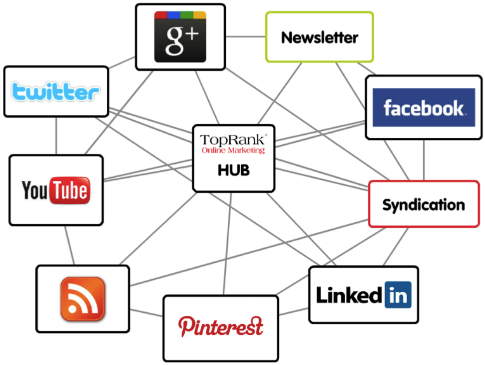
Think of a hub and spoke model for blog publishing where the blog is the hub and social networks are the spokes. Each spoke represents a community of interest, relevant to your blog’s key purpose. Be useful to the community through curation, sharing, interacting, and stimulating conversation and the community will reward you with attention, engagement and sharing.
The time to start an army is not on the first day of the war. With so many sources of information coming at digital citizens every minute they’re connected to the web, it can be a battle to stand out. Many business bloggers make the mistake of simply creating posts and then tweeting them out and expecting attention in return.
To see a return on your blog promotion effort, you must invest! Publishing interesting and useful content isn’t enough. Promotion is key. But promotion itself is useless unless there is an interested audience to receive. That’s why growing networks is so important for a blog that expects to be findable.
Network growth can be achieved at the start, by simply curating interesting news, interacting with others and sharing only the posts that are particularly promotable. Here are a few tips on making social network growth both efficient and effective:
Use a tool – Using a tool like HootSuite can enable a blogger so they can do some basic monitoring their social communities on Twitter, LinkedIn, Facebook and Google+. Saved search queries on Twitter within HootSuite will help monitor topics of relevance and even “buying signals” that can prompt interaction. You can also create lists on Twitter of the influentials in your industry and follow that list within HootSuite for interaction and promotion opportunities.
Track news to curate – Besides monitoring influentials on your social networks for choice for news to share, searching Google News and bookmarking the search results page can also be useful for finding recent and relevant content to curate.
Comment on other blogs and news sites – Find other topically relevant blogs and industry news sites that allow commenting and track them for opportunities to share your opinion. Just one of these comments a day can take about 5 minutes and if you add that up over time, it creates a very credible footprint. It can even turn into bloggers or journalists reaching out to you for comment.
Besides growing networks it’s also important to make the most out of the blog content itself for more effective blog promotion. Here are a few key questions to answer for each post, whether its planned in advance or a spontaneous reaction:
Why is it special? – Think about the one thing that makes the post special or most useful. This can be made into the meta description that appears in search results. The thing that makes a post special, can also be distilled into the post title, Tweets and other social messages.
Who would find it interesting? – Business blogs have a certain audience in mind and should be considered for the voice of the post and where it’s promoted. If you think your social connections that represent the topic of the post would be interested, reach out to them and share the post. Better yet, ask them for a tip and include it in the post.
What is the core message and promise? – Similar to the “special”, this is the syntax for the title. For example, rather than just “10 Blog Promotion Tips”, it will be more effective to say, “10 Blog Promotion Tips to Boost Traffic for Real Estate Blogs”. The revised title includes a classic formula for successful social sharing: Topic, Benefit and for Who. This is also where you should consider using keywords people might use on search engines.
There could be more than one message and more than one target audience for a post, so use it to your advantage and craft Topic, Benefit, Who messages for each. Those can be used for social sharing on different networks or multiple messages shared throughout the week.
What’s the takeaway for the reader? – This is your conclusion of the post. Hint at this in the opening, provide substance for it in the post and provide the takeaway in the conclusion.
Any special media (graphics, audio, video) elements? – If your post has a special image, or embeddable media like a presentation hosted on Slideshare or video from YouTube, then there are promotions opportunities based on those media on other social networks. When dealing with things like video and presentations, there are also many content repurposing opportunities. Images from an embedded presentation could be used on Pinterest or Flickr to attract traffic back to the blog post, for example.
Based on your answers to these questions, some better choices for promotion can be made and you’ll be able to scale the reach of your business blog without scaling the amount of time to achieve it. Every blogger has something valuable to say and there’s no reason that it should be a mystery to find such useful information and advice. Don’t make the mistake of expecting a return on blogging with no investment in promotion or network growth. The social web works on a give to get basis, so thing about what you can do to optimize your blogging effort and create value for the people you’re really trying to connect with.
For a lot of bloggers, just doing 2 or 3 of these things on a regular basis will improve the reach and findability of their blog content. Once a connection is made between promotion and an increase in visits, engagement and interactions, then confidence in an even more active effort will come. Mystery solved!
What blog promotion tips would you add?
Gain a competitive advantage by subscribing to the
TopRank® Online Marketing Newsletter.
© Online Marketing Blog, 2013. | Is Finding Your Business Blog a Mystery? 3 Tips for Blog Promotion & Findability | http://www.toprankblog.com
]]> http://www.toprankblog.com/2013/02/blog-promotion-findability/feed/ 10 http://www.toprankblog.com/2013/02/online-marketing-news-feb152013/ http://www.toprankblog.com/2013/02/online-marketing-news-feb152013/#comments Fri, 15 Feb 2013 11:00:06 +0000 Miranda Miller http://www.toprankblog.com/?p=14836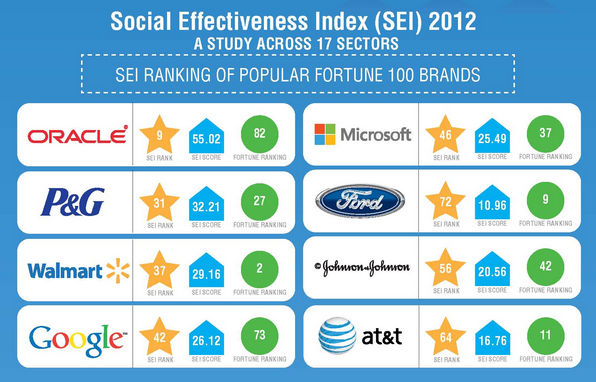
B2B Fortune 100 Companies Prove Effective in Social Media Marketing
Who ever said only B2C brands get to be popular on social networks? The two companies sitting atop the Social Effectiveness Index just happen to be B2B brands Honeywell International, an aerospace and defense contractor, and financial services company American International Group. MetLife, Aetna, Chevron and Walt Disney all made the top ten.
The presence and effectiveness of Fortune 100 brands were measured across five areas: share of voice, identification of influencers and advocates, engagement rate, touch rate and net sentiment. Goldman Sachs topped the list in the banking sector, while Kraft Foods takes the cake as the most effective Fortune 100 in the food & beverage social space. Researchers from Blue Ocean released their findings in the form of an infographic, as well as a report listing their methodology and the results for all 100 brands evaluated.
Content Marketing Overtakes Email as Top Channel Focus for Marketers: Survey
In 2012, email was the number one marketing channel priority for 25.8% of respondents to an industry survey. Social media came second, with 24.3%, while SEO and Content Marketing tied, each taking 18.9%.

2013 will be a year of radical change, if this study is to be believed. Researchers found that 34.8% of respondents plan to focus on Content Marketing in 2013, which beats second place Social Media (24.7%) by 10.1%. Email marketing was knocked from its throne and will only to be a focus for 10.4% of marketers. The survey was conducted by CopyPress, though their sample size of under 400 participants leaves much room for misinterpretation. While it’s not scientifically sound, the survey does reinforce the now almost universally accepted fact that content is here to stay.
Did Poland Spring Blow Its Big Close-Up?
With over 43 million views, the U.S. State of the Union address and the follow-up responses from political parties attracted a substantial audience. That exposure also included a cameo of Poland Spring inspiring the hashtag #watergate when Florida Senator Marco Rubio made an off camera reach for drink in the middle of his response to President Obama. The Twitterverse lit up in anticipation of what Poland Spring would do to capitalize on this opportunistic exposure. Not a single Tweet followed. This was a missed opportunity that companies like Oreo have recently taken full advantage of when it created clever ads after lights went out at the Super Bowl. TopRank CEO Lee Odden was quoted in articles on MediaPost and Econsultancy that social media monitoring to identify and respond to brand mentions is a cost of doing business and if companies do not listen to the social web, their competitors will.
83% of Advertisers Run Social Ads Alongside Display Campaigns
Social ads are an increasingly important facet of a balanced online marketing campaign, though ROI remains a concern, according to survey data released by Neilsen company Vizu. Marketers use social ads for branding more than other objective, with 45% indicating that was their goal. Just 16% of respondents said their social ads were direct response in nature.
About 83% of marketers surveyed choose to run social ads in tandem with their online display campaigns, while 46% use them as part of their video marketing strategy. Social ads are reportedly used with mobile by 40% of marketers. ”With paid social media advertising on the rise, it’s no surprise that marketers are beginning to look for true measures of return on investment to justify their investment,” said senior VP of product leadership for advertising effectiveness at Nielsen, Jeff Smith. “And with paid social ads increasingly part of integrated, branding-related campaigns, there is real demand for metrics that are consistent with what they’ve used for other media, such as brand lift and sales lift.”
Tweeting Will Become: Say What You Mean in 140 Characters, 1 Instagram Pic, 3 Video Clips or Less
Smart marketers better start familiarizing themselves with the latest social video craze, Vine. A tweet from Twitter CEO Dick Costolo seems to suggest the app is coming as a new feature to Twitter. Costolo tweeted “Steak tartare in six seconds” Wednesday, with an embedded vine demonstrating his tartare-making prowess. Vines are six-second videos consisting of up to three pieced-together video clips, which are then shared to Vine and can be shared to social channels. The app seemed so promising that Twitter scooped up the company before it had even launched.
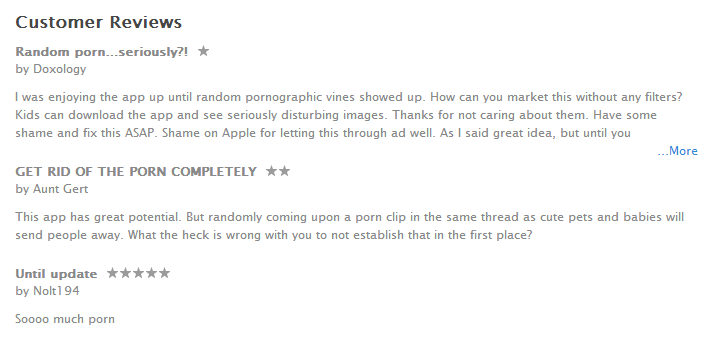
Reviewers pan Vine’s porn problem at iTunes
The already wildly popular iPhone app is getting some flack, however… it seems the social video collection is already chock full of porn. Just this week, Vine became an age-restricted app; users must be 17 years of age or older to create these gifs on steroids. Still, brands from Gap to MSNBC and Cinnamon Toast Crunch have all jumped on the Vine bandwagon and were featured last week for their micro-video creativity at BusinessInsider.
Online Marketing News Briefs from the TopRank Team
Mike Yanke: Media & Marketing Software Companies Make Up Nearly Half of America’s Ten Most Promising Companies
America’s Most Promising Companies, released by Forbes this month, finds itself heavily populated with software companies designed to help better manage / reduce the pain of online marketing tactics. From malware blocking software AnchorFree, to programmatic buying platform Rocket Fuel, several of the companies on this list will no doubt shape how customers and prospects alike consume online marketing material over the next several years. Special congratulations to 3Cinteractive, enterprise mobile solution provider, for topping this list. See the full list of America’s 100 Most Promising Companies by visiting Forbes.
Evan Prokop: Google Announces Update that May Help Webmasters Diagnose Dangerous Links
Following Google’s Penguin update, many webmasters were sent the dreaded “unnatural link warning”. For many, the next logical question was which links specifically were to blame for the warning? In a recent video in the popular Google Webmaster Help Series, Matt Cutts spoke about a new feature that will be rolling out soon, wherein link warning messages will be accompanied by 1-3 examples of negative links from the offending sites link profile.
Alexis Hall: Facebook Graph Search Review – How it Works
Facebook’s Graph Search is still in limited beta; users without access can sign up to the waiting list for notification when it becomes more publicly available. Facebook search has always shown search results contextualized to the user, but early adopters say the improved functionality with the graph may result in more meaningful searches for social media marketers. The emphasis will remain on building social community for business and individuals, according to Social Media Examiner, in order to increase the likelihood of showing up in relevant Facebook search results.
Gain a competitive advantage by subscribing to the
TopRank® Online Marketing Newsletter.
© Online Marketing Blog, 2013. | Online Marketing News: Fortune 100 Social B2B Brands, Vine Embeds Coming to Twitter? | http://www.toprankblog.com
]]> http://www.toprankblog.com/2013/02/online-marketing-news-feb152013/feed/ 5 http://www.toprankblog.com/2013/02/b2b-marketing-analytics/ http://www.toprankblog.com/2013/02/b2b-marketing-analytics/#comments Thu, 14 Feb 2013 11:00:52 +0000 Alexis Hall http://www.toprankblog.com/?p=14831 Valentines Day is a holiday that some people look forward to, while others dread it’s very existence. Let’s face it; no one likes to be alone on Valentine’s Day. Much like personal relationships, business relationships take effort. What are you doing this year to ensure you’re spending time with someone special and keeping your conversion funnel full?
 The typical B2B buying cycle is anywhere from 3 to 12 months. It can be challenging to maintain appropriate touch points throughout a longer sales cycle in a way that will encourage a potential customer to convert, rather than slipping out of the funnel.
Utilizing analytics is a great way for companies to gain insight into customer and prospect behavior and make adjustments to their marketing strategy based on that insight. However, a long sales cycle requires analytics be used beyond simply connecting purchase to channel and adjusting the marketing mix accordingly.
A long term relationship isn’t that different than the relationship between B2B companies and their current and potential customers. A great partner understands how to listen and compromise based on feedback, and so do great marketers.
If you are wondering how to better use analytics in a long sales cycle, read on for 6 ways B2B marketing analytics is like a long term relationship.
#1 Listen to Your Partner
Analytical data provides marketers with insight into current and potential customers habits across all stages of the buying cycle. If you haven’t already mapped your keywords do the following exercise:
- Run an export of all keyword queries (short and long tail), which have driven traffic to your site over the past 90 days.
- Map those keywords to stages in buying cycle.
For example, a user searching for a phrase like ‘online marketing’ or ‘get started with online marketing for small business’ is likely, very early in the buying cycle. If the user is searching ‘name of product + trouble shooting’, then they are likely in a post purchase phase.
Mining keywords from organic search and internal site search and mapping those keywords to the buying cycle is a great way to learn the pain points of customers and prospects.
#2 Give Them What They Want
If you want to maintain and grow a relationship, then give your partner what they want. So if customers are searching for ‘trouble shooting guide’, then create a troubleshooting guide and make it easy to find.
Mapping keywords to the buying cycle is only effective, if you then use the information from analytics to drive your content marketing strategy. Long tail queries are great material for blog posts, white papers and product guides.
#3 If It’s Working Keep Doing It
Once you have identified what tactics are working, continue to monitor and refine. To further refine your strategy you can also:
- Use analytics to determine what content on your site is receiving the most clicks, downloads and page views.
- Confirm you have Google Analytics tracking code on all PDFs and add event tracking code to on page interactions like internal banners, video plays and social sharing buttons.
- Use this information lead your content strategy.
Not only should your most successful content be given prime real estate on your home page or resource center, but it can also be utilized to drive offsite promotion efforts, like email campaigns.
#4 Don’t Give the Last Gesture All the Credit
Can you make a decision about marrying someone solely based on the proposal? Of course not! The wedding is 95% the culmination of all gestures leading up to the proposal, and maybe 5% based on how the proposal was executed.
Therefore, don’t attribute a website conversion just to the last click. Many analytics platforms track conversions back to only the source right before conversion. This may be problematic, especially in a long buying cycle.
In a 6 month time period, a prospect may initially gain awareness of your brand from a Facebook post shared by a friend, then check out your blog, download a white paper, receive an email, then finally search your brand name right before filling out a Demo Request form. In this scenario, conversion is attributed all to search, whereas Facebook was actually the prospect’s first click.
Focusing only on the last click can cause marketers to over or underestimate certain channels and allocated budgets. Some analytics platforms, such as Google Premium offer advanced attribution modeling which allows marketers to track the conversions more accurately through multiple touches, over longer periods of time.
#5 Small Things Make a Big Difference
In a relationship it’s the small, every day gestures that tend to mean the most.
For marketers, this means, don’t ignore the microconversions. Especially, when you are working with a long buying cycle, it is crucial for marketers to pay attention to all the microconversions which are happening on and off site. Like a white paper download, a Facebook comment, or a video view. All of these small conversions, leading up to the purchase or Demo Request, are meaningful interactions from your customers. Marketers should use analytics in order to monitor the channels driving those microconversions, as well as monitoring the microconversions to determine how they lead to the ultimate conversion.
#6 Sometimes You Have to Spend a Little Money
In the course of most long-term relationships, and possibly on Valentine’s Day, a little money is spent in order to let a person know you care.
For analytics, this means marketers may consider investing in a paid Analytics platform , such as Google Premium. This tool allows you to create customized attribution models taking into account time decay and position.
Measurement and analytics is a challenge that many B2B companies are faced with. Analytics is incredibly useful in terms of driving an effective content marketing strategy. However, it’s also potentially problematic when it comes to lead attribution.
Some of the best advice for utilizing analytics is to treat it like you are in it for the long haul. Use the data you have at your fingertips to improve your strategy, but realize that success can be attributed to the culmination of your efforts.
We want to hear from you! How have you been able to leverage analytics to manage a longer sales cycle? What techniques have worked, and which didn’t?
Image via Shutterstock.
Gain a competitive advantage by subscribing to the
TopRank® Online Marketing Newsletter.
© Online Marketing Blog, 2013. | How to Make Love Stay: 6 Ways B2B Marketing Analytics is Like A Relationship | http://www.toprankblog.com
]]> http://www.toprankblog.com/2013/02/b2b-marketing-analytics/feed/ 8 http://www.toprankblog.com/2013/02/where-does-evergreen-content-fit-in-your-company-blog-content-plan/ http://www.toprankblog.com/2013/02/where-does-evergreen-content-fit-in-your-company-blog-content-plan/#comments Wed, 13 Feb 2013 11:00:56 +0000 Miranda Miller http://www.toprankblog.com/?p=14826 B2B and B2C blogging have their individual intricacies, but a mix of content that addresses the needs of your audience is the core of a great blog plan for both types of businesses. Timely content that capitalizes on search and social trends is certainly helpful for attracting new eyes and expanding your reach. Evergreen content has its place too, and an important one at that.
 Both Lee Odden and Mike Yanke have touted the benefits of evergreen content here at Online Marketing Blog. Mike cites the SEO benefits of content that builds links and engages readers over a lengthy period of time. Compelling, engaging, original content satisfies visitors and search engines alike.
It’s also critical for creating marketable assets that convey your company’s key messages designed specifically to attract, engage and convert new business, says Lee. Businesses need to use evergreen content in concert with more timely pieces, creating a layer of information you can refer back to, repurpose, and otherwise use to build your digital footprint over time.
What is Evergreen Content?
I think we can all agree that evergreen content is good and that it should definitely be a part of our business content arsenal, particularly on a company blog. But what does it look like? What it is, exactly, that makes a piece of content evergreen?
Evergreen content has a number of universal characteristics, regardless of your niche or industry:
- It will remain relevant to your audience over a period of time.
- It answers a question, describes a process, offers a definition, or otherwise provides information your readers find valuable.
- It is original and of high quality.
- It is your definitive resource on a topic that might be revisited or referred to countless times in the future.
While creating an editorial plan for your blog (I know you have one!), use the tips below to ensure a portion of your content is purposeful, helpful, and likely to live on for years to come.
Tips to Make Your Content Evergreen:
Stop! See what I did there? I can’t assume that each person who reads this post will have read Lee’s previous post, Core Content SEO Tools: Keyword Glossary and Editorial Plan. I can’t properly explain what an editorial plan is, or how to create one, in this post if I’m to deliver on what I promised you to this point. Yet each month, about 4,400 people search Google for “editorial plan.” I linked to his evergreen editorial planning resource to offer assistance to those looking for more information on the topic.
Now, for those tips:
- Remove any timely elements from your post. There is a time to refer to a recent study, share news, or tie your post to a trending topic, but this isn’t it; this can quickly make it appear outdated.
- Invest time in making it awesome. If you really want a piece of content to be a source you’ll refer your readers back to for the foreseeable future, don’t do it halfway.
- Incorporate multimedia elements like photos from Flickr, SlideShare presentations or videos embedded from YouTube. Images and video can be helpful in explaining concepts and add visual interest. Plus, each is searchable in its own right and when linked, can lead visitors from those properties to the helpful resources on your blog.
- Optimize each piece for search engine discovery and social sharing. This is best practice for any type of content, but especially important to keep it living after the initial buzz of a newly published piece dies down.
How Does Evergreen Content Fit Into Your Content Plan?
Now that you know what it is and how to create it, when should you use evergreen content?
Make a concerted effort to work it into your content plan; there’s no optimal percentage or density I can recommend. In a lot of cases, your audience will tell you – perhaps not in so many words – where they would like more information or advice. This is where your web analytics, social listening and competitive research all come into play, to inform opportunities to create resources that answer a specific need.
Get creative and try a few of the following:
- Create topic pages that introduce a narrow, specific idea and curate your best content, with a description and link to each. For example, a fashion blog could create one post on “Fit” and link to their ten best resources on properly fitting and tailoring clothing.
- Make a How-To post that compiles posts you’ve written on each step of a process and guides new readers through from start to finish.
- Define terms and concepts in one post that links to your lengthier posts on each one.
- Make a timeline of industry events.
- Share a compilation of statistics or factoids for a period of time, ie.: a specific month or year. These can be evergreen if you offer information from a variety of sources, making your post a valuable resource to refer back to in its own right.
Even Evergreen Content Needs Upkeep
Revisit your evergreen posts monthly or bi-monthly to refresh your content and add updated information. Remember to link back to these posts wherever relevant so they aren’t sitting dormant in the underbelly of your blog for all eternity.
The process of maintaining evergreen content is far simpler if you plan for it. Set calendar alerts for future dates to check in on specific post topics, or add each post as you write it to a list you’ll access again in a year’s time.
Build out your arsenal of evergreen content to keep the pageviews, social shares and leads coming. How important is evergreen content in your company blog strategy? Share your thoughts in the comments!
Image courtesy of Stock.Xchng
Gain a competitive advantage by subscribing to the
TopRank® Online Marketing Newsletter.
© Online Marketing Blog, 2013. | Where Does Evergreen Content Fit in Your Company Blog Content Plan? | http://www.toprankblog.com
]]> http://www.toprankblog.com/2013/02/where-does-evergreen-content-fit-in-your-company-blog-content-plan/feed/ 7 http://www.toprankblog.com/2013/02/email-marketing-for-customers/ http://www.toprankblog.com/2013/02/email-marketing-for-customers/#comments Tue, 12 Feb 2013 11:00:42 +0000 Ashley Zeckman http://www.toprankblog.com/?p=14824 Striking down opponents with your ninja online marketing skills can provide a sense of satisfaction that many marketers crave. However, there is danger in focusing all of your efforts on the front end of the customer buying cycle.
 Do you know how much it costs to acquire new customers versus retaining those that have already signed with you? According to a recent study it costs roughly six to seven times more to gain a new customer, than to keep an existing one. Email marketing is one of the many ways that we can communicate with customers on an ongoing basis. If you’re tired of the same old ninja stars and nunchuks, I’ve uncovered 5 email marketing tips to add to your arsenal.
A True Ninja Understands Engagement-RFM
According to Econsultancy, Engagement-RFM is a combination of behavioral data, and RFM (Recency, Frequency, Monetary value). Understanding how to craft the appropriate email touch points is key in communicating with your customers on an ongoing basis. The chart below details some of the different cycles within the customer lifetime that can provide guidance in creating email communication.

Well-Trained Ninjas Start the Relationship Off Right
Welcoming new customers into the fold is a fantastic way to set an expectation early on that you will be communicating with them on an ongoing basis. For example, anytime you take on a new customer it would be wise to send them a welcome email. This email could include:
- Key contacts within the organization
- Showing appreciation for the fact that they selected your services over the competition
- Links to helpful resources
- A heads up that your team will be sending emails on an ongoing basis and ask if they would like to sign up.
Different Targets Require Alternate Weapons
You may work with customers in a vast variety of industries, or a smaller group of defined markets. Either way it is essential that you know what makes different customers tick. Say you have a segment of customers within the healthcare industry. It would make sense to flavor your email content in a way that speaks to their unique set of pain points or needs. Alternately, retail customers should receive a different communication.
If you’re sending a monthly newsletter with interesting stories and news, it’s okay to send it to all of your customers. However, it is very important that you also send some email communication that takes into consideration what different customers may have an interest in learning more about. Also, it shows that you’ve taken the time and have an interest in providing assistance in a customized way.
Knowing the Perfect Time To Strike
If ninjas chose the middle of the day in an exposed area to strike, they would not be very successful. Similarly, knowing when and how to bring up particular opportunities with your customers is key. If you’re trying to upsell a customer with additional products or services, you should be aware of what else they may have going on that could affect purchasing decisions.
Sending a direct email communication will always be more effective, but that doesn’t mean that you can’t send an email to all of your customers sharing case studies on success you’ve had with particular programs, or new services or products that you’re rolling out that they might find of interest.
Important Contacts Shall Be Made Aware of the Mission
Most people like to feel that they knew something before the rest of the world. Utilizing email communication to share exciting news or even ask for insight from your customers can accomplish a few things:
- You’ve included your customers as part of the process
- It’s clear that you care about their input
- As a loyal customer, you’ve given them premier access to information noone else has.
Whether you’re an email marketing ninja in training, or training ninjas of your own, connecting with your current customers is key in keeping them happy. A consistent flow of email communication as part of a larger integrated online marketing strategy will strengthen loyalty, retain business, and can even lead to your customers advocating on behalf of your brand.
What type of email communication have you found works best with your customers and what feedback have they shared with you?
Image provided via Shutterstock.
Gain a competitive advantage by subscribing to the
TopRank® Online Marketing Newsletter.
© Online Marketing Blog, 2013. | The Warrior Way: How to Improve Email Marketing Engagement, Ninja Style | http://www.toprankblog.com
]]> http://www.toprankblog.com/2013/02/email-marketing-for-customers/feed/ 7 http://www.toprankblog.com/2013/02/blogging-expression-community/ http://www.toprankblog.com/2013/02/blogging-expression-community/#comments Mon, 11 Feb 2013 11:45:38 +0000 Lee Odden http://www.toprankblog.com/?p=14820 Within the blogging community there’s a substantial number of bloggers that are independent business people and even more that run a personal blog. With the rise and fall and rise again of blogging as an online communications channel there are the expected debates about best practices and such.
 One of the debates is around writing content as a stream of consciousness with the assumption that it will attract the audience that it deserves, causing it to be shared and exposed to even more readers.
Then there are the opportunists that seek to scale the reach of their content though blogging by creating processes for generating topics, keyword optimization and social sharing schemes to blast the content everywhere the internet’s sun doesn’t shine.
As extremes these are opposing views where one is focused on earned attention due to quality and another is focused on maximum attention due to quantity. The tricky part is that they both have merit but not until a very important distinction is made:
Blogging for personal expression is not the same thing as blogging for a business.
Blogging as a form of personal expression vs. blogging to meet the needs of a particular audience you want to do business with are different things.
Personal expression and creativity are awesome. If your form of creative expression results in something that also happens to resonate with your readers and internet audiences at large, it’s very gratifying. It’s also a crapshoot in terms of achieving results.
On the other hand, when a business, small or large, invests time in creating content, there’s an expectation that it will result in a return of some kind. Few companies have unlimited budget and time to figure out what that return is, so they reconcile the difference between business goals and the information needs of the audience they’re trying to connect with.
In tandem with who you’re writing for is the notion of frequency, a topic of last night’s #blogchat hosted by Mack Collier. “Should we should strive to blog consistently, or only when we have something epic”. Epic or meaningful, it makes sense to write when you feel inspired. But for business blogs there has to be some accountability. Epic can mean an overwhelmingly practical and useful post or the “War and Peace” of your industry.
Based on 9 years of business blogging, I answer such questions through layers in the editorial plan. Some topics deserve to be epic and others more routine. There’s an audience for both. There’s satisfaction in creating both.
Tools and processes like a content marketing strategy, editorial plan, researched topics and keywords that are in demand by a target audience can all help move the business blog’s chances of getting a return on effort from crapshoot to a solid investment. And it can do so without compromising content quality.
The flip side is when opportunists take those processes and pervert them mechanically, then the spew of auto generated, keyword curated nonsense in the name of content marketing and SEO puts a nasty mark on two very legitimate marketing disciplines. All because of how the tools are used.
Tools are only as good as the expertise of the person using them.
Recently, I read a post on Social Media Explorer about the need for creativity with business content. With that premise, I can’t agree more. Companies that master the blocking and tackling of content creation will never rise above to their potential without tapping into the creative inspiration that exists within their subject matter experts and content producers.
At the same time, there is a very important role with the aforementioned tools in order to scale those creative efforts. I’ve been using and recommending these types of tools for many years. That’s why the following part of the post caught my attention and inspired me to comment on both the post and to write this one:
“Put the editorial calendar on hold and focus instead on developing pure ideas. Set the list of key words aside and face an empty page (and) without it the crutch.”
That is just one part of the post, but my experience with using such tools has been very different. Here’s my reply:
“Really? I’ve been using an editorial calendar with keywords and topics as a guide for 5+ years. We have one of the most popular marketing blogs on the web. Traffic, inquiries and awareness of our business have never been higher. Our posts get hundreds and sometimes thousands of social shares and anywhere from 4,000-8,000 visits per day. We’ve had a 6 year engagement with a $100bn company because of that content. We helped launch a new social community with one of the world’s largest computer manufacturers because of that content.
If someone is ineffective at using tools like an editorial calendar, search phrases and social topics, does that mean those tactics stand in the way of creative inspiration?
Content planning that considers the information needs of the audience you’re after that will ultimately buy you, your products and services deserves guidelines. There’s plenty of room for creative execution, just as there’s room for content planning to be accountable for business outcomes. It’s not enough to dance like no one’s looking to be competitive.
Could businesses stand to be more creative and free with the content they produce? Of course. But I’ll take creative + performance over creative + personal expression every time.
So, my question to you is, are you blogging for personal expression or do you consider the audience you’re writing for? Do you use any tools to manage and optimize your writing and blog post promotion efforts to reach those readers?
Photo via Shutterstock
Gain a competitive advantage by subscribing to the
TopRank® Online Marketing Newsletter.
© Online Marketing Blog, 2013. | Blogging For Business or Pleasure? Personal Expression vs. Creating Value for Your Community | http://www.toprankblog.com
]]> http://www.toprankblog.com/2013/02/blogging-expression-community/feed/ 11 http://www.toprankblog.com/2013/02/online-marketing-news-feb082013/ http://www.toprankblog.com/2013/02/online-marketing-news-feb082013/#comments Fri, 08 Feb 2013 11:00:09 +0000 Miranda Miller http://www.toprankblog.com/?p=14807
Brands on Facebook More Socially Devoted Than Ever
In order to be successful on social media channels, regardless of your industry, marketers must be socially devoted, say researchers at SocialBakers.com. Their latest Socially Devoted report and corresponding infographic shows that brands on Facebook have made great strides in both speed and volume when responding to fan interactions with their Company Page.
Among their Q4 2012 findings, SocialBakers reports:
- The average brand response time on Facebook is now 13.7 hours, compared to 20.9 hours in Q2 2012.
- Brands answer 55% of questions posed to them on Facebook; in the second quarter of 2012, only 30% were answered.
- Airlines, finance and telecom remain the three most responsive industries, though their positions have shifted since Q2 2012.
- The volume of questions posted to Facebook has increased by 26% from Q2 to Q4 2012.
“In the last year, there has been a shift away from brands simply seeking to collect the highest number of fans. What is important is how you interact and how you serve them,” said Jan Rezab, CEO of SocialBakers.com. Social devotion is measured using a number of factors, including how the Facebook page is set up, whether brands respond to fan questions at least 65% of the time, and the rate of response time.
While Brands Become More Devoted, Are Facebook Fans Turning Away?
On the heels of the Social Devotion study, Pew Internet finds that fully 61% of Facebook users say at some point, they’ve taken a voluntary break from using Facebook for several weeks or more.
Of those who took a self-imposed Face-cation, 21% cited other demands on their time, or simply a lack of time for Facebook, as the reason. Other top reasons were a lack of interest in the site itself, a feeling that it was a waste of time or the content was not relevant, and too much drama, gossip, negativity or conflict. Just 4% reported they’d taken a break due to concerns about privacy, spam, or advertising.
While breaks from Facebook may seem an interesting trend, the effect on brands should be negligible. Facebook’s latest earnings report shows a 25% increase in monthly active users and 28% more daily active users, compared to the same period in 2011.
Quick-Thinking Marketers Capitalize on Super Bowl Blackout with Clever Tweets
 In the moments following the power outage heard round the Twittersphere and in just about every American single living room, a few brand marketers hit out of the park home runs simply by seizing the moment.
Oreo earned over 10,000 retweets in the hour after they blasted an image that took just minutes to make out to their Twitter following. “Power out? No problem,” the tweet read, accompanied by an image that read, “You can still dunk in the dark.” In total, the tweet garnered over 15,000 retweets and 5,000 favorites. Oreo execs and members of their agency were together in a social media warroom of sorts and made the decision in minutes, according to Ad Age.
Tide also proved quick on their feet; they capitalized on the popularity of the #blackout hashtag with this tweet:
“We can’t get your #blackout, but we can get your stains out. #SuperBowl #TidePower”
Tide’s tweet was also accompanied by a quickly mocked up, branded image.
Retailer Walgreen’s took the opportunity to “We do sell candles. #SuperBowl,” followed shortly after by, “…we also sell lights. #Superbowl.” Each received thousands of retweets.
Considering the millions spent on producing and airing ads on Super Bowl Sunday, these brands made out like bandits by keeping one eye on the game and the other attentively manning their Twitter accounts.
Over 80% of Super Bowl TV Ads Had an Online Call to Action
Tracking the 53 commercials from kick-off to the final play, Search Engine Land‘s Vanessa Fox found that over 80% had an online CTA. Interestingly, those commercials released as teasers online ahead of the game most often used their Facebook URL as the call to action, while commercials aired on TV were more apt to direct viewers to the Twitter account or a hashtag.
“In some ways, this seems like a great strategy, as hashtags work best as a moment in time discussion, and Facebook is better at comments left over time,” Fox wrote. Still, eight Super Bowl commercials had no call to action at all. No official word yet on whether no CTA at all or asking people to Shazam your commercial (as Jack in the Box did) resulted in a greater ROI.
NASA Offers No-Expenses Paid Trip to Washington for Social Networking with Astronauts in Space
Wednesday, February 20th, NASA will host 150 of their social media followers and their guests at their Washington Headquarters. The group will spend the first half of the day communicating via social media with three astronauts aboard the International Space Station. Kevin Ford, Tom Marshburn and Chris Hadfield will chat live with participants from 240 miles above Earth.

One caveat: though entry to the contest is open to citizens worldwide, NASA is not offering assistance with travel or accommodations. However, they explain in the FAQs about the event, “If you cannot come to NASA Headquarters to attend in person, you do not need to register for the NASA Social. However, you can still plan to follow along with the event on Twitter via the hashtag #NASASocial.”
We can only hope that after perfecting communications between Earth and the space station, NASA will get to work on furthering their understanding of Google Hangouts, where the trip to Washington wouldn’t have been an obstacle for fans!
Best Super Bowl Commercial in the History of Ever: The Clydesdales “Brotherhood”
It’s official, 9 out of 10 people who recommend things recommend Budweiser’s latest Clydesdale commercial for the completely unscientific and quite possibly imaginary Best Commercial in the History of Ever award I might have just made up.
I’m quite sure there are still a few people left on the planet who haven’t seen “Brotherhood,” since it only has 10 million views in the six days since it was posted pre-game. The CTA at the end of the video asks viewers to participate in naming the baby Clydesdale featured in the beginning of the commercial, who was just days old during filming. Without further ado, enjoy!
Online Marketing News Briefs from the TopRank Team
Mike Yanke: Can We Please Just Kill PageRank Already?
In answering a question regarding the importance of PageRank, a tool that has been long removed from Google Webmaster Tools and had its importance downplayed for years, Google’s Matt Cutts provided a rather ironic response. In this video posted by Search Engine Land, Cutts indicated that some in the industry suffer from ‘tunnel vision’ regarding PageRank, assuming that it’s been completely abandoned by web searchers. In fact, he continues, several web searchers still use this tool to evaluate the authority of a website they are visiting.
Is this true, Yanke asks? Or is Cutts suffering from an alternate form of tunnel vision, assuming searchers are still using PageRank, as a reason to keep an ego-tool alive? A rather serious question now – will anyone out there admit to using PageRank?
Lee Odden: Content is Top Marketing Priority for 2013
Content marketing has surpassed social media, CRO, targeting and personalization and other strategies as the top priority for marketers in 2013, according to Adobe and Econsultancy. Content marketing was named by 39% of marketers surveyed as their highest priority for the upcoming year, with social media analytics dropping from 19% to 9%.
Social media engagement, however, still tops the list for 38% of marketers, who admittedly aren’t as excited about it as they once were. In 2012, 54% identified social media engagement as the most exciting digital opportunity, which fell to just 35% for the coming year.
Ashley Zeckman: Yahoo & Google Enter Contextual Ad Deal
Within hours of signing a new global yet non-exclusive contextual ad deal with Google, Yahoo’s stock rose more than 1.5%. Contextual advertising ensures ad content is in direct correlation to the content on the web page. This alliance is likely to help boost Yahoo’s search revenues, provide Google with additional ad space, and allow website owners housing these ads to keep roughly 68% of the revenue generated, according to a Yahoo Finance report.
Brian Larson: Google Acquires eCommerce Firm Channel Intelligence (CI)
In an acquisition deal that almost makes too much sense, Google has acquired eCommerce solution leader, CI. Google’s mission (don’t roll your eyes) is to provide visitors with a quality search experience. CI’s mission is to make it easier to users to “find and buy products”. See where this is going? Learn more about the details of this acquisition at Search Engine Watch.
Gain a competitive advantage by subscribing to the
TopRank® Online Marketing Newsletter.
© Online Marketing Blog, 2013. | Online Marketing News: Facebook Brands Respond Faster, NASA Gets Social, Social Media Marketers Win Super Bowl | http://www.toprankblog.com
]]> http://www.toprankblog.com/2013/02/online-marketing-news-feb082013/feed/ 2 http://www.toprankblog.com/2013/02/creative-content-marketing/ http://www.toprankblog.com/2013/02/creative-content-marketing/#comments Thu, 07 Feb 2013 15:24:42 +0000 Lee Odden http://www.toprankblog.com/?p=14533 In just a few weeks, I’ll be making the pilgrimage to London where I will be speaking at the SES London conference about integrated marketing and content, two very hot topics right now.
 As the internet marketing industry evolves with innovations in platform technologies and consumer behaviors changing right along, marketers and brands are trying their best to keep up. This is as true in London as it is here in Minneapolis or New York or San Francisco.
Top of mind these days is “content marketing” and a study from Econsultancy and Adobe reports that content marketing is a top digital marketing priority in 2013 for companies worldwide. Another study conducted by Econsultancy & Responsys shows that UK companies are budgeting accordingly with 99% stating they will increase or maintain their content marketing investments in 2013.
Along with a spike in desire to capitalise on such trends, I think a lot of marketers are finding that beyond the hype and into implementation, there are challenges with the almighty content marketing religion.
One of the most pressing is the ability to create content on a continuous basis. Even so, there are numerous solutions and advice for that, as numerous as the ubiquitous red phone booths and double decker busses in London. There’s a pressing realization that as companies mature in the content marketing field, they’ll find that the need to stand out has even deeper challenges.
Sustaining any kind of content over a long period of time involves strategy and inspiration, but it’s mostly mechanical. It can be tough, but not impossible. I’ve been doing it myself for over 9 years. However, sustaining meaningful content over a long period of time is another thing entirely and that is where the talent pulls away from the pack. Creativity, innovation, customer focus, platform and analytics savvy, ability to use data for creative insight and the ability to simultaneously grow networks and amplify content to those networks are all essential skills to stand out.
With the SEO industry now chasing content marketing expertise like a pack of wolves after a piece of meat, digital marketers are going to need all the advantages they can get.
In the U.K. there are a few agencies that stand out to me in when it comes to a blend of creativity, tech savvy and ability to amplify: Zazzle Media and Velocity Partners. Both are “walk the talk” content marketing consultancies that serve as aspirational examples for the many, many other UK based digital marketing agencies getting into the content marketing game. Velocity’s work with the Salesforce Social Success site which is a hub of useful content using a variety of media types is particularly good.
A few other UK focused creative content examples include:
Innocent: January campaign. Shared by Luke Brynley-Jones Founder & CEO of Our Social Times.

Innocent has a very active social presence (plus a sense of humor) and appears to appreciate both a variety of content types and enabling interactions with that content on Facebook (Fruit Picker Game), Pinterest and others.
T-Mobile: Life’s for Sharing campaign. Shared by Omar Kattan, Chief Strategy Officer Sandstorm Digital.
The video above is from several years ago, but this campaign is a classic when it comes to examples of creative content marketing.
Of course I think the UK Online Marketing Influencers and Bloggers list we did with Traackr was fairly creative as a c0-created content object, especially since we’re not done with the content part yet. I’ll be sharing details of how we went about that project from planning to implementation to continued repurposing.

There are many other examples of course, (including these case studies from the CMA) and in my presentation at SES London I’ll be sharing many more examples, digging into what worked, what didn’t and opportunities to be even more effective. I’ll be addressing the importance of how to be smarter and more efficient about creativity with content marketing as well as being focused on inspired action that leads to business results (not just winning creative awards).
Here are the full session details. I hope to see you there.

Creative Content Marketing – Winning the Hearts, Minds and Wallets of Today’s Distracted Consumer
Tuesday, February 19th, 2013
11:45am – 12:45pm
(details)
Investments in content marketing are on the rise, but few companies have fully realised what the best practices are for creating high quality content over a long period of time. Developing ideas for effective marketing can be a challenge and this session will help delegates to:
- Develop a framework for creative and efficient content creation
- Find resources and ideas where others cannot
- Leverage a mix of evergreen, repurposed, curated and co-created content for better marketing results
- Apply SEO and social media optimization principles to amplify content reach and engagement
Here’s where you can get more info about SES London and the schedule of extremely useful sessions and speaking topics.
What are some of the more creative content marketing efforts that you’ve seen from B2B or B2C companies? In the UK? In Europe? Elsewhere in the world?
Gain a competitive advantage by subscribing to the
TopRank® Online Marketing Newsletter.
© Online Marketing Blog, 2013. | Creative Content Marketing in the UK – Winning Hearts, Minds & Wallets | http://www.toprankblog.com
]]> http://www.toprankblog.com/2013/02/creative-content-marketing/feed/ 5 http://www.toprankblog.com/2013/02/online-pr-pitching-etiquette/ http://www.toprankblog.com/2013/02/online-pr-pitching-etiquette/#comments Wed, 06 Feb 2013 11:00:56 +0000 Miranda Miller http://www.toprankblog.com/?p=14796 Over the course of my online marketing career, I’ve had the opportunity to participate on both sides of the online PR outreach process, pitching publications on behalf of clients as well as receiving them as a search and social industry journalist. In the course of performing outreach for clients and receiving hundreds of pitches from other PR professionals and in-house marketers, a few important rules became crystal clear.
 Companies use online PR in a number of different ways, depending on the desired outcome. You might pitch mainstream media to offer a company executive up as an expert source on a breaking news story, in order to build your company’s credibility. Where the goal is to earn links back to your website, you may offer guest posts or interviews to industry bloggers or digital magazines. Your focus might be increased exposure in your target market, in order to increase sales of a certain product or service.
Practicing good etiquette in your outreach efforts doesn’t ensure placement in news publications or links from sources that could help your business. However, failing to follow these rules will almost certainly result in your pitch landing in the virtual Trash can.
1. Don’t Ask for Anything in a First Pitch You Wouldn’t Request the First Time Meeting a Stranger
 All but the smallest of industry blogs, magazines, newsletters and other publishers get dozens or even hundreds of PR pitches a week. It’s more important than ever to establish a relationship before that first pitch, in order to go in warm and increase the chances your request will even be read.
Thankfully, this is also easier than it’s ever been. Journalists, bloggers, thought leaders and other influencers usually have social media accounts you can use to connect in advance of a pitch. This advice can be taken too far; using a churn and burn approach to relationship building quickly becomes obvious. You don’t want to be “That Guy” who is everyone’s buddy for about 5 minutes, before he asks for a product review and disappears, never to be heard from again.
Take the time to build a relationship with the people you’d like to interview with or write for – it just makes sense. Think about it: if they’re so influential in your industry (or in media in general) that you would like them to publish something about your company, why on earth wouldn’t you want to have that person in your social circle, to learn from, converse with and possibly influence yourself?
2. Do the Legwork to Ensure Your Pitch is a Good Match for the Publication
Pitching a publication with an offer to write a guest post about the different ways Product Type XYZ is used in the home is useless if they just published a post about it last week. Bloggers and other online publishers also typically have editorial guidelines and a certain style or voice to which writers must adhere. They’ll share that information with you if your pitch is selected, but you can capture their attention by showing a deep understanding of their publication in their pitch.
Try one of these tactics to stand out in the pitch pile:
- Reference a previously published piece of content and explain how your concept builds on it, ie.: “Your October post on buttercream frosting application techniques was very helpful. My post on tools to use in this process ties nicely into that and will provide a link back to your article.”
- Show your understanding of their audience and style, ie.: “We’ve enjoyed sharing your how-to posts internally; our staff find your direct, step-by-step approach easy to follow. In an interview, you will find I offer the same type of logical process for completing XYZ project in order to give readers everything they need to do it right, start to finish.”
- Recommend an author, columnist or interviewer for your piece, ie.: “I’ve read many of Ashley Zeckman’s articles and felt she might be a great fit to discuss our perspective on the recent changes in the industry.”
The idea is to familiarize yourself with their work, then convey that knowledge in your pitch.
3. Come Armed with a Unique, Original Idea
 Every time Google updates their algorithm, search journalists industry-wide pull their hair out over these pitches:
“Hi Miranda, you might have heard the news about Google’s recent algorithm update. So-and-So, CEO of XYZ Company, is available to discuss what this means for marketers in an interview at your convenience. Our company has millions of clients and makes billions of dollars and we’re so awesome I can’t even believe it myself [insert more corporate PR hot air here]; when can I pencil you in?”
What is it, exactly, that you have to offer that the publication can’t find elsewhere? Have you done an original study, or seen a trend across a number of clients that might interest readers? This is what the person you are pitching wants to hear.
A direct pitch is not the place to insert the same promotional blurb you append to your press release. Ideally, you have already established a relationship with the person you are pitching and therefore need to focus on your unique value proposition. Regurgitating your Company Overview is an annoying waste of space that earns you an instant ticket to the Trash can.
The Elements of a Great Online Public Relations Pitch
Once you’ve established and nurtured relationships with the people and publications potentially open to including you as a guest blogger, expert source, featured company/product or otherwise, make sure your pitch has the following elements to stand out amongst the inbox noise:
- A clear, descriptive Subject Line – whether via email, social messaging or otherwise, make use of that first opportunity to catch the reader’s eye and attention.
- An introduction that states your unique value proposition upfront. Ideally, this one or two sentence intro will tell the reader who you are, why you’re a valuable source of information specific to their audience and what you bring to the table for this specific piece of content.
- A clear description of your idea, insight or information offering. In the main body of the pitch, show the reader you have thought this out and ready to go. This isn’t the place to hold your cards close to your chest or be vague.
- Links to a few items that may help the journalist/blogger choose you as a source over another candidate. This might include a popular social media account, an article on another (non-competitive and preferably high caliber) publication in which you were featured or a video of a speaking engagement on a related topic, for example.
- Access to your original research or any other material to which you refer in your pitch. There is nothing more annoying than a company offering a journalist an interview based on a report they have to access via an online signup form. Just send the document; they don’t want to be on your mailing list.
- Any timeline restrictions, if applicable. For example, if you are offering an interview on an embargoed report that will release in two days, let the person you are pitching know of any exclusivity they can have as well as the time constraint.
- The best contact information to arrange an interview, guest post or other publicity opportunity. Amazingly, many companies release news yet are not willing to be interviewed to discuss it. Making someone available for a 15 minute phone call may give the person you are pitching the exclusive content element that influences their decision to take you on.
What has been your biggest challenge in pitching bloggers, journalists or other media? Share your stories and any tips for other readers in the comments!
Gain a competitive advantage by subscribing to the
TopRank® Online Marketing Newsletter.
© Online Marketing Blog, 2013. | Digital PR Pitching Etiquette: 3 Critical Rules for Online Public Relations Outreach | http://www.toprankblog.com
]]> http://www.toprankblog.com/2013/02/online-pr-pitching-etiquette/feed/ 16 http://www.toprankblog.com/2013/02/facebook-for-business/ http://www.toprankblog.com/2013/02/facebook-for-business/#comments Tue, 05 Feb 2013 11:00:09 +0000 Ashley Zeckman http://www.toprankblog.com/?p=14802 Social media marketing for business has become a necessity, not an option. However, with quickly evolving social graph algorithms, applications, and platforms it can be hard to keep up. An essential part of marketing any product or solution is ensuring that you reach as many of your prospects and customers as possible.
 In recent months Facebook has made several changes which affects which of your fans see specific content that you post.
According to Mari Smith (one of our favorite Facebook marketing gurus), “The way Facebook’s Edgerank algorithm works is that each piece of content – whether posted via a personal profile or fan page – passes through a three-part filter and has a different score for each user or fan. In other words, we all see content from fan pages differently.” So when every post counts, what can you do to better attract and engage your Facebook fans?
Multiple Content Types Keep Fans Interested
Take a moment and think of some of your favorite B2B or B2C marketing campaigns. It’s likely that a single campaign had many different elements like perhaps an online contest, infographic, email campaign, the list of options goes on and on. Ask yourself, if the entire marketing campaign had consisted of just one tactic (example: online contests) would it have held your interest?
Facebook offers a variety of different ways to share content with your fans. Some of my favorites are:
- Personalized graphics
- Asking a thought provoking question
- Videos
- Sending fans to a helpful tips or news article
- Using Facebook Timeline to tell your story (Ford Motor Company does a fantastic job of using this feature)
In addition to the different content types above, many companies also utilize custom applications to truly create an experience for their fans. Also, we should always remember that B2B’s are people too so make sure you offer a variety of content types no matter if you are a B2C or B2B company.
Know How To Increase Your Odds
In order to successfully navigate Facebook’s quickly changing landscape you need to understand how users interact with your page and how feeds work. TechCrunch recently released an article that provides some very insightful information into determining if your posts will show up in your fans news feeds:
- Create “likeable” Content: The more your fans “like” content on your page, the more often your posts will show up in their feed.
- Other’s Reactions Matter: If your post shows up in some users feeds but is ignored or marked as spam, your post is less likely to be shown to more people.
- Content Types Are Important: If a particular user has a tendency to like videos or photos posted by your page, then they are more likely to be shown that type of content on a regular basis.
Facebook Graph Search Is Your Friend
Facebook’s new Graph Search is changing the way that business will connect with customers, and be found by new fans. Facebook Page best practices include creating a complete profile and making sure your information is up to date but additionally you’ll find that Graph Search has optimization opportunities including:
- About Section: Your name, category, vanity URL, and additional information is all searchable and will help people find your business.
- Geo Information: If you have a location or place page, adding your address will ensure you appear in results when users are searching for a specific location.
According to a recent article from Search Engine Watch, the new Graph Search algorithm will offer Facebook users results based on items such as:
- Connections
- Likes
- Check-Ins
- Place Type
- Category
- Name
- Location
- All other information collected about your business
Third Party Tools That Are Worth Checking Out
Many business page admins struggle with understanding the actual exposure of content shared on Facebook. One tool that can help admins gain insight into what works and what doesn’t is EdgeRank Checker. Offering both a paid and free version, EdgeRank Checker gives marketers a deeper understanding of the inter-workings of their page so that they can make smarter and more engaging decisions on Facebook. Mari Smith has also recommended that marketers take a look at the following tools:
- PageLever.com – dedicated to Facebook analytics
- CrowdBooster.com – in-depth Facebook and Twitter analysis
- ZuumSocial.com – weekly PDF reporting that is easy to read and understand
- SocialBakers.com – offers Facebook, Twitter, LinkedIn, Google+, and YouTube analytics
- TwentyFeet.com – analytics for most social networks and is also very inexpensive and fun to use
- FanGager.com – includes a free Insights report, plus users can add gamification to your fan pages
Staying up to date on Facebook’s latest updates and additions are just part running a truly successful Facebook marketing campaign.
Have you noticed that particular content types seem to resonate best with your audience? Which of the tools above (or not mentioned) have you used to help monitor your Facebook marketing campaigns? Have you seen a noticeable difference since deploying social analytics for you Facebook business page?
Image via Shutterstock.
Gain a competitive advantage by subscribing to the
TopRank® Online Marketing Newsletter.
© Online Marketing Blog, 2013. | How to Optimize Facebook Content For Business: Variety, Engagement & Tools | http://www.toprankblog.com
]]> http://www.toprankblog.com/2013/02/facebook-for-business/feed/ 12 http://www.toprankblog.com/2013/02/grow-personal-brand-online/ http://www.toprankblog.com/2013/02/grow-personal-brand-online/#comments Mon, 04 Feb 2013 13:08:12 +0000 Lee Odden http://www.toprankblog.com/?p=14793
Mari Smith exemplifies personal brand through social content
Building personal brand online is easier than ever. It’s also underrated and misunderstood by many companies trying make sense of where personal and brand social media engagement fit in the marketing and communications mix.
For myself, blogging, speaking and becoming an author have been less about becoming a “brandividual” than to serve as a proxy to the consulting that TopRank Online Marketing offers. This approach has served us well, resulting in creating awareness internationally and keeping customer acquisition costs extremely low.
Alternatively, many companies focus solely on brand promotion without any real people behind those social media interactions. This generic brand approach often finds social content efforts lacking. Engagement tends to be low, attention spent by the community superficial and the momentum of community growth is elusive.
What’s the solution? Companies that realize there are amazing stories to be told by internal brand advocates and that scalable social media is more meaningful when there are real people behind it are investing resources into supporting a digital presence for key executives, subject matter experts and even sales or customer service staff.
In order for everyone to win in this scenario, there are two essential considerations:
- Which of your personal goals can be facilitated by an enhanced online and social media presence?
- How can your online thought leadership advance the corporate brand?
When a company has a clear vision about what role social media and content will play in providing value and growing the business, then incorporating a combined personal and brand focused social content effort will help scale the social brand presence, Rather than being seen as mechanical, social interactions combine individual personalities with a common brand narrative resulting in a more meaningful online presence. This presence benefits individuals by creating more awareness of their thought leadership, which in turn reflects positively on the overall brand.
I know from experience there can be some uncertainty and even a little fear of “going social” for many executives. Drawing from my own experience and from many years of consulting with companies, here are some basic steps to get started:
1. Decide: What do you stand for? – What is your unique selling proposition? How do you want to be known in the context of your core values and your expertise within the company?
2. Discover who you’re trying to connect with and how you can help them. Who can benefit from your knowledge and expertise? In what situations? What are their preferences for information discovery, consumption and action with social content?
3. Develop a social content plan - Reconcile your personal value and USP (unique selling proposition) with the information needs of those you’re trying to reach. Distill the message of your own thought leadership value into statements. What are the key topics, phrases and words that best support your message? Use those concepts to support your social content plan.
4. Pick a channel and commit – Find an online home or hub for your content, whether it’s a blog, podcast or video channel. Pick spokes that will serve as channels of distribution. Commit to spending a small, but consistent amount of time growing your networks by sharing, engaging and being useful to your community.
5. Schedule participation – “No time” is the number one objection to social media participation and the simplest way to become more efficient is through planning. Networking, content creation and engagement should be scheduled in your daily plan of activities.
For example, spend 15 minutes daily finding useful resources to share and schedule that sharing to publish throughout the day. Find an hour or two, once or twice a week to create content. Take 5-10 minutes mid-day to review social channels, answer comments and interact on your social channels. Making social engagement and content party of your routine will ensure consistency. More time practicing these skills will also make you more efficient.
6. Borrow to build – Seek others that already “have” the thought leadership that you seek in specific areas. Find ways to interact with them through social channels, commenting and co-creation of content. Find ways to create value that existing thought leaders want. These interactions can lead to connections that result in collaboration, cross posting of content and by proxy, increased thought leadership for yourself and your brand.
7. Leverage software – Efficiency is key for time and resource starved executives, so tools are essential. In particular, tools for:
- Monitoring social news and communities – trackur, sproutsocial
- Curation – scoop.it, storify
- Social engagement – hootsuite
- Social publishing - tumblr, wordpress
I’ve always been a fan of using a hub and spoke model for implementing this kind of approach with a blog as the hub. It doesn’t have to be your own blog either. It can be as a contributor to the corporate blog or another community blog. You don’t need numerous spokes to begin with either. I started with blogging and LinkedIn in 2003. Then I added other social networks, public speaking and more industry involvement over the next 8 years.
If just a handful of executives or public facing figures for a company become savvy about social content and building simultaneous individual and corporate brand thought leadership, the effect on scaling the company’s meaningful social presence can be substantial.
So what’s holding you back? What’s stopping you from taking a leadership position with your brand’s social media approach and activating your internal thought leadership?
Gain a competitive advantage by subscribing to the
TopRank® Online Marketing Newsletter.
© Online Marketing Blog, 2013. | The Power of We: How to Build Personal & Corporate Brand Thought Leadership Through Social Content | http://www.toprankblog.com
]]> http://www.toprankblog.com/2013/02/grow-personal-brand-online/feed/ 15 http://www.toprankblog.com/2013/02/online-marketing-news-feb012013/ http://www.toprankblog.com/2013/02/online-marketing-news-feb012013/#comments Fri, 01 Feb 2013 11:00:30 +0000 Miranda Miller http://www.toprankblog.com/?p=14779
Community Manager Appreciation Day Infographic Offers Insight to CM Platforms, Roles & Traits
Women still hold the majority of Community Manager positions, although men are making gains, accounting for 39% across the U.S. This is a marked move towards gender neutrality compared to 2010, when just 31% of Community Managers were male, according to the annual Community Manager Report from Social Fresh. Their data shows that CMs might be more mature, or at least a bit older, than the stereotype indicates: the average age of a CM was 29 in 2011, but expected to reach 32 in 2013.
Researchers also found that 4 out of 5 CMs work in-house for brands, with the remainder on the agency side. Boston, Washington D.C. and Cincinnati are hotspots for CMs, boasting the most filled positions per capita in the country. Study participants indicated they’d found the greatest community building success on Facebook, with 54% reporting the social giant was their preferred network. Twenty percent of Community Managers found the most success on Twitter, while LinkedIn followed at a distant third, preferred by just 8% of CMs.
Online Video Now Used by Over 90% of Marketers as Offer for Demand Generation
 Video is a critical part of an holistic content marketing strategy for an increasing number of marketers, according to new research from SoftwareAdvice.com, with partners Eloqua and CMO.com. For their 2012 B2B Demand Generation Benchmark Survey, researchers polled 155 marketers in verticals from healthcare to telecom and beyond, in order to identify marketing priorities for 2013. Only “learn more, contact us” ranked higher than video as far as which content types or offers marketers use for lead generation. White papers, case studies, and live demos with reps are used by just slightly less marketers.
In-house email marketing is a tactic still employed by over 90% of marketers, while print, radio and television combined dropped to about half. Respondents also reported the greatest perceived quality of leads from in-house email marketing, followed closely by SEO, telemarketing and tradeshows or events. Social media falls about midway on the quality scale, yet produces the lowest cost leads by far, they report.
Facebook Exceeds Expectations with $1.59 Billion in Q4 2012 Revenue, Driven by Mobile
Facebook increased their mobile revenue from about 14% of advertising revenue to 23% in just one quarter, making the end of 2012 a big win for the social network. ”In 2012, we connected over a billion people and became a mobile company,” said Mark Zuckerberg, Facebook founder and CEO. “We enter 2013 with good momentum and will continue to invest to achieve our mission and become a stronger, more valuable company.”
Marketers may be particularly interested in these stats from Facebook’s earnings report:
- Monthly active users (MAUs) were 1.06 billion as of December 31, 2012, an increase of 25% year-over-year
- Daily active users (DAUs) were 618 million on average for December 2012, an increase of 28% year-over-year
- Mobile MAUs were 680 million as of December 31, 2012, an increase of 57% year-over-year
- Mobile DAUs exceeded web DAUs for the first time in the fourth quarter of 2012.
HMV Learns Hard Lesson About Social Media Account Management
Thursday morning, bankrupt UK retailer HMV briefly lost control of their Twitter account, as a person or persons claiming to be employees in the process of being fired from the company sent out a series unflattering tweets.
“There are over 60 of us being fired at once! Mass execution, of loyal employees who love the brand,” one tweet read, with the hashtag #hmvXFactorFiring. Another (undoubtedly embarrassing for the brand) tweet declared, “Just overheard our Marketing Director (he’s staying, folks) ask, ‘How do I shut down Twitter?’”
The Marketing Director soon enlisted help in deleting the tweets almost as soon as they appeared, though most, if not all, were retweeted by at least a few users before they could be removed. And the lesson for brands is pretty cut and dried: remove access from social accounts BEFORE you fire your staff. From this day forward, may we refer to an oversight to do so and the inevitable account hijacking as “Being HMV’d.”
Marissa Mayer Halts the Yahoo! Revenue Bleeding; First Increase in Four Years Posted
Yahoo! may just become a serious search marketing contender once again with Marissa Mayer at the helm. Plagued by internal problems and a revolving door on the CEO’s office, Yahoo! has seen their revenue falling each quarter over the past four years. Though the latest report shows revenue grew only slightly, from $4.98 billion in 2011 to $4.99 billion for 2012, profits were up $1.06 billion over a year ago. Quarterly search revenues grew 4% YoY, while paid ad clicks saw an increase of 11% over Q4 2011. Overall, things are looking up for Yahoo and advertisers had best keep them on the radar.
Facebook Settles Sponsored Stories Lawsuit for $20 Million
Approximately 125 million Facebook users received emails this past week notifying them of the settlement of the lawsuit against Facebook for using their names and profile pictures in Sponsored Stories ads. Forbes columnist Kashmir Hill was among those contacted and explains why she won’t be running to collect her $10 share of the windfall: in order to file a claim, users must attest under threat of penalty of perjury that they did not know Facebook received income from Sponsored Stories (among other required declarations). “I’m very curious how many of the 125 million didn’t know that Facebook was making money this way,” she writes. Indeed.
News & Commentary from the TopRank Team
Mike Yanke: Paid Social Advertising Budgets to Increase in 2013
While traditionally free, marketers are so pleased – or banking on the growing potential – of social media that nearly 64% are planning to increase their budgets in 2013, according to Neilsen company Vizu. While this is good news for major social networks, it’s tempered by the fact that most see their budgets increasing only nominally. A significant portion will increase their budgets by less than 20%.
Brian Larson: Facebook Creates the Ultimate Gift Card
Imagine a card that carries multiple balances. You have $60.00 for Red Lobster and $15.00 for AMC Theaters (sounds like a nice night). Well, Facebook had the vision to make that idea a reality – although don’t quote me on whether Red Lobster offers Facebook gift cards. As the social media giant strives to become even more ingrained in our daily lives, this development will only help their cause. Learn more about this ‘social gift card’ in this story from Mashable.
Rob Bayne: Expertise & Budget Among Top Mobile Marketing Challenges
Marketers are trying to navigate significant challenges in mobile, with 55% reporting their organization lacks an effective mobile strategy. Inadequate staffing resources and expertise tops the list of barriers to mobile success, followed by insufficient budget and an inadequate understanding of the mobile user conversion path, according to MarketingSherpa’s 2012 Mobile Marketing Benchmark Report. Companies have no choice but to overcome these challenges, as consumer demand for mobile-optimized information and purchasing options increases. As we recently reported from SES Chicago, responsive design, customized messaging and clearly defined mobile KPIs/objectives are all critical to mobile marketing success.
Have Your Say:
Is your company using online video for lead generation, or is it more effective in helping you achieve other goals? Do you think Yahoo! can become a serious search contender again? And what do you think of HMV’s mass firing and account hijacking? Share your thoughts in the comments!
Gain a competitive advantage by subscribing to the
TopRank® Online Marketing Newsletter.
© Online Marketing Blog, 2013. | Online Marketing News: More Men Managing Communities, Video in Content Marketing Grows, HMV: How Do We Shut Down the Twitter? | http://www.toprankblog.com
]]> http://www.toprankblog.com/2013/02/online-marketing-news-feb012013/feed/ 3 http://www.toprankblog.com/2013/01/4-brands-visual-content/ http://www.toprankblog.com/2013/01/4-brands-visual-content/#comments Thu, 31 Jan 2013 11:00:50 +0000 Ashley Zeckman http://www.toprankblog.com/?p=14765 As the online landscape becomes increasingly more competitive, marketers are finding that great content isn’t just about what you say, but how content is presented as well. Content marketing that is injected with visually appealing images not only attracts readers to your message, but it helps to tell the story you’re trying to convey.
 Visually pleasing content, videos, eBooks, or graphics (to name a few) can make your customers feel a connection to your brand that they might otherwise not. This post shares examples from four consumer brands that have integrated visual content to help tell their stories, and engage customers.
#1 – Kraft Foods: Recipes For the Modern At-Home Cook
When many of us think of Kraft Foods a nostoligic picture of childhood favorites comes to mind. Whether it be Mac-n-cheese, Jello, or Kool-Aid we have all craved their products at one time or another.
Kraft Foods has taken their line of products into the 21st century by providing a variety of recipes (all with mouth watering photos) for those looking for a healthy alternative, comfort foods, meals for special occasions, seasonal recipes, cocktails, and so much more.
Kraft’s approach to visual content provides a little something different but equally appealing on their Facebook Page, Pinterest Boards, Blog, and YouTube channels. Below you find just a few examples of the customer centric approach they take to creating an appetizing, healthy, and fun spin on cooking with their products.

#2 – General Electric: Finding Innovation In Everyday Life
Have you ever purchased an appliance, ridden in a plane, or turned on a light switch? These are just a couple examples of how GE impacts the everyday life of most Americans.
General Electric does a fantastic job of using different types of visual content to engage their followers. Infographics, filtered photos, clever pins about science and innovation are always present on their social networks and blogs.
Pintrerest has proven to be a fantastic creative outlet for GE along with Facebook, Infographics, YouTube, and General Electric’s visualization blog. Directly following you’ll experience a glimpse into GE’s visual content strategy.

#3 – Sherwin-Williams: Color Your World
Anytime I’m in a home improvement store I take some time to sneak over to the paint swatches and daydream about how awesome my walls would look painted blue, no green, wait yellow. Other times I find myself inspired by something I see at a friend’s house, in a magazine, or on television but can’t exactly remember how it looked when I go to do the project myself.
Sherwin-Williams has created a very interactive and eye-catching approach to finding “your colors” and different ideas on how to decorate your home based on the room you’re trying to spice up, the season, or inspiration from various other sources.
Sherwin-Williams has taken a creative approach to Pinterest by sharing paint colors, inspirations based on season, or even famous landmarks. Sherwin-Williams has pumped up their Facebook page with featured sections on what is new, an invitation to chat with a color expert, and polls on color swatches. Lastly, their blog offers color forecasts, color tools, and much much more.

#4 – Coach: Old, New, & Behind the Scenes
Even if you can’t afford a pricy handbag, that doesn’t mean you can’t admire their beauty. Or if you’re not the purse toting gender, do some digging to find out what all the hype is about that bag your significant other “must have”.
Coach has managed to create a good mix of clever taglines alongside their products, a glimpse into what’s new and some of their more classic pieces, as well as a behind the scenes look at their company.
On Coach’s Pinterest page users can see the products in action, stills of the accessories themselves, or color swatches for the different lines. A clever approach to Facebook marketing includes a “Spotted At” series showing coach accessories at Sundance, L.A. and beyond, as well as different ways to wear the same bag, and Coach editors picks. Coach’s blog consists mostly of links to other fashion centric blogs that their customers might enjoy.

Incorporating creative content marketing into your online strategy doesn’t have to break the bank. What it does take is some creativity and a deep understanding of who your customers are, what they care about, and how they share information. Have you seen any clever content marketing campaigns that have caught your eye recently? If so, please share how the imagery influenced how you thought or felt about the company.
Gain a competitive advantage by subscribing to the
TopRank® Online Marketing Newsletter.
© Online Marketing Blog, 2013. | How 4 Consumer Brands Are Using Visual Content To Tell Stories & Engage Customers | http://www.toprankblog.com
]]> http://www.toprankblog.com/2013/01/4-brands-visual-content/feed/ 9 http://www.toprankblog.com/2013/01/inspiration-engagement-and-other-content-marketer-storytelling-lessons-from-robert-munsch/ http://www.toprankblog.com/2013/01/inspiration-engagement-and-other-content-marketer-storytelling-lessons-from-robert-munsch/#comments Wed, 30 Jan 2013 11:00:19 +0000 Miranda Miller http://www.toprankblog.com/?p=14769 I am a huge fan of Robert Munsch and have been since he visited our public school, many moons ago, to read to our class the story of The Paperbag Princess. You might remember Munsch from your own childhood; he travelled Canada and the U.S. visiting classrooms and sharing his stories, not because it was a sales driver, but because it was what he loved to do.
 If you’re not familiar with his work, Munsch is a popular and much-loved Canadian/American children’s author originally from Philadelphia, Pennsylvania. His personal story and professional accomplishments are fascinating, yet it wasn’t until fairly recently that I began to think about how his successes translate so well to marketing.
As I grew from a fan of his books to a fan of his career as an author, it struck me that Munsch has done for decades precisely what marketers today are trying to achieve. Munsch is probably my single greatest influencer… and I’m not even a children’s author! He is a master children’s storyteller, but also understands relationship building and how it applies across the content cycle – from creation right through to promotion – better than any other person I’ve yet to witness.
Lessons from the Life and Works of Robert Munsch
Munsch has authored over 50 children’s books spanning his career. The most popular of his stories, Love You Forever, had sold over 18 million copies between its release in 1986 and the last New York Times Bestsellers perennial sales update I could find, from 1999.
As a bit of background on his earlier years (with commentary from his website), Munsch:
- Was an unexceptional public school student (Munsch: “I almost flunked first grade and also the second, third, fourth and fifth.”)
- Was also unsuccessful in studying for priesthood (“I was lousy priest material.”)
- Worked part-time in an orphanage (“to escape deadly classes in philosophy.”)
- Earned his Master’s in Anthropology (“That’s what they give you when you flunk your orals for your Ph. D.”)
- Returned to school for Child Studies and worked in daycares until budget cuts resulted in a layoff, at which time he and his wife moved to Canada.
Munsch actually began telling stories to children because, as he puts it, “I discovered that I could get the kids to shut up during nap time by telling them stories.” What, this isn’t the pedigree or perfect recipe for a master marketer you had in mind? Yet he went on to become one of the most prolific children’s authors of our time. Both his personal and professional stories have been incredibly useful to me as a writer and content creator; I hope you are able to take away from his experience lessons you can use, as well.
Do What You Love and Love What You Do
 For ten years, Munsch told his stories, yet never wrote them down. He didn’t feel he was especially gifted and even refused to publish a book when it was first suggested to him. Finally, his boss flat out told him to write one of his stories and even gave him two months off to do it. According to Munsch, he wrote ten different stories and sent them to ten different publishers, nine of whom responded with rejections. One, however, took him on and published Mud Puddle.
He was such a great storyteller that the people around him encouraged him to share his stories more widely; this is not a person with an inherent need to self-promote. Can you imagine doing something with no tangible pay-off for a decade for any reason other than your love for what you’re doing? I can’t. When you love your business this much, sharing stories about it comes easily.
Use Your Audience for Content/Product/Service Research
Munsch used the children in his care as inspiration for his stories. Even after he was able to quit his job and become an author full-time, he would write stories for a particular child and make that child the main character in the story. His publisher hated this, he’s said, as it meant each story contained a new character and this flies in the face of traditional publishing norms.
As an author and storyteller, Munsch traveled to schools and daycares, then later to children’s festivals and events, where he would tell his stories to anywhere from a few to a few thousand children at a time. He was completely immersed in his “industry” and had the benefit of insight you can only get directly from your target market baked right into his content creation process.
He had the ability to begin telling a story and change it on the fly if it clearly didn’t resonate with his audience. Publishing changes that, as you may well know; blog posts, social content and other marketing materials are pretty much “out there” once you hit the button to share it with the Internet. It’s difficult now to make modifications to existing content without also publishing an explanation or retraction.
By the time Munsch created a product by actually writing a book, it had already been field-tested by children across the continent. He knew his audience and their likes, beliefs and preferences deeply. This is critical for marketing content creators. While it’s likely not possible for you to sit in the same room as your audience members and figure out the best story by trial and error prior to publishing, the state of digital marketing has given you a wealth of information to help drive the direction of your content. Consider:
- Website analytics
- Social media sentiment
- Direct feedback in webforms, call centers, blog comments, social channels, in-store, and at all other points of customer contact
- Passive feedback via sales data, abandoned shopping carts, dropped customer service calls (that’s still telling you something!) and more
- Performance of previous pieces of content, whether in the form of a blog post, press release, e-book, podcast, video or other.
All of this can be used to build buyer personas, based on demographic and psychographic data. Know who you are writing for before you pick up your pen (or fire up the laptop).
Build Out Your Content Catalogue
That first published book, Mud Puddle, sold 3,000 copies in its first year. This was not a blockbuster by any stretch of the imagination, yet Munsch kept writing. Slowly and with each new release, his books saw better sales. According to the author, Mud Puddle had its best year for sales ten years after its release.
Print books have long included a list of the author’s previous works on the jacket or within its pages. Today, we are able to hyperlink back and forth between published works, yet many marketers fail to use this strategy properly. Linking content goes beyond SEO and even navigation by offering readers a better user experience, via simple access to other relevant information on any given topic. Write well and write often, then make sure your audience can access more of your content catalogue by:
- categorizing content in a logical, organized way
- linking to older, evergreen pieces within new content where it offers value to the reader
- refreshing existing content as necessary to keep it relevant.
Let People Love You First
I don’t even remember if Robert Munsch brought books to our school when he came to tell us the story of The Paperbag Princess. I’m quite positive he didn’t sit down in front of us seven-year olds and pitch us a special bonus if we bought TODAY, at the low, low one-time only price of [insert insanely low price for a book in 1980-something here].
No, Munsch came to tell us a story. Did he ever! That I remember the pitch of his voice changing through characters and the expressions on his face all these years later is a testament to his storytelling skills.
And yet, we went home and begged our parents to please, please buy us The Paperbag Princess. And Murmel, Murmel, Murmel. And I Have To Go! Each time he released a new book, rabid fans ran home across North America to pester their parents into buying the latest Robert Munsch book. Why? Because we LOVED him!
We were buying whatever he was selling because he had created an intensely loyal fan base through his product and relationship building. This didn’t happen overnight, yet his taking the time to actually visit schools, connect with his audience and share a part of himself with us has paid off by way of an entire generation of parents eager to introduce his stories to their own children.
Here are just a few more content tips based on insanely awesome things Robert Munsch has done:
- Make your content accessible. Do you have customers outside of the English language? Do you ship globally yet offer phone support only in North America? Your promotion, post-sales support and loyalty building content must be available and accessible to your audience, wherever and whoever they may be. As of last year, three of Robert Munsch’s books had been translated to Inuktitut, the Inuit language of his fans in Canada’s northern-most regions.
- Take every opportunity possible to surprise and delight your audience. Munsch delighted in showing up unexpectedly at schools when he was in the area, to tell his stories to students who may have written him a letter or otherwise tried to contact him. Never miss out on the chance to provide a memorable experience for the people who keep your business going.
- Do what it takes to stay so involved in your business you can’t help but be inspired. If you find yourself short on ideas for content relevant to your business, the problem just might be that you aren’t spending enough time in it. But I work all the time! you might say. Listen more! Tune in to the inspiring things going on around you. Munsch stayed with families as he toured the country, first out of necessity when he couldn’t afford hotel rooms, then simply because he enjoyed it. On his website, he shares the story of a visit to South Carolina, where the daughter of the household told Munsch all about her grandfather, who had broken both his arms hunting. “I would never have thought of a story about a kid visiting her 101-year old granddad,” he writes.
- Entertain to capture attention and engage. So your product or service probably isn’t as inherently funny as a kid who has to go pee as soon as they’re all bundled up in their snowsuit. Your audience members are still looking for something from you and chances are, it needs to have some entertainment value in order to make it stand out in the sea of content to which they’ve already been subjected. Find that angle that can inspire and engage your readers and you’re golden.
Munsch’s experience in traditional publishing holds many important lessons for people navigating new media, more distribution channels and the highly connected nature of consumers in the age of digital marketing. The Internet moves fast, yet sometimes what we really need is to slow down, remember what works, and reconnect with our passion for what we do, in order to share knowledge and information in a way our audience can appreciate.
Who has influenced you most as a marketer? Tell us about your role models in the comments!
A very special thanks to Robert Munsch for sharing so much of his experience (used as background for this post) on his website. And also, for being awesome in general.
Gain a competitive advantage by subscribing to the
TopRank® Online Marketing Newsletter.
© Online Marketing Blog, 2013. | Inspiration, Engagement & Other Content Marketing Storytelling Lessons from Robert Munsch | http://www.toprankblog.com
]]> http://www.toprankblog.com/2013/01/inspiration-engagement-and-other-content-marketer-storytelling-lessons-from-robert-munsch/feed/ 9 http://www.toprankblog.com/2013/01/link-insights-beyond-seo/ http://www.toprankblog.com/2013/01/link-insights-beyond-seo/#comments Tue, 29 Jan 2013 11:28:52 +0000 Lee Odden http://www.toprankblog.com/?p=14760 Whether it was at SES London or one of the many other search marketing conferences in the U.S., I’ve always been able to count on Dixon Jones for great advice on link building. Dixon was recently recognized for his content contributions to the online marketing world in our Top UK Online Marketing Influencers and Bloggers list.
 Working with Majestic SEO as their Director of Marketing, (TopRank has used Majestic for years) Dixon has been a fountain of smarts when it comes to the value of of links for SEO, but also for many other purposes. Links are the connective tissue of the web. Before Google and other search engines, links were the only way to find content. Their importance has changed over the years but not diminished.
In this invited guest post, Dixon shares his insight into how link information can be valuable for online marketers, public relations or advertising pros.

Dixon Jones
Links are for life, not just for SEO. That is to say – knowledge and insight into the link profile of a URL, or the ability to manipulate it, can help you influence your world way beyond search.
If you’ve ever managed programmers (or been a programmer yourself) you’ll know how easy it is to get into “programming mode” when you wrestle with a problem and try to build the best thing you can, without regard to the real world marketing problem that you are trying to address. In a similar vein, Marketers tend to think about links as “something that affects SEO”. Here’s 5 practical reasons for marketers analysing links beyond search.
1: Do you trust this page or site?
There used to be many tools that showed PageRank in your toolbar and we used PageRank intuitively to get a sense of how much we trusted the page. These days, looking up PageRank on the fly is harder than it used to be as Google clamps down on automated lookups – but you can still to it, using the Optfirst extension available in Chrome and Firefox.

However, the publicly available value of PageRank is only a number between 0-10 and is very rarely updated publicly by Google – maybe twice a year. There are now other metrics, which are more granular than the 0-10 value that PageRank offers. The two most well known are Majestic SEO’s Flow Metrics® and SEOMoz’s Moz Metrics. Both are available in browser extensions. The Majestic SEO Chrome extension will tell you instantly the Trust Flow in a score or 0-100 and the Citation Flow in a score of 0-100. These are different algorithms to PageRank, but are still iterative in nature and give excellent initial indications as to whether you might trust a page or whether it was created yesterday just with a view to scamming you.
2: Should you consider advertising on this site?
MajesticSEO’s Flow Metrics and SEOMoz’s MozMetrics are extremely helpful in understanding whether you should consider any advertising or sponsorship relationship with a site. If you are like me, you get people on a regular basis tracking you down trying to pitch their business model with your site – claiming to have the ideal audience for your business. The headline numbers will give you some idea as to how much advertising on a page might be worth – but actually visiting the strongest of those links will give you an excellent feel for the types of people coming to the site and talking about the site. Indeed – there may be some merit in using Majestic’s Trust Flow score to create a dollar value as to how much you might bid or pay for advertising on any given page or site, as it is more qualitative that just visitor counts, link counts or referring domain counts alone.
3: Understand the history of any business
Looking at the way in which a website has developed links over time give an indication as to not only the age of the business, but the strength of the business. This is easy to see for free using Majestic’s free link history charts. In particular – when looking at a site, looking at the referring domain pattern, not the referring link pattern, because site wide links over time can cause the latter chart to appear more erratic than the business deserves. In addition, switching the chart to a cumulative one will show you how a business has built over time.
4: Find other websites in a group
Often, one business represents its business through many brands. Usually there will be links of some sort between the brands – but even if there aren’t, they often all reside on the same server or – in the case of large companies – the same data center and therefore the some IP range. One of the cool things that you can do for free on Majestic is see what domains reside on a given IP number or range, simply by looking at the links into that IP number. Other systems do this as well. For example Domaintools.com.
5: Find the REAL influencers in any vertical
We all know that Lee Odden is influential in search, because we are reading his blog right now! (unless you are reading a scraped version, which is even more of a testament to his influence that someone should take the trouble to steal his content). But if you knew nothing about the industry, could links help to find the main influencers?
At least two companies that I know of have invested in being able to find these people through back link analysis. Linkdex and CognitiveSEO both are able to take link data wholesale, then parse the link URLs to see what type of pages and links these are. They both do a pretty good job of finding links embedded particularly in BLOG content. If the blog pages themselves are influential (again we are back to Flow Metrics® or Page Rank® to see this) then we have ourselves an influential blogger for that vertical.
Now you have 5 useful ways to use web page link data for purposes that range from determining advertising value to discovering influencers for blogger relations and outreach. How are you using link analysis and tracking tools outside of search engine optimization?
Save the date: If you want to find out how to use link tracking tools like Majestic SEO for creative content marketing purposes, be sure to check out my session at SES London on Creative Content Marketing: Winning Hearts, Minds and Wallets on Tuesday, February 19th at 11:45am.
Gain a competitive advantage by subscribing to the
TopRank® Online Marketing Newsletter.
© Online Marketing Blog, 2013. | The Incredibly Useful Value of Links Beyond SEO by Dixon Jones | http://www.toprankblog.com
]]> http://www.toprankblog.com/2013/01/link-insights-beyond-seo/feed/ 8search engine marketing services uk search engine marketing software

No comments:
Post a Comment