SPONSORS

Saturday, 30 June 2012

Friday Humor: Spider-Man, Spider-Man…

The Amazing Spider-Man comes out on July 3, 2012! There are going to be Spidey events all over New York, and geeks everywhere are super excited! I have to say I had a very hard time finding Spidey humor that didn’t include curse words, but I finally found some things.

However, we are going to start with a 4 minute preview to the new movie…The Amazing Spider-Man.

The Trailer

I Love This Scene

Just an Awesome Scene

Oh, and guess what? I found a link on YouTube for the entire Spider-Man 2 movie. Don’t think it is legal, but it is there.

See More Friday Humor Posts:

search engine optimisation newcastle search engine optimisation package

Is a Rush to Revenue Hurting Your Marketing Innovation & Domination?

Revenue Marketing InnovationHere’s a familiar scenario with many companies that have tactically approached social media marketing:  ”Let’s stop wasting time with this social media mumbo jumbo. We need to increase sales, grow revenue and sign up more customers!”.

On the other end of the spectrum you might hear, “Social media marketing is too difficult to measure, it’s early days. So let’s keep investing and eventually we’ll be able to see our return.”  Neither attitude has the best long term interests of the business in mind.

Clearly there are few businesses that don’t want to increase sales and conversions, but is a singular focus on revenue, especially in today’s world of connected consumers, actually helping bottom line business results or creating a longer term disadvantage?  Alternatively, is the absence of focus on revenue with social media marketing a responsible and accountable approach to the investment?

Winning battles without also winning hearts and minds can lose the war.

Increased transactions and revenue alone are not enough to scale competitive advantage. Investment in prospect, community and customer engagement are also essential, even if they don’t directly generate sales.  Investment in digital marketing innovation that keeps pace with shifts in technology and how consumers use digital communication channels to discover, consume and engage with content is essential to achieve and maintain a competitive advantage, especially when both the direct and indirect impact on revenue is being optimized.

Some revenue-only driven marketers will see the progress their social media savvy competitors are making with industry buzz and move towards a social media marketing effort, but it’s often superficial or more mechanical than meaningful. Increasing fans, friends and followers does not automatically equate to more sales or qualitative engagement.

Meaningful social engagement between companies and the communities of prospects, customers, partners, employees and industry media can act as a force multiplier towards gaining market share and improving business outcomes all along the customer lifecycle of engagement from attention to transaction to advocacy.

customer lifecycle content marketing

There are a number of obstacles to qualitative social media adoption within organizations and a recent study by the Economist Intelligence Unit and PulsePoint Group reveals the most common barriers include the inability to prove ROI. I think John Bell from Social@Ogilvy offers a great response to that:

Don’t let ROI hunger kill innovation. ROI and budget are also a leadership issue.  While arriving at ROI measures are important to managing business, they are hard to do in a space where we are all still innovating and proving models valid. Leaders need to guide organizations to be responsible about value without being too ruthless on ROI in the near term lest they kill innovation.”

There is no question marketing needs to be accountable to sales and revenue. At the same time, the direct and indirect impact of effective, meaningful and scalable social media marketing efforts must be considered in that accountability, not just the short term wins.  Limiting investment solely to those activities that directly impact customer acquisition and sales leaves a lot of mindshare, awareness and collective brand equity on the table for competitors to take and turn into scalable revenue in the future.

What are your roadblocks to broader and more meaningful social media adoption within your company?  Which end of the spectrum do you fall? Pure ROI or Pure Engagement? Somewhere in between?


organic search engine optimization organic search engine optimization services

Video Recap of Weekly Search Buzz :: June 29, 2012

Subscribe via iTunesThis is my last video recap in this office, after ten years, I am moving to a new larger space. This week I cover the Google Panda update, version 3.8. I also discuss the difference between Penguin and Unnatural links. Google for the first time called out a site they ignore links from. There are link removal companies popping up left and right despite Google saying they are coming out with a disavow link tool. Bing beat Google to coming out with a disavow links tool. Bing is trying to win the hearts of SEOs but maybe to try to change market share? Google launched Google Now and more changes to Google Mobile. I think Google wants you to nofollow affiliate links. Google added ten new videos on SEO on Webmaster Academy. New Zealand publishers got paid 40% less due to an exchange rate bug. Google is testing hiding the top black bar. Google Maps owner responses is broken again. Google demoed Google Glass live at I/O with sky divers diving onto the convention center. YouTube explained why some videos stick at 301 views. Google had an unbelievably geeky and sophisticated logo for Alan Turing's 100th birthday. That was this past week at the Search Engine Roundtable.

Make sure to subscribe to our video feed or subscribe directly on iTunes to be notified of these updates and download the video in the background. Here is the YouTube version of the feed:

For the original iTunes version, click here.

Search Topics of Discussion:

Please do subscribe via iTunes or on your favorite RSS reader. Don't forget to comment below with the right answer and good luck!

search engine optimisation firms search engine optimisation free

Online Marketing News: Content Marketing for B2B, Engage Your Audience, Twitter Bot Seems Human, Facebook Knows What’s Best, Watch The Sarcasm

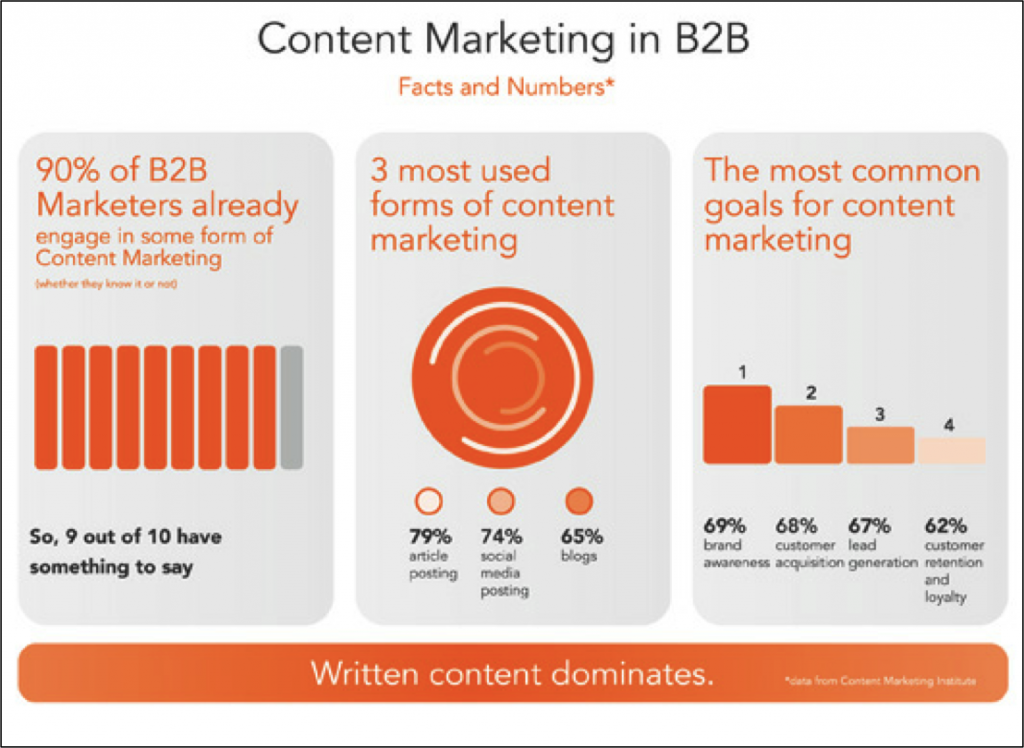
Content Marketing in B2B

exploreB2B recently partnered with Content Marketing Institute and MarketingProfs to creat this infographic which covers elements of why, what, where, and how of B2B Content Marketing that are necessary to execute on a successful campaign.

Featured TopRank Team Story

Shawna Kenyon – How to Build – and Keep – an Engaged Audience
For those of us creating content on a regular basis it is important to understand how best to build and keep and audience.  Many companies find themselves asking: with so much content online how do we fit in, and how do we differentiate ourselves from the competition? Gripping headlines, to the point copy, and promotion are just a few of the tips included in this article.  Via Mashable.

Weekly Online Marketing News

Google+ Product Manager Spams Twitter With Bot Network
Chances are you’ve seen automated tweets before, and were not impressed.  In 2008 the handle @trackgirl was setup as a Twitter Bot and the creator found that people were engaging with the bot and sending direct messages in response to tweets that were being sent out.  Read this article to learn more.  Via Wired.

Google to Offer Free WiFi in NYC
New York City is known for it’s spotty wifi service, especially when entering the underground subway system.  Starting on Monday some New Yorkers will be given the opportunity to keep on streamin.  Via AdWeek.

Never Ever Start Facebook or Twitter Campaigns on Friday – New Yesmail Study
This article provides further reasoning why marketers should not attempt to start a Facebook, Twitter, or YouTube campaign on a Friday.   Based on this study Friday’s are already stock full of messaging, however Tuesdays are a little les cluttered.  Read on to gain even more insight on social marketing and why sometimes less is more.  Via VentureBeat.

It’s Official: Microsoft Buys Yammer for $1.2 Billion
Yammers price tag and buy out from Microsoft has been rumored for the past few weeks.  Microsoft has now agreed on a hefty $1.2 Billion investment to purchase Yammer, and integrate the service as part of their office productivity tools.  If you are a Yammer fan have no fear, for the time being Yammer will remain as a stand alone  product and the company will continue to maintain control.  Via SocialTimes.

Apparently Facebook Knows What’s Best For Us
In order to create consistency across Facebook’s users (or so they claim) it was announced in April that the social network would update email addresses to one provided by their own email service.  This article provides what the writer considers to be a natural progression of the actions Facebook is currently taking without properly notifying users.  Everything from Facebook accessing users vehicle navigation systems, to implanting users with Facebook chips in their brains.  Via Media Post.

Top Online Marketing Tips of the Week

5 Time Saving Tools for Twitter
Choosing the right time saving applications that meet your social networking needs can be overwhelming.  The author of this article ran a survey of his Twitter followers that had at least a 5-digit following to see what tools they use to manage the amount of information that is shared and consumed on a daily basis.  If you’re looking for some ways to increase your impact while saving time this is an article you don’t want to miss.  Via Inc.

7 Things to Check Before Sending A Sarcastic Message
Industry research has shown that online messages are misinterpreted more than half of the time.  We’ve all been there, you think of something amusing or sarcastic that you want to share in an social message or email reply.  Problem is, you may have just confused or worse, offended your audience.   This article provides  7 sound tips for checking your message a final time before sharing, sending, and possibly turning off the recipients.  Via Ragan.

A Complete Guide to the Facebook WordPress Plugin
If you create and publish content on a WordPress blog social integration has just gotten easier.  Facebook recently released a new highly comprehensive plugin for WordPress which creates ease of use for auto-publishing to your timeline.  Via Social Media Examiner.

Time to Weigh In: What day of the week have you found to be most effective for starting your social media campaigns?  Do you think that Yammers integration with Microsoft will shift the way you are using their products?  Finally, does Facebook really know best, or are they taking it too far?


search engine marketing services search engine marketing services uk

Tweak and Optimize Your PPC Ads

PPC Ads

There are two things that you can do when optimizing your pay-per-click ad: Overhaul your ad copy or tweak it. However, there are those who are resistant to the tweak approach. They think that a small change on an ad will only result to minimal improvement. They didn’t know that both approaches don’t need exclusivity. What’s important is that your changes can produce great impact to your target market.

It’s all about the Psychological Change

Tweaking your PPC ads is not just about the number of changed words. It’s about how it alters the meaning of an ad to persuade a reader. Take for example “Enhance memory and attention” and “Enhances memory and attention.” An addition of one letter was able to change the whole thing.

The first one implies that you have to do something to improve your memory and attention, while the other offers a tool that will help you do just that. So which ad copy will persuade a reader to consider what your ad is offering? Of course the second one!

When it comes to optimizing your PPC ad, it’s not about the physical change of an ad copy. It deals with the psychological change in your target market, and how it can help generate results.

Apply Both Approaches to Your PPC Ad

When overhauling or tweaking a PPC ad, it doesn’t need any exclusivity. Tweaking your ad copy means that you’re testing one element at a time to see what works. On the other hand, you overhaul your ad by rewriting the whole thing to alter its meaning.

Giving your PPC ads is similar to getting all the mileage that your ads should be getting when it is overhauled. So if you’re not testing any small changes on your ad, how would you know if your rewritten copy will work? As mentioned earlier, an addition in letter can change the meaning and impact of the whole thing. It’s the same with using a word’s synonyms.

It is important that your words will have great impact to your target market. Most of all, it should explain what your ad is all about in ten words or less. Consider also the keywords that majority of your target market uses. That way, your ad will be visible and more compelling for any relevant search.

The bottom line here is that you should have a cycle of tweaking and overhauling your PPC ads. This will help your copy reach their optimal performance.

image via: www.webseoanalytics.com

managed search engine marketing managed search engine marketing services

Getting Started: Online Marketing

Online Marketing

Emerging businesses are taking advantage of online marketing, hoping that it will be the best and fastest way for them to be popular and generate more revenue. What they didn’t know is that web promotion is not an easy stint.

Starting with Your Landing Page

Internet marketing has its many facets, making it difficult for many newbie online advertisers to know where they should start. But it all boils down to where these web promotion strategies lead to—the landing page.

In fact, it serves as the center of any Internet marketing campaign. That’s because it’s the landing page that tells your target market what it should do. Although it is not necessary most of the time, it can always make a big impact in your online marketing efforts. Hence, it is also important that you know the web promotion components that support your landing page.

Social Media Marketing

Social Media Marketing is the new darling of web promotion. If you’re using SMM for your campaign, you have to know the platform that would be ideal for your business, and learn a few styles on how you can convert your fans into consumers.

Email Marketing

Email marketing may sound so old school for many online marketers, but it can still make a different for your Internet marketing efforts. You can use this tool to keep your audience engaged with whatever your business can offer.

Lead Generation

Of course, you cannot send out emails if you don’t have contacts. That’s why you should have knowledge on how you can grow your email list.

Organic Search Marketing

Organic search marketing or search engine optimization is the most popular and most talked about part of organic search marketing. That’s why it’s also important to learn SEO, so that you can build a natural ecosystem and encourage link building around your content.

Conversion Rate Optimization

It is also important to take your inbound traffic’s destination page into consideration. You should know how to optimize it so that you can entice them to try or buy your products.

Analytics

Analytics may be dull, especially if you can’t understand its components. Know the ins and outs of it, and it’ll be easier for you to manage everything that is related to it.

Content Marketing

Content is integral when it comes to online marketing. That’s because it is the beginning, middle and end of your campaign process.

Paid Search Marketing

Although pay per click advertising is the quickest way to gain traffic, it’s difficult to perform. Learn how you can do it right so that it can compliment the rest of your marketing efforts.

If you want to be successful with your campaign, you have to make a long-term plan. But most of all, take things easy. Learn every facets of web promotion one by one and take all the lessons that you can have. That way, you have a clear view of where your efforts are leading your business.

image: onlinemarketingtraining.info

search engine marketing professional search engine marketing professionals

Friday, 29 June 2012

Video Recap of Weekly Search Buzz :: June 29, 2012

Subscribe via iTunesThis is my last video recap in this office, after ten years, I am moving to a new larger space. This week I cover the Google Panda update, version 3.8. I also discuss the difference between Penguin and Unnatural links. Google for the first time called out a site they ignore links from. There are link removal companies popping up left and right despite Google saying they are coming out with a disavow link tool. Bing beat Google to coming out with a disavow links tool. Bing is trying to win the hearts of SEOs but maybe to try to change market share? Google launched Google Now and more changes to Google Mobile. I think Google wants you to nofollow affiliate links. Google added ten new videos on SEO on Webmaster Academy. New Zealand publishers got paid 40% less due to an exchange rate bug. Google is testing hiding the top black bar. Google Maps owner responses is broken again. Google demoed Google Glass live at I/O with sky divers diving onto the convention center. YouTube explained why some videos stick at 301 views. Google had an unbelievably geeky and sophisticated logo for Alan Turing's 100th birthday. That was this past week at the Search Engine Roundtable.

Make sure to subscribe to our video feed or subscribe directly on iTunes to be notified of these updates and download the video in the background. Here is the YouTube version of the feed:

For the original iTunes version, click here.

Search Topics of Discussion:

Please do subscribe via iTunes or on your favorite RSS reader. Don't forget to comment below with the right answer and good luck!

search engine optimisation firms search engine optimisation free

Newest Version Of AdWords Editor Released

It’s time again to update your AdWords Editor desktop software. Google today released version 9.8.1 which will now let users add and edit dynamic search ads and product listing ads.

Each of these ad formats now has its own tab, and these types of ads can now be managed on two new targeting tabs.

The new version also adds a Locations tab (under Targeting), where users can add, update and copy location targets.

The company has also made changes to CSV imports and exports, and changed text on the software to match that within the AdWords website interface. Here are the full release notes.

Google will maintain support for previous versions of AdWords Editor for four months, and will require all users to upgrade by October 28.

search engine optimisation explained search engine optimisation firm

Break Free of Bad SEO Advice – Optimize for Customers

break free bad seo adviceDespite years of warnings from Google and especially from search quality guy, Matt Cutts, there’s a certain segment of internet marketing consultants that continue to give out bad advice:  SEO shortcuts, tricks and loopholes with manufactured content and buying links to gain an artificial advantage that runs contrary to Google’s Guidelines.  Complicating matters is the fact that large numbers of companies are taking that advice in their rush to win traffic and sales.

The result? Getting penalized, removed from the index or other consequences affecting visibility of their content in search. From the Florida update almost 10 years ago to the Panda and recent Penguin updates, it’s clear Google is committed to narrowing down what kinds of SEO tactics can have an explicit impact on search visibility in their quest for quality.

In my opinion the issue is not as much about complying with Google’s rules, but about managing risk and creating a sustainable marketing effort that bears fruit over and over again. The effect may be the same, but I’m in business to make our clients money, not Google. Serving our clients’ interest is #1 and since helping them connect with prospects and existing customers is the goal, our approach to optimization emphasizes customers as the priority over search engines.  That said, a focus on both is essential to be competitive.

Webmasters and website owners need to not only comply with Google guidelines (which can seem a bit ambiguous with advice like “create good user experience”) by avoiding spammy tactics, but those operating in a competitive category will need to think about how to create a competitive advantage without putting their online business at risk with Google’s increasingly conservative approach to SEO tactics.

To Google’s credit, they have done an increasingly good job of creating content for webmasters on SEO basics, like this recent video from Maile Ohye “SEO for Startups in under 10 minutes”.

But those are the basics and a better understanding of the integration of search, social and content is necessary to win in competitive markets.

Content and social media are important means to connect with customers that also results in rewards from search engines in the form of better visibility. Unfortunately, many SEO tactics that are focused on rankings objectives rather than customer acquisition and engagement limit social media participation to pushing content out through social media channels. In those situations, there’s less of a focus on creating engagement or community, which can actually produce the signals that search engines really value: content, interactions, sharing.  The good news is that many smart SEOs are educating social content producers on the use of keywords and other optimization efforts to improve visibility of social content within search. The win is to do both: optimize for search and social engagement.

Many SEOs are getting on board the content bandwagon, except the common approach so far is to produce “more” content or “great” content (what does that mean?) in order to cast a wider net within search results. This makes sense: The more web pages, the more potential entry points via search or shared links.  But how much more effective would those ranking-centric efforts with content marketing be if there was more consideration of target audience needs during the buying cycle? What about optimizing for customers and business outcomes vs. keywords and rankings?

The best SEO advice isn’t about SEO. The basis of the book Optimize and what we write about here at Online Marketing Blog is to combine best practices SEO with a more customer-centric approach to developing content.  With a strong base of purposeful content, bring in keyword and social media optimization strategically to reach business goals for any kind of content, not just getting products and services pages to rank on page one with Google and Bing. The outcome is a more efficient, effective and scalable online marketing effort that attracts and engages more customers through search and/or social, is risk free and helps grow social networks at the same time.

Successful search marketing isn’t about following the rules, it’s about creating your own rules that satisfy the needs of the market you’re doing business in to grow your own business. At the same time, it’s about managing risk and knowing what the boundaries are. Sometimes that means you have to push to see what pushes back. Ongoing testing and marketing program optimization will be your best source of information, not solely search engine guidelines or industry experts. There is a time and a place for any type of SEO, social media or other online marketing tactics. Just be sure to quantify or clarify advice that seems too good to be true and cross check with your own ability to test and analyze.


search engine marketing solution search engine marketing solutions

Dominating the Google SERPs

Google SERP

Search engines started presenting results of 10 sites, with the occasional 1/3/7 local listing. But over time and with the introduction of universal search, the SERPs now present URLs, images, videos, news, and book listings. Despite the transition, there are websites who were able to stay on the top rank. Regardless of the changes, you can still maintain your rank if you know how to optimize your content.

Title and Descriptions

It would be a big help for your search engine optimization campaign if you know what keyword to incorporate on your content. Include your primary keyword on your title and description, so the search engine bots can index it. Just make sure that it’s written naturally, can still attract readers’ attention, and not keyword spammed. That way, you don’t just bring your content on the front row; you can also get your desired clicks.

News

When it comes to news writing, make sure that you incorporate your keywords on the title, Meta tag, and body. However, make sure that you strategically place your keywords. Otherwise, search engines your content will be flagged for keyword spamming. Include social bookmark button and post your news on these sites to gain additional exposure for your content. You can also dominate the SERPs by creating XML sitemap. This will feed the search engine bots with URLs and keyword-related information.

Images

You can also optimize the images on your website even if it’s not in text format. Use a keyword-rich file name and alternative text, include it on your image’s caption, create an image XML sitemap, and upload your photos on a photo-sharing site.

Videos

Just like with images, use a keyword-rich file name, and use your selected search term on your video’s title, description and tag. You can also upload it on video-sharing sites, and include a link to your website on the description section. Creating a video XML sitemap can also help index associated keywords to your videos.

Merchandising

Making sure that their feed is error-free is one way for shopping sites to reign on SERPs. It should also have a keyword-rich product page, with proper product listing and page-naming convention. As for the product images, it’ll boost the site SEO if they incorporate the keywords on the file name and photo description.

Local Listings

There are ways on how your site listing can be integrated with local listing to boost your SEO campaign. Include rich snippets for each of your location page, and make sure that it has a link back to a relevant section on your site. Moreover, your local listing’s category and description should be relevant to your site’s theme.

Working on your SEO doesn’t mean focusing on your content alone. It can also help if you know how to incorporate your keyword to different content on your website, and share it to various bookmarking and listing sites.

search engine optimisation newcastle search engine optimisation package

Interview with Liz Wilson, Community Manager at Paper.li

Content curation is hot nowadays, and there are quite a few content curating tools to help you organize and re-use user-generated content that is spreading across the web.

One of the oldest, and still the hottest, content curation tools out there is Paper.li, of course, a great app that helps you create an online magazine of your (or your community) tweets that gives that content second life.

I’ve known Paper.li for ages, and I have blogged a lot about them. For example, here’s an old, but still relevant, one on building your community with Twitter with Paper.li mentioned as one of the tools.

Therefore, I was very happy to get to know Paper.li Community Editor Liz Wilson.

What brought you to Paper.li?

It’s based in Lausanne, Switzerland where I live. Switzerland has a really vibrant startup scene. A friend put me in touch with Kelly Hungerford, the Community Manager, and I started out doing interviews for the Community Blog.

About seven months later, I took over as the Community Editor. So Kelly runs the community management and the team, and my part is looking after the community blog, commissioning guest articles, interviewing experts, telling publishers’ stories, and helping keep the editorial standards high.

Can you give us some insight into the team working on it? How was it born? Where is it heading? How is it evolving?

We have a small yet very culturally diverse team. We cover 19 different nationalities and languages out of the team of 14. We call Lausanne home and are based out of the EPFL’s Scientific Start-up Park, yet our international work is distributed across Europe and Japan.   

Paper.li was co-founded by two Swiss entrepreneurs, Edouard Lambelet and Iskander Pols. They founded SmallRivers in 2008 and began developing services with the aim of connecting like-minded people.

One day they both realized that they were awash in content and thought it would be fantastic to create a tool that could help sift, sort, and make sense out of their Twitter stream. A few weeks later, they had a running prototype that semantically analyzed content in a user home-timeline, organized it, and then presented it in an easy to consume and fun to read online newspaper. 

Paper.li swiftly progressed. Today Paper.li is no longer a service that analyzes a timeline. It is a platform that enables users to curate and publish online newspapers with content from anywhere on the web. Our content engine analyzes over 10,000 articles a minute, and we feature more than 15 million articles on more than 500,000 Paper.lis daily.  We strongly believe that the future of content curation is based on a symbiotic relationship between technology and people and that curators today are helping to transform the way information is organized, discovered, and shared in the future. This is happening already, and digital curation is only in its infancy.  

Good digital content curation requires both technology and people working together, and we believe that people are the ones qualified to make the final selection of content for their audience. We will continue to provide our growing nation of micro-publishers with tools that will help them make their jobs even easier and more efficient, so they can provide their audience with the most compelling and relevant content possible. 

Can you give us some creative example of how people are using Paper.li?

You only need to browse the Paper.li newsstand! They range from advocating for a cause like WaterAid to uniting a community around an interest, like the Mod Generation, to promoting a business, like the FederalLobbyist, or even an event, like Agents of Change. There are so many different uses it’s impossible to catalog them. It can be anything you want. I’ll give you a few of my personal favorites:

The @smexaminer Authors Daily published by Rich Brooks is brilliant for social media news.

If you are into publishing, check out the Best Tweets for Writers Daily from Jane Friedman.

I follow Shashi Bellamkonda’s daily paper because he has a brilliant mix of the expected and unexpected.

I could go on forever. You see the creativity; it is just boundless.

When did you realize that writing should become your career?

When I was studying for my exams at age 15, we had to submit a piece of creative writing. I started writing about a country girl who went to the big city and fell in love with a real no-gooder. I loved doing it so much I wrote 30,000 words. I gave it to my English teacher, and he put it in his office. Then every lunchtime, girls were going in there to read it! They thought it was like a true romance comic.

You used to be a journalist for the most powerful newspapers. Are you still contributing there? When and how did you start writing for the web?

I don’t do print journalism any more, only because I don’t have the time. I love news and news gathering, and one reason I feel close to Paper.li is that it looks like a traditional newspaper. I did print journalism for a long time in London, but I stopped because I wanted to realize a long-held ambition and live abroad.

I moved to France with my husband and his two sons. We just wanted to live out of our comfort zone to see what it was like. I don’t remember when I started writing for online, but it was probably about 2005. When we went to France, I started freelancing in corporate communications, and I wrote loads of content for intranets and static websites.

How is writing for newspapers and writing for the web different?

That’s such an interesting question for me because I disagree with a whole bunch of people about that. I like to think in terms of writing for an audience, not a channel. If you know your audience, then you know how to write for them, what format they want, how timely it has to be, what depth they prefer. If you know they want a long analysis of a topic, it’s the same whether it appears in the Sunday Times newsprint edition or the Huffington Post online. If you know they just want snippets they can scan, that’s the same whether it’s on or offline. If you look at tabloid newspapers, their style is the same as a lot of websites or blogs.

Okay, perhaps there are small differences, but I think a lot of people approach it from the wrong end. I see loads of articles saying things like blog posts must be 400 words, etc. Who says? Some people like 4,000 if it’s really interesting. I’m really pleased to see so many sites that have long form pieces, like The Browser, for example.

So I would say tune into your audience and stop worrying about what other people tell you to do.

Where do you think journalism is heading? How is it influenced by the web and social media?

Well, I could write a book about that, but the main thing is that “journalism” is ceasing to be an occupation practiced by the few, and it’s becoming an instinctive part of daily life for the many. We have gone from mass media, with a few media talking at the masses, to media mass, with an unquantifiable amount of media talking to the few.

I heard the expression “everyone is a publisher” frequently, and I think we can also say that “everyone is a journalist” if they want to be. The tools and access exist for anyone to report what’s happening and tell stories; that is what journalism is at its heart.  Obviously, I’m talking about countries where that’s possible, though even in countries where the tools and access are restricted, people still manage to report.

The influence comes with opening up access for anyone to report or analyze news. The old media companies can’t control the means of getting the news out now. It’s impossible. Some of them are embracing this and working with it, like the Guardian in the UK, which is encouraging people who don’t have journalism training to take part. They even have a platform for people to set up hyperlocal websites, and they have opened up their APIs to encourage innovation and collaboration.

Some media companies are fighting open journalism and retreating behind paywalls, pretending nothing has changed. They still have an “us” and “them” mentality – us being the media company and them being the readers. They will lose out.

The division between so-called “professional journalists” who have gone through training and people who just want to share news or information and have taught themselves to do it will disappear in the end. You can see it happening right here with the number of people who publish a Paper.li. They create and publish the news, too. Their contribution is as important as The New York Times or any established media company. The potential for citizen journalists is limitless in the long run.

email marketing company uk email marketing services uk

Google Rolls Out Panda Update 3.8

Google Panda

Google recently announced through their Twitter account that they pushed out a refresh for their Panda algorithm. There were earlier rumors that an update will arrive over the weekend, but it arrived last June 25.

Labeled as version 3.8, Google pointed out that they didn’t make any algorithm changes. They just rerun it to capture websites that deserve to be hit by Panda and release those that do not. This means that some website might see fluctuations on their analytics report.

Prior to this, a Panda also had an update last June 8. Google usually released an algorithm update once a month, that’s why it’s a wonder why they rolled out two updates this month. But whatever the search engine giant’s plans are before moving on to Panda update 4.0 will remain a mystery as of the moment.

Google Panda: What You Need to Know

The Google Panda is designed to promote high-quality website and bury low-quality sites deeper in the search engine result pages. Since its release, many sites were tremendously affected by this algorithm update. There were even rumors that some websites can’t do anything to recover. However, since Google Panda is considered as more of a content quality filter, there are some remedies that website owners can apply.

Remove Low-quality Content

First thing that you should so is determine which among your content has low quality. It can range from spun write-ups to duplicate content. Ad heavy and keyword-spammed posts are also considered low-quality.

Create Original and Unique Content

Although there’s a possibility that the topic you want to cover on your site has already been discussed, you should find a way on how you can make something unique out of it. Don’t just copy whatever other people have written. Instead, and post your own content.

Establish Your Authority

High-quality websites are ranked based on their authority. In the World Wide Web, authority refers to the number of people and other websites that share your content. You have to work on it if you want boost your SERP ranking.

Keep a Healthy Advertising Ratio

Another thing that Google is looking for in a website is its advertising ratio. Make sure that your site is not ad heavy, especially in the above-the-fold section. This is not just about your page ranking; it also has something to do with your readers being able to see your content immediately.

If you’re still affected by the Google Panda, you might want to consider doing the mentioned tips. This would help you boost your ranking, even in minimal amount. What’s important is that you keep track of any algorithm update that Google releases, and monitor how it affects your analytics.

improve search engine ranking improve search engine rankings

Thursday, 28 June 2012

10 Ways Coding Can Help Your SEO

Too many webmasters think of SEO in terms of things you do after a website is created, whether that’s optimizing specific on-page variables in order to maximize the odds of being ranked for particular keywords or the process of soliciting backlinks from qualified sources to power off-page SEO.

However, ignoring the important role that your site’s coding can play in its overall optimization is essentially the same as building your home on an unstable foundation.  Consider all of the following ways that coding can help your site’s SEO in order to avoid missing out on these critical benefits.

Tip #1 – Validate your code for search engine spider accessibility.

Keep in mind that the search engine spider programs have some serious limitations when it comes to crawling and indexing your site.  Since they really only read text effectively, other elements on your site, including image, audio, video, and script files, can all prevent important site text from being crawled and indexed appropriately.

To see for yourself exactly how the search engines interpret your pages, use the Webconfs “Search Engine Spider Simulator” tool to review your website.  If you notice that chunks of text are missing from your pages, validate your code correctly so that the search engines are able to find your information.

Tip #2 – Use coding to create SEF URL rewrites.

Creating search engine friendly (SEF) URLs is beneficial from both an SEO perspective and in terms of the user experience. The specific way you’ll need to modify your site’s code in order to minimize the number of extraneous characters and codes that are present in your URL will depend on the specific platform your site runs on.  If you use WordPress, Joomla, or any other CMS, you should have access to plugins or internal dashboard settings that will allow you to make the necessary changes.  In some other cases, particularly when it comes to open source ecommerce platforms, you may need to address your permalink structure within your .htaccess file.

Tip #3 – Clean your code to facilitate site speed improvements.

Although your site’s code might start out “clean,” over time, it’s common for website modifications to result in a number of different errors that can slow down your site’s operation.  For this reason, it’s a good idea to perform regular checks that account for all of the following issues:

  • Eliminate excess whitespace, while still keeping your code readable
  • Use an HTML validator to eliminate broken and unpaired tags
  • Use a broken link checker tool to remove invalid URLs

Tip #4 – Serve text-based alternative to on-page scripts.

As mentioned in Tip #1, the search engines can’t usually access information that’s contained within image, video, or script files.  However, as these elements can go a long way towards improving the user experience on your site, it isn’t a good idea to eliminate them entirely.

Instead, a better alternative from a coding perspective is to serve up alternate, text-based versions of the information you’d like the search engines to index.  As an example, when serving up Flash files, consider using the SWFObject2 library, which will automatically deploy alternate text-based content whenever it detects users or search engine spiders that can’t process these file types correctly.

Tip #5 – Set up “noindex” tags on your robots.txt file.

While there’s no way to control the behavior of the search engine spiders with 100% accuracy, telling them not to index certain pages on your site through the use of “noindex” tags on your robots.txt file can be useful from an SEO perspective.  This tag should be added to your robots.txt file for any pages that shouldn’t appear in the search results, including:

  • Shopping cart and checkout pages
  • User dashboard pages
  • Archive pages
  • Contact pages

Tip #6 – Use “rel=canonical” to deal with duplicate content issues.

If you use a CMS program like WordPress, Magento, or Joomla to build your site, chances are you’ve got duplicate content issues that result from the way these platforms create URLs.  Whenever you add a new post to your website, it’s not uncommon for these systems to automatically generate any or all of the following options:

  • Yoursite.com/post-name.html
  • Yoursite.com/category1/post-name.html
  • Yoursite.com/category2/post-name.html
  • Yoursite.com/archive/date/post-name.html

Because all of these different URLs redirect to the same page, you risk being subjected to duplicate content filters within the search engines if you don’t specify exactly how each of these URL variations should be treated.

The best way to instruct the search engines on how to handle your URLs is through the use of the “rel=canonical” tag.  This feature can be added to the <head> section of your website either by hand or through the use of a plugin and tells the search engines to disregard, redirect, or index a given page for the specified URL.

Tip #7 – Set up 301 redirects to ensure proper PageRank flow.

When it comes to setting up proper 301 redirects, there are two coding situations you’ll want to consider from an SEO perspective.  First, use this code to inform the search engines that both www and non-www versions of your URLs should be treated the same.

Second, if you ever move content within your site (for example, if you change the title and permalink of a blog article), create a 301 redirect to inform the search engine spiders of the move.  Doing so will minimize the potential loss of PageRank that can occur when backlinks no longer resolve to your former URLs.

Tip #8 – Use microdata to create rich snippets.

One recent addition to the SEO developer’s toolbox is microdata, a new language that allows you to add several levels of clarifying data to your site’s HTML tags.  Not only can these elements help your site to be indexed and ranked correctly, they can also boost your clickthrough rates from the SERPs through the creation of enhanced search result listings known as “rich snippets.”

As there’s some speculation that overall clickthrough rates from the Google SERPs are being weighted as a ranking factor, adding these new features may help a site’s SEO in addition to driving extra traffic from the search results.

For more information on what rich snippets are and how to create them through the use of microdata, check out Schema.org.

Tip #9 – Combine script files to speed up load times.

Recently, site loading speed has gained significant importance as a search engine ranking factor, based on Google’s stated desire to reward fast sites in the search results.

Unfortunately, if you’ve built out your site using tons of different scripts in order to provide additional functionality for your visitors, loading all of these various code files at once can bring down your site’s performance substantially.  By combining these individual code sheets into a smaller number of files, you’ll minimize the long load times caused by excess script demands and improve your site’s overall SEO.

Tip #10 – Utilize CDNs to minimize necessary launch resources.

Finally, if you’ve made all of the possible modifications to your website’s code, and you still haven’t been able to achieve measurable improvements in your site’s load times, consider utilizing a content delivery network (CDN) to serve up content from external websites in order to minimize the total resources needed to launch your site.

CDNs like Amazon’s popular S3 service or RackSpace are an especially good idea if you host a large number of images, audio files, or video files on your site.  If you feel that excess file demands may be dragging down your launch times, look into serving up remote content via CDN services.  They’re often quite cost-effective to use, and they can make a big difference in terms of your site’s overall SEO.

search engine marketing blog search engine marketing business

Getting Started: Online Marketing

Online Marketing

Emerging businesses are taking advantage of online marketing, hoping that it will be the best and fastest way for them to be popular and generate more revenue. What they didn’t know is that web promotion is not an easy stint.

Starting with Your Landing Page

Internet marketing has its many facets, making it difficult for many newbie online advertisers to know where they should start. But it all boils down to where these web promotion strategies lead to—the landing page.

In fact, it serves as the center of any Internet marketing campaign. That’s because it’s the landing page that tells your target market what it should do. Although it is not necessary most of the time, it can always make a big impact in your online marketing efforts. Hence, it is also important that you know the web promotion components that support your landing page.

Social Media Marketing

Social Media Marketing is the new darling of web promotion. If you’re using SMM for your campaign, you have to know the platform that would be ideal for your business, and learn a few styles on how you can convert your fans into consumers.

Email Marketing

Email marketing may sound so old school for many online marketers, but it can still make a different for your Internet marketing efforts. You can use this tool to keep your audience engaged with whatever your business can offer.

Lead Generation

Of course, you cannot send out emails if you don’t have contacts. That’s why you should have knowledge on how you can grow your email list.

Organic Search Marketing

Organic search marketing or search engine optimization is the most popular and most talked about part of organic search marketing. That’s why it’s also important to learn SEO, so that you can build a natural ecosystem and encourage link building around your content.

Conversion Rate Optimization

It is also important to take your inbound traffic’s destination page into consideration. You should know how to optimize it so that you can entice them to try or buy your products.

Analytics

Analytics may be dull, especially if you can’t understand its components. Know the ins and outs of it, and it’ll be easier for you to manage everything that is related to it.

Content Marketing

Content is integral when it comes to online marketing. That’s because it is the beginning, middle and end of your campaign process.

Paid Search Marketing

Although pay per click advertising is the quickest way to gain traffic, it’s difficult to perform. Learn how you can do it right so that it can compliment the rest of your marketing efforts.

If you want to be successful with your campaign, you have to make a long-term plan. But most of all, take things easy. Learn every facets of web promotion one by one and take all the lessons that you can have. That way, you have a clear view of where your efforts are leading your business.

image: onlinemarketingtraining.info

free search engine submission software global search engine marketing

Improve Conversion and CTRs through Interlinking

Link BuildingYour website’s search engine optimization campaign can get some help through internal link building. However, it can also damage the conversion funnel. In fact, not all SEO-friendly link building campaigns provide holistic experience for the site visitor. On the other hand, those that are helpful for the visitors are not in-sync with the website’s conversion goals. You should find ways on how to create internal links that can improve your site’s conversions and click-through rates.

Ditch Unhealthy Internal Links

An unhealthy internal link is not helpful to both visitor and website. Most of these links are created based on personal preference or just for the heck of it. You can avoid this mistake by making sure that you are linking to a page or website that’s relevant to your content. Moreover, there should be an existing relation between your site and the page or other website that you’re linked with.

Revamp the Contextual and Navigational Links

Some links are created to define a term or provide context for other content. However, it only helps visitors to avoid confusion, but it doesn’t convert them. When creating internal links, avoid using “Learn More” or “Click Here.” Make your anchor text as specific as possible, reflecting your link’s destination page.

When creating links to define a particular text, it’s better if you’ll redirect your visitor within your site. It will prevent them from acquiring unnecessary information. If you’re linking to another website, don’t just bring your visitor to the home page. Redirect them straight from where you got your text. You should also make sure that the new page will open to a new tab or window, to keep your visitors on your website.

Build a Powerful Link Building Strategy

A powerful link is something that is helpful for you SEO campaign, creates valuable experience for your visitor, and encourages conversion. Regardless of the anchor text that you’re using, the link that you provide must do the following:

  • Provide enough context to encourage click-through
  • Urge your readers to know who the person you mentioned is
  • Doesn’t over share information
  • Introduces the link’s destination page with a good adjective

Simply put, a powerful link urges a visitor to view its source. Having the courage to promote other content is what makes most successful content writers likeable.

Planning your link building strategy is important if you want your website to thrive both in SEO and conversions. That’s why it’s important to understand that SEO is just one aspect of online marketing that needs to be considered.

image: onlinebizdev.com

outsource search engine optimization paid search engine marketing

Is a Rush to Revenue Hurting Your Marketing Innovation & Domination?

Revenue Marketing InnovationHere’s a familiar scenario with many companies that have tactically approached social media marketing:  ”Let’s stop wasting time with this social media mumbo jumbo. We need to increase sales, grow revenue and sign up more customers!”.

On the other end of the spectrum you might hear, “Social media marketing is too difficult to measure, it’s early days. So let’s keep investing and eventually we’ll be able to see our return.”  Neither attitude has the best long term interests of the business in mind.

Clearly there are few businesses that don’t want to increase sales and conversions, but is a singular focus on revenue, especially in today’s world of connected consumers, actually helping bottom line business results or creating a longer term disadvantage?  Alternatively, is the absence of focus on revenue with social media marketing a responsible and accountable approach to the investment?

Winning battles without also winning hearts and minds can lose the war.

Increased transactions and revenue alone are not enough to scale competitive advantage. Investment in prospect, community and customer engagement are also essential, even if they don’t directly generate sales.  Investment in digital marketing innovation that keeps pace with shifts in technology and how consumers use digital communication channels to discover, consume and engage with content is essential to achieve and maintain a competitive advantage, especially when both the direct and indirect impact on revenue is being optimized.

Some revenue-only driven marketers will see the progress their social media savvy competitors are making with industry buzz and move towards a social media marketing effort, but it’s often superficial or more mechanical than meaningful. Increasing fans, friends and followers does not automatically equate to more sales or qualitative engagement.

Meaningful social engagement between companies and the communities of prospects, customers, partners, employees and industry media can act as a force multiplier towards gaining market share and improving business outcomes all along the customer lifecycle of engagement from attention to transaction to advocacy.

customer lifecycle content marketing

There are a number of obstacles to qualitative social media adoption within organizations and a recent study by the Economist Intelligence Unit and PulsePoint Group reveals the most common barriers include the inability to prove ROI. I think John Bell from Social@Ogilvy offers a great response to that:

Don’t let ROI hunger kill innovation. ROI and budget are also a leadership issue.  While arriving at ROI measures are important to managing business, they are hard to do in a space where we are all still innovating and proving models valid. Leaders need to guide organizations to be responsible about value without being too ruthless on ROI in the near term lest they kill innovation.”

There is no question marketing needs to be accountable to sales and revenue. At the same time, the direct and indirect impact of effective, meaningful and scalable social media marketing efforts must be considered in that accountability, not just the short term wins.  Limiting investment solely to those activities that directly impact customer acquisition and sales leaves a lot of mindshare, awareness and collective brand equity on the table for competitors to take and turn into scalable revenue in the future.

What are your roadblocks to broader and more meaningful social media adoption within your company?  Which end of the spectrum do you fall? Pure ROI or Pure Engagement? Somewhere in between?


google search engine placement google search engine ranking

Dominating the Google SERPs

Google SERP

Search engines started presenting results of 10 sites, with the occasional 1/3/7 local listing. But over time and with the introduction of universal search, the SERPs now present URLs, images, videos, news, and book listings. Despite the transition, there are websites who were able to stay on the top rank. Regardless of the changes, you can still maintain your rank if you know how to optimize your content.

Title and Descriptions

It would be a big help for your search engine optimization campaign if you know what keyword to incorporate on your content. Include your primary keyword on your title and description, so the search engine bots can index it. Just make sure that it’s written naturally, can still attract readers’ attention, and not keyword spammed. That way, you don’t just bring your content on the front row; you can also get your desired clicks.

News

When it comes to news writing, make sure that you incorporate your keywords on the title, Meta tag, and body. However, make sure that you strategically place your keywords. Otherwise, search engines your content will be flagged for keyword spamming. Include social bookmark button and post your news on these sites to gain additional exposure for your content. You can also dominate the SERPs by creating XML sitemap. This will feed the search engine bots with URLs and keyword-related information.

Images

You can also optimize the images on your website even if it’s not in text format. Use a keyword-rich file name and alternative text, include it on your image’s caption, create an image XML sitemap, and upload your photos on a photo-sharing site.

Videos

Just like with images, use a keyword-rich file name, and use your selected search term on your video’s title, description and tag. You can also upload it on video-sharing sites, and include a link to your website on the description section. Creating a video XML sitemap can also help index associated keywords to your videos.

Merchandising

Making sure that their feed is error-free is one way for shopping sites to reign on SERPs. It should also have a keyword-rich product page, with proper product listing and page-naming convention. As for the product images, it’ll boost the site SEO if they incorporate the keywords on the file name and photo description.

Local Listings

There are ways on how your site listing can be integrated with local listing to boost your SEO campaign. Include rich snippets for each of your location page, and make sure that it has a link back to a relevant section on your site. Moreover, your local listing’s category and description should be relevant to your site’s theme.

Working on your SEO doesn’t mean focusing on your content alone. It can also help if you know how to incorporate your keyword to different content on your website, and share it to various bookmarking and listing sites.

free search engine optimisation free search engine optimization

Inbound Marketing in Foreign Languages

Traditional “outbound” marketing techniques, such as advertising and telemarketing, involve reaching out to potential customers and grabbing their attention. Inbound marketing involves creating quality content that will bring your customers to you. This can be challenging enough in your own native language. When dealing with multiple languages online, there are even more things to consider.

Do Your Research

The globe-spanning nature of the Internet has opened up a host of opportunities for businesses of all sizes. In theory, it has never been easier to reach new markets, but actually doing so takes a little more effort than simply setting up in your own little corner of cyberspace and hoping for the best.

According to the latest figures from Internet World Stats, English remains the single, most widely used language online, but it still only accounts for around a quarter of total usage. Studies have shown that users place more trust in sites in their own native language, especially when it comes to making a purchase online. Clearly, a multilingual approach is necessary for anyone wishing to fully exploit the world wide nature of the web.

Localization can take a lot of planning and effort, however. Even if you have a product or service you consider to have worldwide appeal, it usually makes sense to concentrate on one or two new markets first. A bit of market research should help you identify the best potential markets, and Google’s analytic tools can also tell you if your primary website is already attracting visitors from other, specific countries.

Foreign language microsites can be useful for testing the waters. If they generate enough interest, you can follow up with fully localized websites.

Translate Your Content

Translation is perhaps the single most important aspect of the localization process. There are a number of free translation programs available, but even the best automatic translation can be prone to mistakes. This can lead to a stilted, amateur-looking site, which is hardly ideal when it comes to engendering a sense of trust. Working with native speaking translators will help avoid contextual errors and help you achieve a fluent and more natural style.

Pay Particular Attention to Keywords

Keywords are the words or phrases that users type into a search engine’s search box when looking for content online. Even if you’ve done extensive research on the keywords for your native language website, it’s important not to rely on straight dictionary translations, as colloquialisms, abbreviations, or other alternative terms may all be more effective. That doesn’t mean you have to start from scratch, however. Your English language keywords can serve as a starting point, and a translator can help you brainstorm alternative terms. These can then be tested using the keyword tools on a local version of Google or other major search engines.

Have a Plan for SEO

Search engine optimization (SEO) is the process of improving your website’s visibility in the search results of major search engines like Google. Even the most well-known brands can benefit from the extra traffic that search engines can direct their way. For a smaller business attempting to break into a new market, search engines can be invaluable.

Keywords, as already mentioned, play a large part in SEO, but your localized website’s URL can also help boost your rankings. Using a country code Top Level Domain, such as .fr for France or .de for Germany, will help improve your results in local searches. Even if you use a generic Top Level Domain such as .com, you can use Google’s geographic targeting tool to specify a location.

Back links are also important in SEO. It generally helps to ensure that these links are from sites that are both located in your target market and relevant to your content.

Make Use of Social Media

Social media sites offer an ideal platform for getting your brand name out there and for interacting directly with customers. The major sites like Facebook and Twitter already have a worldwide audience and should not be overlooked, but in certain markets, other local competitors rule the roost. In China, for example (where both Facebook and Twitter are banned), Qzone is the most visited site. Russia, meanwhile, is dominated by Vkontakte (commonly known as VK) and Odnoklassniki, sites that are also rapidly expanding into other eastern European countries. Depending on your target markets, it can be worth maintaining a number of profiles on different sites and linking them together.

Be Proactive

Inbound marketing is an ongoing process. Besides using social media, you can spread the word through blogs, while also updating your sites with news and other fresh content that will help your SEO and keep things interesting for returning customers. It’s also important to interact with your customers. Responding to feedback and queries in a customer’s own language can help foster a stronger relationship.

Marketing across foreign languages can take a lot of forward planning. With a little extra effort and local knowledge, however, it can be an effective way to tap into brand new markets.

local search marketing services london search engine optimisation

Wednesday, 27 June 2012

SEO Blog Feeds - What is RSS? What are Feeds?

Subscribe via Email:

Subscribe via Feed Reader:

Feed Formatting Issues?

Does your feed reader have issues with either of the above feeds? If so you can subscribe to our FeedBurner feed

What are Feeds? What is RSS?

This video does a good job describing how feeds work.

Below is similar information, in a boring textual format.

Offline Subscriptions

In the offline world we subscribe to our interests by

  • paying for magazine subscriptions
  • watching TV channels and shows that interest us at the same time each week
  • reading all books created by a favorite author

Online vs Offline

Online individuals and companies create a vast sea of content. Too much content perhaps. To keep up with all the new content every day I could visit SeoBook.com, sethgodin.typepad.com, SearchEngineLand.com, SEOMoz.org, Wolf-Howl.com, and a bunch of other great blogs and news websites.

Or, to keep myself organized, I could subscribe to feeds from all these great sites and access them all from one place. Feeds allow you to subscribe to information you find relevant and useful, and be notified when your favorite websites are updated.

Instead of needing to visit all the above websites every day you could just go to Google (Google Reader or iGoogle), My Yahoo!, or Bloglines and read all the news at any one of these sites. You do not need to visit all 3 sites to read the news. Just pick your favorite one and subscribe to a bunch of your favorite sites. If you are an avid online reader using RSS subscriptions to keep track of the news can save you hours a day.

Bonus RSS Tip

  • In addition to subscribing to top blogs you can also subscribe to RSS feeds for news topics. For example, here is a link for the Google News feed on SEO. You can subscribe to other keywords that interest you using the RSS link in the left side of a Google News search result.
  • Other information aggregators, like Google Blogsearch, also provide RSS feeds. You can use RSS feeds to track blogs that link to your site.

Want Access to the Best SEO Feed on the WWW?

Bingo. You got it here...the featured threads feed from our private forums.

Subscribe.

Gain a Competitive Advantage Today

Want more great SEO insights? Read our SEO blog to keep up with the latest search engine news, and subscribe to our SEO training program to get cutting edge tips we do not share with the general public. Our training program also offers exclusive SEO videos.

google search engine uk google uk search engine

Google’s Knowledge Graph Has An Error 20% Of The Time

knowledge-graphGoogle’s knowledge graph which launched a little over a month ago is reportedly often wrong.

Conductor ran a study showing that for trending terms, the knowledge Google is providing via their knowledge graph is wrong about 20% of the time. By trending, Conductor looked at the top 50 ‘people’ in Google Trends and Google Insights and 1 out of 5 of them had outdated or wrong information.

For those in the Top 50 on Forbes’ Celebrity 100 list, Google is more often right, with only a 4% chance of the information being outdated. So combined, 12% of the answers in the knowledge graph are inaccurate according to Conductor.

Brian Ussery this morning wrote how even Matt Cutts, Google’s head of search spam, entry has wrong information. It says he attended University of North Carolina School of Law when he never did actually go to law school, as far as I know.

Brian looked at how other Knowledge Graph entries are also wrong and then Conductor published their study showing the accuracy rate of the data in these knowledge graphs.

As you know, the data comes from sources such as Freebase, Wikipedia and others and thus the answers are only as good as the data being sourced for this information.

search engine marketing agency search engine marketing agency uk

How to Attract Facebook Fans for Your Business

Facebook Ads

Nearing one billion users, Facebook was able to connect businesses with their existing and potential market worldwide. However, not all brands that have a Facebook Page know how to attract fans through the social network. A great fan acquisition requires that you have the right mix.

Include Email Marketing

In the world of online marketing, it is already established in that Facebook can promote your brand faster than email marketing. When a user likes your page, it will appear on his or her friends’ News Feed. However, email marketing is one way to keep the communication constant and troll-free. It also strengthens relationship between the brand and the customers. Include social links in all your emails, or send a monthly news letter to promote your page.

Offer Perks to New Fans

Providing incentives is a great way to encourage first-time visitors to like your page. Create a banner that can catch a user’s attention, post special rewards, and require them to like your page before getting their incentive. Encouraging Facebook users to like your page can boost your fan acquisition.

Create Word of Mouth Contests

Other than incentives, giveaways can also be a great way to increase engagement, promote your page farther, and expand your fan base. But if you’re budget constrained, look for partners who are willing to sponsor your contest in exchange of additional exposure for their brand. Your contest can be as simple as “Why should you win our prize?” Ask them to mention you and your partner’s brand on their Wall, and let them spread the word for you.

Just bear Facebook’s Terms of Service about contests in mind. To give you an idea, working with a representative can let you do more on the network. However, you can only talk to a representative if you’re spending five figures on Facebook Ads already.

Convert Buyers into Facebook Fans

If you have an online shop, you can also include your Facebook marketing campaign. It’ll be easier to ask your buyers to like your page because they are already fans of your products. When a user purchases something on your website, add a Facebook Like Box on your Thank You or confirmation page. You can also announce contests that will require your customers to like your page first. Again, just be mindful of the ToS.

Acquiring fans on Facebook gives you better revenue stream. You just have to know how you can invite and keep them on your page. In turn, your fan base will become your consumer base.

image: battelle media.com

learn search engine optimization local search engine marketing

YouTube Video Stuck At 301 Views? Here Is Why.

YouTube 301 ViewsI had no idea, but there is this phenomenon with YouTube videos and the number 301. No, not a 301 redirect but 301 views. On popular videos, the video count would often hit 301 views and then stop and stay like that for up to 24 hours and then jump to thousands of views after that.

No one outside of Google/YouTube knew why it stopped at 301. There were rumors, theories but no official answer from Google themselves. That is until today.

Brady Haran posted a video named Why do YouTube views freeze at 301? with an explanation from YouTuber, Ted Hamilton.

The short answer is, YouTube decides to stop updating at that number to verify the authenticity of those clicks and future clicks. They try to eliminate "counterfeit views." Here is the video explanation on how this works:

Pretty interesting, but knowing Google, I know they can figure out a way to make this more real time. Get some of the search quality team folks over there to help out.

Forum discussion at Google+.

search engine optimisation agency search engine optimisation campaigns

Bing Maps Introduces 38 Million Sq Kilometers Of New Satellite Imagery

As the “mapping wars” heat up Microsoft is introducing a huge new body of satellite imagery into Bing Maps. It’s not clear whether any of this will extend to mobile given the apparent substitution of Nokia Maps for Bing in Windows Phone 8.

The new imagery covers vast amounts of land on almost every continent. According to the Bing blog post, “The total area covered in this data release is nearly 38 million square kilometers.” The company says that this single update constitutes more data (165 terabytes) than all the previous releases combined (129 terabytes).

Bing also said that its global orthogonal (angled) imagery project was 85 percent complete and published. In addition Bing has 100 percent aerial coverage over the US. Europe will be completely covered and published by Q4 according to Microsoft.

Microsoft is giving some mixed signals on Bing Maps. The company appears to be making significant ongoing investments like the above even as it’s commingling its assets and dividing up labor with partner Nokia on the PC. However, in the case of mobile Bing Maps is being subordinated to Nokia Maps entirely.

marketing search engine optimization most effective search engine marketing

Tuesday, 26 June 2012

SEO Blog Feeds - What is RSS? What are Feeds?

Subscribe via Email:

Subscribe via Feed Reader:

Feed Formatting Issues?

Does your feed reader have issues with either of the above feeds? If so you can subscribe to our FeedBurner feed

What are Feeds? What is RSS?

This video does a good job describing how feeds work.

Below is similar information, in a boring textual format.

Offline Subscriptions

In the offline world we subscribe to our interests by

  • paying for magazine subscriptions
  • watching TV channels and shows that interest us at the same time each week
  • reading all books created by a favorite author

Online vs Offline

Online individuals and companies create a vast sea of content. Too much content perhaps. To keep up with all the new content every day I could visit SeoBook.com, sethgodin.typepad.com, SearchEngineLand.com, SEOMoz.org, Wolf-Howl.com, and a bunch of other great blogs and news websites.

Or, to keep myself organized, I could subscribe to feeds from all these great sites and access them all from one place. Feeds allow you to subscribe to information you find relevant and useful, and be notified when your favorite websites are updated.

Instead of needing to visit all the above websites every day you could just go to Google (Google Reader or iGoogle), My Yahoo!, or Bloglines and read all the news at any one of these sites. You do not need to visit all 3 sites to read the news. Just pick your favorite one and subscribe to a bunch of your favorite sites. If you are an avid online reader using RSS subscriptions to keep track of the news can save you hours a day.

Bonus RSS Tip

  • In addition to subscribing to top blogs you can also subscribe to RSS feeds for news topics. For example, here is a link for the Google News feed on SEO. You can subscribe to other keywords that interest you using the RSS link in the left side of a Google News search result.
  • Other information aggregators, like Google Blogsearch, also provide RSS feeds. You can use RSS feeds to track blogs that link to your site.

Want Access to the Best SEO Feed on the WWW?

Bingo. You got it here...the featured threads feed from our private forums.

Subscribe.

Gain a Competitive Advantage Today

Want more great SEO insights? Read our SEO blog to keep up with the latest search engine news, and subscribe to our SEO training program to get cutting edge tips we do not share with the general public. Our training program also offers exclusive SEO videos.

internet marketing search engine internet marketing search engine optimization

100% Search Topics, Speakers & Community: Search Marketing Expo ­ SMX East in NYC, October 2-4

Search Marketing Expo – SMX East provides expert insight and real-world-proven tactics on paid search, SEO, local search, mobile and more. Immerse yourself in exceptional content and networking, October 2-4 in New York City. Six intensive workshops also available October 1. Register by July 28 and pay just $1395 for a 3 day All Access pass. For more info visit smxeast.com.

search engine marketing firm search engine marketing firms

The Domino Effect Of Links & Relationships

organic search engine optimisation organic search engine optimization

Link Removal Companies: We're In A New World

junk removalWith all the concern over unnatural link notifications, the Penguin update, disavowing links and lawsuits over linking, SEOs and webmasters are eager to remove all bad links as far back as they can.

A Google Webmaster Help thread has discussion about a new linking industry, not for link building but for link removals. The concept is not new, we discussed it in 2008 with link unbuilding but it is much more of a concern today than in 2008.

In fact, so much so, there are companies cropping up that just work on linkage removal campaigns.

The webmaster pointed out two services, one deletebacklinks.com and the other linkdelete.com. SEOmoz is reportedly working on a way to detect spam links as well. Some other private tools do this already. There are also link removal tools such as removeem.com.

The new link building is unbuilding links, at least in 2012.

Forum discussion at Google Webmaster Help.

Image credit to BigStockPhoto for messy room

check search engine ranking create a search engine

What's The Difference Between Google Penguin vs Unnatural Links?

Google PenguinThere is still a huge amount of confusion in the SEO space around how the Google Penguin update differs from the unnatural link penalties being sent out.

I don't blame anyone for being confused, I am confused.

We know that Penguin is automated and the unnatural link notifications are manual. So the clear distinction is if you receive a warning in webmaster tools for unnatural links, then it is that. If you saw a drop in rankings when Penguin launched or refreshed then it was Penguin.

But if you didn't have any of those details, how can you tell if a site was hit by Penguin vs unnatural links by just looking at the linkage data?

If I had to guess, I'd say:

  • Unnatural links is more about link networks, paid links, blog networks and unnatural link patterns.
  • Penguin is more about low quality links with weird looking anchor text, plus other SEO related link building techniques.

What do you think?

Forum discussion at WebmasterWorld.

search engine optimisation leeds search engine optimisation link building