SPONSORS

Monday, 30 April 2012

Penguin Update Gets a Google Form for Webspam Report

Last April 24, Google has officially launched its search algorithm update to target webspam. Called as the Penguin Update, it is designed to catch website owners who spam search results or purposely do things to rank better. As posted by Google’s Head of Webspam Team Matt Cutts:

“In the next few days, we’re launching an important algorithm update targeted at webspam. The change will decrease rankings for sites that we believe are violating Google’s quality guidelines. This algorithm represents another step in our efforts to reduce webspam and promote high quality content.”

Google defines webspam as pages that are trying to gain better rankings by means of keyword stuffing, link schemes, cloaking, “sneaky” directories, “doorway” pages and purposeful duplicate content.

Recovering From Penguin Update’s Peck

It is said that the Penguin Update can affect 3 percent of search queries. In most cases, Google will send messages to the webmaster about their website’s spammy activities. But it is unlikely to arrive at the inbox of other owners who have unverified accounts.

Therefore, the best way to know if a website is affected by the change is to check its analytics since April 24. If a dramatic drop in traffic is present, it’s possible that it was hit by the Penguin Update. In order to remove the penalty, the website owner must correct anything that Google flagged as spammy. If there were no flags, remove anything that’s spam-like.

The Feedback Form and “Report Webspam Button”

Unfortunately, the Penguin Update disables a webmaster for a reconsideration request. That’s because it is an algorithm update that is applied automatically. This means that no human employee spots for a webspam and applies manual penalty.

However, Cutts shared that webmasters can fill out a feedback form in case their website was mistakenly affected by the update. On the other hand, they can also report a website that they deem uses spammy techniques using a Report Webspam Button.

Just simply head to the standard spam reporting page and hit the button. This will bring a user to a form where he or she can enter the URL of the spammy page, the exact query where it appears and any additional details. Just remember to use the keyword “Penguin” as part of the details field.

The Penguin Update is not meant to make it difficult for website owners and search engine optimization practitioners to rank their content. What Google want is to encourage them to continue with their best SEO practices.

“Our advice for webmasters is to focus on creating high quality sites that create a good user experience and employ white hat SEO methods instead of engaging in aggressive webspam tactics….

“We want people doing white hat search engine optimization (or even no search engine optimization at all) to be free to focus on creating amazing, compelling websites.”

search engine marketing and optimization search engine marketing blog

Google Releases Full FCC Street View Report

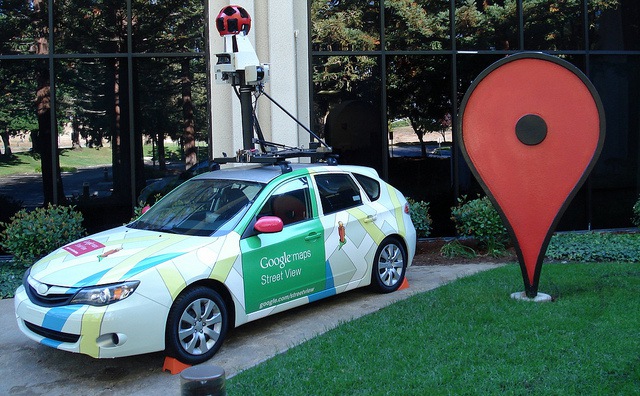
google maps street view fccOn Friday evening, Google released the full 25-page document detailing the recent investigation by the Federal Communication Commission (FCC) into Google Street View. The Google Street View project, which used hundreds of high-tech cars equipped with special photographic equipment to collect images of streets, enabled Google Maps to provide users with 360-degree views of streets worldwide. However, in addition to collecting street imagery, Google was simultaneously collecting private data related to the wireless networks within people’s homes.

Although Google initially denied that they were collecting private data from unprotected Wi-Fi networks, the search company later admitted that one Google engineer had mistakenly collected data and that he had acted alone. While the FCC investigation found that the unnamed Google engineer had told several other engineers and at least one senior manager of his plans to collect sensitive data, it indicated a high likelihood that he acted alone in creating the data collection scheme.

Jill Hazelbaker, the head of corporate communications at Google, indicated that the search giant cooperated fully with the investigation and hoped to put it behind them soon:

“We decided to voluntarily make the entire document available except for the names of individuals. While we disagree with some of the statements made in the document, we agree with the FCC’s conclusion that we did not break the law. We hope that we can now put this matter behind us.”

According to the FCC report, Google gathered “highly sensitive personal information” including: text messages, emails, passwords, and Internet-usage history.  Since the wiretap laws were unclear and the unnamed Google engineer was not willing to testify, the FCC ultimately decided not to penalize Google for the collection of data. However, due to not fully cooperating with the FCC investigation, Google was fined $25,000.

Sources Include: The Wall Street Journal & Bloomberg
Photo Credit: Image used under Creative Commons from sanchom

search engine optimisation google search engine optimisation help

Google Releases Full FCC Street View Report

google maps street view fccOn Friday evening, Google released the full 25-page document detailing the recent investigation by the Federal Communication Commission (FCC) into Google Street View. The Google Street View project, which used hundreds of high-tech cars equipped with special photographic equipment to collect images of streets, enabled Google Maps to provide users with 360-degree views of streets worldwide. However, in addition to collecting street imagery, Google was simultaneously collecting private data related to the wireless networks within people’s homes.

Although Google initially denied that they were collecting private data from unprotected Wi-Fi networks, the search company later admitted that one Google engineer had mistakenly collected data and that he had acted alone. While the FCC investigation found that the unnamed Google engineer had told several other engineers and at least one senior manager of his plans to collect sensitive data, it indicated a high likelihood that he acted alone in creating the data collection scheme.

Jill Hazelbaker, the head of corporate communications at Google, indicated that the search giant cooperated fully with the investigation and hoped to put it behind them soon:

“We decided to voluntarily make the entire document available except for the names of individuals. While we disagree with some of the statements made in the document, we agree with the FCC’s conclusion that we did not break the law. We hope that we can now put this matter behind us.”

According to the FCC report, Google gathered “highly sensitive personal information” including: text messages, emails, passwords, and Internet-usage history.  Since the wiretap laws were unclear and the unnamed Google engineer was not willing to testify, the FCC ultimately decided not to penalize Google for the collection of data. However, due to not fully cooperating with the FCC investigation, Google was fined $25,000.

Sources Include: The Wall Street Journal & Bloomberg
Photo Credit: Image used under Creative Commons from sanchom

search engine optimisation explained search engine optimisation firm

Google Releases Full FCC Street View Report

google maps street view fccOn Friday evening, Google released the full 25-page document detailing the recent investigation by the Federal Communication Commission (FCC) into Google Street View. The Google Street View project, which used hundreds of high-tech cars equipped with special photographic equipment to collect images of streets, enabled Google Maps to provide users with 360-degree views of streets worldwide. However, in addition to collecting street imagery, Google was simultaneously collecting private data related to the wireless networks within people’s homes.

Although Google initially denied that they were collecting private data from unprotected Wi-Fi networks, the search company later admitted that one Google engineer had mistakenly collected data and that he had acted alone. While the FCC investigation found that the unnamed Google engineer had told several other engineers and at least one senior manager of his plans to collect sensitive data, it indicated a high likelihood that he acted alone in creating the data collection scheme.

Jill Hazelbaker, the head of corporate communications at Google, indicated that the search giant cooperated fully with the investigation and hoped to put it behind them soon:

“We decided to voluntarily make the entire document available except for the names of individuals. While we disagree with some of the statements made in the document, we agree with the FCC’s conclusion that we did not break the law. We hope that we can now put this matter behind us.”

According to the FCC report, Google gathered “highly sensitive personal information” including: text messages, emails, passwords, and Internet-usage history.  Since the wiretap laws were unclear and the unnamed Google engineer was not willing to testify, the FCC ultimately decided not to penalize Google for the collection of data. However, due to not fully cooperating with the FCC investigation, Google was fined $25,000.

Sources Include: The Wall Street Journal & Bloomberg
Photo Credit: Image used under Creative Commons from sanchom

paid search engine placement ppc search engine internet marketing

SearchCap: The Day In Search, April 27, 2012

Below is what happened in search today, as reported on Search Engine Land and from other places across the web.

From Search Engine Land:

  • StarCraft Themed Google Easter Egg “Zerg Rush” Calls An Attack On Your Search Results

    Google’s newest Easter egg, a search for “zerg rush,” forces to to fight an onslaught of invaders to save your search results. This Easter egg is themed after the popular strategy game StarCraft, and may just be the geekiest Easter egg to date. In Starcraft a variety of races exist, one of which are “Zergs.” These insect-like creatures [...]

  • Private: Google Denies “Wi-Spy” Non-cooperation With FCC As FTC Hires Outside Counsel For Possible Antitrust Case

    Google has denied that it obstructed the Federal Communications Commission (FCC) investigation into the so-called “Wi-Spy” (StreetView WiFi eavesdropping) privacy case. The FCC officially cleared Google of legal liability but fined the company $25,000 for “willfully and repeatedly” not cooperating with the investigation. According to Politico, yesterday Google filed a response to the FCC’s claims of non-cooperation [...]

  • Private: Google Street View Investigation Closed With $25,000 Penalty

    Bloomberg reports that the Google Street View wifi eavesdropping investigation has now been officially closed after Google has agreed to pay $25,000. Google filed with the Federal Communications Commission saying the U.S. Justice Department “would not pursue a case for violation of the Wiretap Act.” On April 13, the commission proposed a $25,000 fine for [...]

  • Understanding Your Analytics Versus Campaign Management Tools

    More and more, I have been interacting with executives using campaign management tools as their internal reporting systems. In most cases, these companies have an analytics package but prefer to use ad server data rather than analytics for internal tracking. Campaign management tools and analytics provide fundamentally different information, and while directionally similar in many [...]

  • Almost 1 Of Every 5 Google Searches Shows Rel=Author In Top 100 Results, Study Shows

    What began as an experiment 10 months ago is now showing up in nearly one of every five Google search results. I’m talking about authorship — Google’s use of the rel=author markup to identify content creators next to their content. A new SearchMetrics study published this week says that about 17 percent of queries included [...]

  • Penguin Update Peck Your Site By Mistake? Google’s Got A Form For That

    Was your site hit by Google’s new Penguin Update that targets spam? Are you not guilty as charged? Google’s got a new feedback form for that, as well as a method to report spam that should have been caught. I’m Innocent! The head of Google’s web spam team, Matt Cutts, shared the information on Twitter [...]

  • Google Webmaster Tools Expands Query Data to 90 Days

    Today, Google has expanded the historical search query data to 90 days. The number of queries reported has increased as well: the report will now list the top 2,000 for each day of the selected date range (vs. the previous top 1,000). This is great news, as this is data not available anywhere else and [...]

  • Big Data Management: Forensics – SMN webcast next Wednesday, May 2

    Search Marketing Now will host a webcast next Wednesday, May 2 at 1 PM EDT. “Big Data Management – Forensics” will feature Brad Geddes, founder of Certified Knowledge.org — and also recently crowned the most influential SEM by his peers — and Matt Van Wagner, President of Find Me Faster. If you’re feeling overwhelmed by [...]

Recent Headlines From Marketing Land, Our Sister Site Dedicated To Internet Marketing:

Search News From Around The Web:

Business Issues

Local, Maps & Mobile

Link Building

Searching

SEO & SEM

  • April Release Announcement: What’s New in Microsoft Advertising adCenter, adCenter Blog
  • Big Improvements to Quality Score Diagnostics, PPC Hero
  • Example email to a hacked site, Matt Cutts
  • Getting Started with Structured Markup for SEO, seoskeptic.com
  • How to Do SEO Web Design and Development, BruceClay.com
  • Keyword Clustering for Maximum Search Profitability, Search Engine Watch
  • More Affiliate Dirty Tricks: Device Targeting Brand PPC, RKG Blog
  • Negative SEO: Myths, Realities, and Precautions – Whiteboard Friday, SEOmoz
  • On Page Factors Correlation Data, The Open Algorithm
  • Penguins and Pandas: A Black and White Issue, BruceClay.com
  • The Google Penguin Update: Over-Optimization, Webspam, & High Quality Empty Content Pages, SEO Book
  • Two PPC Wins and a Fail, Searching Beyond the Paid
  • Video: Google Penguin Update, Panda 3.5 & Zipper & Other Google Logos, Search Engine Roundtable

Social Media

Related Topics: SearchCap


search engine marketing jobs search engine marketing leeds

Defend Your Google Search Results: Zerg Rush

Zerg RushGo ahead, search Google for [zerg rush].

That is the latest easter egg, a Star Craft component, where these zergs rush to attack you and you click on them to kill them off. You can now play the game on Google by clicking on the Os to protect the search results.

When you lose, it builds GG using the Os that attacked you. GG is a classic component to the game, it means Good Game.

Here is a video of a real Zerg Rush explained by an avid player:

What a voice!

Here is the GG:

Zerg Rush

Here is a video of me playing the game, I am not too good:

Forum discussion at Google+ and also trending #zergrush.

increase search engine ranking internet marketing search engine

Sunday, 29 April 2012

SearchCap: The Day In Search, April 27, 2012

Below is what happened in search today, as reported on Search Engine Land and from other places across the web.

From Search Engine Land:

  • StarCraft Themed Google Easter Egg “Zerg Rush” Calls An Attack On Your Search Results

    Google’s newest Easter egg, a search for “zerg rush,” forces to to fight an onslaught of invaders to save your search results. This Easter egg is themed after the popular strategy game StarCraft, and may just be the geekiest Easter egg to date. In Starcraft a variety of races exist, one of which are “Zergs.” These insect-like creatures [...]

  • Private: Google Denies “Wi-Spy” Non-cooperation With FCC As FTC Hires Outside Counsel For Possible Antitrust Case

    Google has denied that it obstructed the Federal Communications Commission (FCC) investigation into the so-called “Wi-Spy” (StreetView WiFi eavesdropping) privacy case. The FCC officially cleared Google of legal liability but fined the company $25,000 for “willfully and repeatedly” not cooperating with the investigation. According to Politico, yesterday Google filed a response to the FCC’s claims of non-cooperation [...]

  • Private: Google Street View Investigation Closed With $25,000 Penalty

    Bloomberg reports that the Google Street View wifi eavesdropping investigation has now been officially closed after Google has agreed to pay $25,000. Google filed with the Federal Communications Commission saying the U.S. Justice Department “would not pursue a case for violation of the Wiretap Act.” On April 13, the commission proposed a $25,000 fine for [...]

  • Understanding Your Analytics Versus Campaign Management Tools

    More and more, I have been interacting with executives using campaign management tools as their internal reporting systems. In most cases, these companies have an analytics package but prefer to use ad server data rather than analytics for internal tracking. Campaign management tools and analytics provide fundamentally different information, and while directionally similar in many [...]

  • Almost 1 Of Every 5 Google Searches Shows Rel=Author In Top 100 Results, Study Shows

    What began as an experiment 10 months ago is now showing up in nearly one of every five Google search results. I’m talking about authorship — Google’s use of the rel=author markup to identify content creators next to their content. A new SearchMetrics study published this week says that about 17 percent of queries included [...]

  • Penguin Update Peck Your Site By Mistake? Google’s Got A Form For That

    Was your site hit by Google’s new Penguin Update that targets spam? Are you not guilty as charged? Google’s got a new feedback form for that, as well as a method to report spam that should have been caught. I’m Innocent! The head of Google’s web spam team, Matt Cutts, shared the information on Twitter [...]

  • Google Webmaster Tools Expands Query Data to 90 Days

    Today, Google has expanded the historical search query data to 90 days. The number of queries reported has increased as well: the report will now list the top 2,000 for each day of the selected date range (vs. the previous top 1,000). This is great news, as this is data not available anywhere else and [...]

  • Big Data Management: Forensics – SMN webcast next Wednesday, May 2

    Search Marketing Now will host a webcast next Wednesday, May 2 at 1 PM EDT. “Big Data Management – Forensics” will feature Brad Geddes, founder of Certified Knowledge.org — and also recently crowned the most influential SEM by his peers — and Matt Van Wagner, President of Find Me Faster. If you’re feeling overwhelmed by [...]

Recent Headlines From Marketing Land, Our Sister Site Dedicated To Internet Marketing:

Search News From Around The Web:

Business Issues

Local, Maps & Mobile

Link Building

Searching

SEO & SEM

  • April Release Announcement: What’s New in Microsoft Advertising adCenter, adCenter Blog
  • Big Improvements to Quality Score Diagnostics, PPC Hero
  • Example email to a hacked site, Matt Cutts
  • Getting Started with Structured Markup for SEO, seoskeptic.com
  • How to Do SEO Web Design and Development, BruceClay.com
  • Keyword Clustering for Maximum Search Profitability, Search Engine Watch
  • More Affiliate Dirty Tricks: Device Targeting Brand PPC, RKG Blog
  • Negative SEO: Myths, Realities, and Precautions – Whiteboard Friday, SEOmoz
  • On Page Factors Correlation Data, The Open Algorithm
  • Penguins and Pandas: A Black and White Issue, BruceClay.com
  • The Google Penguin Update: Over-Optimization, Webspam, & High Quality Empty Content Pages, SEO Book
  • Two PPC Wins and a Fail, Searching Beyond the Paid
  • Video: Google Penguin Update, Panda 3.5 & Zipper & Other Google Logos, Search Engine Roundtable

Social Media

Related Topics: SearchCap


search engine marketing optimisation search engine marketing optimization

Marketing Boring Products – It’s Not A “Boring” Problem, It’s a “Knowing Your Customers” Problem

boring product marketingIn the search engine marketing world, effective online marketing comes down to surfacing keyword opportunities that reflect a demand for solutions (products/services). Content about those products is created and optimized to attract search traffic for popular and relevant keywords.

Niche products often suffer from a universe of keywords that have low popularity counts and that creates a challenge. Because in the world of SEO, accountability starts with driving more organic, non-branded search traffic to a company website. If there’s very little demand for the keyword phrases identified, it can be frustrating for all.

A common reaction to that frustration is to accuse the products, company or industry as being “boring”.  But here’s the thing:

Challenges with marketing low popularity products isn’t an issue with the products being boring. It’s a problem with the marketers’ understanding of customers and the problems those product solve.  

If there’s a market for a product that solves a problem, then selling that product, as niche and “boring” as it may be, through SEO, content marketing or social media marketing has to do with better understanding the people and problems relevant to the product.

“One man’s junk is another man’s treasure” as the saying goes. What’s important is to understand the product and market well enough to know why a specific audience has value for it, what the end benefits are and the context for how prospects come to need and purchase it.

Here are 5 tips to help find ways to make marketing niche and low demand products more effective:

1. Who has bought the product in the past and why?  Current customers can tell you a lot that’s not revealed in analytics. Survey customers, sales people and customer service reps for the company to identify the company’s perception of their unique selling proposition and the actual reasons customers buy.

2. Segment buyers by common characteristics, pain points, goals and behaviors. Get in the mind of the customer and understand why, how and where they buy.

3. Map the buyer sales cycle from Awareness to Interest to Consideration and Purchase. What kind of content, search keywords and social topics are relevant to guide the buyer through the sales cycle (or better yet, attract them from other companies selling the same thing).

4. Optimize for a quantity of niche. Go horizontal and get creative with a wide variety of variations on keywords.  A keyword with a really low popularity count that is very high on relevancy only needs one sale to be profitable in many cases. Think about that and go wide for every situation there might be for buying the product.

5. Create a cycle of continuous monitoring, measurement and refinement that allows you to adapt and scale successes.

If you can think past keywords and get into the mind of the customer, their problem to be solved and the sales cycle they go through, you can develop an effective content marketing program that leverages search and social media to attract traffic, engage prospects and inspire both sales and social shares.  That’s the Optimized way of online marketing.

What are some of the tactics or situations you’ve solved with “boring” products or services?


bing search engine submission business search engine optimisation

Almost 1 Of Every 5 Google Searches Shows Rel=Author In Top 100 Results, Study Shows

google-g-logoWhat began as an experiment 10 months ago is now showing up in nearly one of every five Google search results.

I’m talking about authorship — Google’s use of the rel=author markup to identify content creators next to their content.

A new SearchMetrics study published this week says that about 17 percent of queries included at least one instance of rel=author within the first 100 search results. The company analyzed a million keywords — including a mix of navigational, information and transactional — and found that more than 170,000 included a rel=author display somewhere in the first 10 pages of results for each keyword.

What about on the first page, you ask? We asked that question, too, and SearchMetrics says its study found at least one rel=author integration showing up on page one for 3.07 percent of its one million keywords.

To be clear, SearchMetrics counted only the actual rel=author appearances in the main organic results; the study didn’t count author appearances in the “People and Pages on Google+” content box that occasionally shows on generic queries.

madonna-authorship

SearchMetrics also put together a list of the authors who appeared the most in those one million keywords studied, and the author with both the most overall appearances (4,274) and the most appearances on page one (1,658) is Diana Rattray, a food author and contributor to About.com. SearchMetrics includes an Excel spreadsheet that lists the top 200 authors at the end of its blog post.

Related Topics: Google: Rich Snippets | Google: Web Search | Top News


improved search engine ranking improving search engine ranking

The Game of Business

What would you do if you had a Google in your vertical?  Would you patiently abide the pecking order?  Would you beef up your stock, gaining more leverage and money within a respective space?  Alpha, big-boy personalities don’t always play well.  Sometimes they clash in an attempt to spread respective feathers.

Have you heard?  Facebook recently acquired startup Instagram.  It makes sense.  Pictures are a huge factor in using Facebook.  Mobile devices and smart phones are more popular than ever and building momentum.  Zuckerberg and crew are savvy to align their camp with a picture application.  Who else is a big boy on the block in the tech space?  Give me a capital G for Google.  Google knows well about the size and popularity of Facebook, perhaps to the point Facebook should be flattered.  They say imitation is the sincerest form…  G’s Google Plus social platform is similar to Facebook’s.

Hmm…Zuckerberg aligns with Instagram.  Google, it’s your move.  (They know.)  Google is working on a project, Google Drive, the brand’s own version of the cloud.  Consumers can store up to 5GB for free with more to covet for a fee.  The service would ‘butt heads’ with standing services such as Dropbox and SkyDrive (Microsoft).

Google Drive will harness digital picture technology, allowing users to sift through high numbers of data formats including PDFs and photos (of course it will).  I closely follow tech news and development.  (It’s quite a commitment and entertaining to see the chess-like strategies of brands.)  Google is making moves, breaching the cloud service market.

One good turn deserves another.  Facebook, it’s your turn.  “Facebook doesn’t have a cloud service but this may prompt it into an acquisition,” observes Richard Edwards of Ovum.  He goes on to observe, “If Facebook bought Dropbox that would be a game changer.”  Yes, but the game never ends…  It would just be Google’s move at that point.

Edwards makes another good point, stating Google’s ability to engineer its cloud service to address the multiple devices leveraged by users as crucial.  “I will be looking to see how I can synchronise content stored in the cloud to all my devices to access as and when I want.”

We are in the digital age.  That means we are collecting digital assets, with no indication of ‘letting up’ on digital acquisition.  Therefore, it makes sense for the game of business to focus on the ambiance of the age.  The BBC story observes the growing popularity of digital assets by Britons; the trend looks similar on this end of ‘the pond’ as well.  I think another observation within the BBC article succinctly sums up the essence of the ‘game’:  [In anticipation of Google's announcement, rivals have updated their own services.]  Indeed, but one good turn deserves another…

search engine marketing campaign search engine marketing campaigns

The Fallacy of Influence

influenceHow important is influence with online marketing? Most professionals would say influence is pretty important, especially when it comes to social media. The notion is that a few key people can spread an idea to their audiences and networks, causing a brand’s content to “go viral” or at least gain more substantial distribution than if the content were promoted to the every day social media Joe and Jane.

Pursuing the “big influencers” alone, is probably one of the biggest fallacies on the web.

Put aside the challenges how to find influencers and consider what “influencer” means. To me, it’s someone that has earned ongoing attention of an audience or community and the ability to motivate others to action. There’s often a disconnect between the appearance of influence and those in a position to act on it.

Mass influence exists, but it’s often confused with popularity. They’re not the same thing.

Influencers with mass appeal are easy to find and get found often. They get pummeled with requests by others to do things: share this, promote that. Some of them take up those offers and lose credibility by over-promoting. While they have a significant community watching and listening to them, the ability to inspire action is often lost.

Maybe niche influence is what companies should be considering. Rather that just going after the big fish, target those that have closer, more intimate and meaningful connections with their networks.  Say goodbye to the idea that if you could just get that one famous person to say something positive about your software on Twitter, or Facebook or on a blog, then things are going to happen.  They probably won’t.

Go after a quantity of quality. Go after many different niche influencers. Not just the big fish.


search engine optimisation link building search engine optimisation london

Creating Reader and Search Engine-friendly Website URL

If you think that only your website’s title and description matters in search engine optimization, think again. Even its URL can also help in ranking your content on search engine result pages. In fact, it is one of the most important on-page SEO techniques that you should practice.

Incorporate Keywords on Your URL

SEO is all about links and keywords. If you’ll incorporate your keywords on your website link, that gives you twice the advantage of ranking on SERPs. The good thing about this is that your page title and its link don’t need to be similar.

If your webpage is about the “Advantage of Choosing the Right Running Shoes,” your URL doesn’t need to be that long. It could be as simple as “Choosing Running Shoes.” What’s important is that it’s relevant to your content and has your targeted keywords.

Keep it Short and Simple

If you want to optimize your website URL, you have to keep it short and simple. That’s because search engine bots like links that are clutter-free. Other than helping with your SEO efforts, a simple link structure reduces load time and it is easy for your visitors to read and remember.

Remove Unnecessary Characters

If possible, you should also check that your website URL is free of unnecessary characters or punctuation marks such as the percent sign and ampersand. This could be confusing for your readers, and search engine bots are less likely to index it to their database. Moreover, this makes your website prone to being hacked.

If you need to separate terms in your URL, you can use hyphen or underscore. Using the previous example, it should look like www.yoursite.com/choosing-running-shoes.

Your Business and URL Structure should Match

Depending on the niche or industry that you cater, your URLs should be in tune with your business. It should be relevant with the product information and the type of services or content that your website offers. Figure out the link structure that would better guide your visitors to effectively navigate across your website.

While there are various ways on how you can optimize you websites, organizing its URL can definitely help with your effort. When organizing your link structure for SEO purposes, you have to consider that search engine bots can easily index it. Other than that, it should be easy to read and remember for your web visitors. That way, your website URL is not just SEO-friendly; it is also secured and beneficial for your readers.

higher search engine placement how to optimize your website

Saturday, 28 April 2012

Almost 1 Of Every 5 Google Searches Shows Rel=Author In Top 100 Results, Study Shows

google-g-logoWhat began as an experiment 10 months ago is now showing up in nearly one of every five Google search results.

I’m talking about authorship — Google’s use of the rel=author markup to identify content creators next to their content.

A new SearchMetrics study published this week says that about 17 percent of queries included at least one instance of rel=author within the first 100 search results. The company analyzed a million keywords — including a mix of navigational, information and transactional — and found that more than 170,000 included a rel=author display somewhere in the first 10 pages of results for each keyword.

What about on the first page, you ask? We asked that question, too, and SearchMetrics says its study found at least one rel=author integration showing up on page one for 3.07 percent of its one million keywords.

To be clear, SearchMetrics counted only the actual rel=author appearances in the main organic results; the study didn’t count author appearances in the “People and Pages on Google+” content box that occasionally shows on generic queries.

madonna-authorship

SearchMetrics also put together a list of the authors who appeared the most in those one million keywords studied, and the author with both the most overall appearances (4,274) and the most appearances on page one (1,658) is Diana Rattray, a food author and contributor to About.com. SearchMetrics includes an Excel spreadsheet that lists the top 200 authors at the end of its blog post.

Related Topics: Google: Rich Snippets | Google: Web Search | Top News


marketing search engine optimization most effective search engine marketing

Daily Search Forum Recap: April 27, 2012

Here is a recap of what happened in the search forums today, through the eyes of the Search Engine Roundtable and other search forums on the web.

Search Engine Roundtable Stories:

  • Video Recap of Weekly Search Buzz :: April 27, 2012
    I am a bit under the weather, as you can tell. Google launched the Penguin update this week, it is what was initially called by us as the over optimization algorithm or webspam algorithm. If you were hit on the 24th...
  • Defend Your Google Search Results: Zerg Rush
    Go ahead, search Google for [zerg rush]. That is the latest easter egg, a Star Craft component, where these zergs rush to attack you and you click on them to kill them off. You can now play the game on Google by clicking on the Os to protect the search results...
  • Google Penguin Feedback Form
    Google's Matt Cutts tweeted that they have launched a form to submit to Google if you think your site should not have been hit by the Penguin update. With Panda, Google did a similar thing about a week or so later...
  • Google Tablet Search Interface Infects Desktop Users
    There are several reports of a major bug with Google Search in the Google Web Search Help that say people using desktop search but the interface looking as the tablet search interface. The reports started to come in 5 days ago and more and more reports trickled in since...
  • Google's Over Optimization Update Named Penguin
    The Google update that Matt Cutts first called the over optimization filter and then called webspam algorithm was actually called the Penguin Update internally at Google...
  • Google Goes After Links In WordPress Themes
    A WebmasterWorld thread has an SEO claiming he received a response from Google to a reconsideration request that the only way his site will be reincluded in Google is if he removes all or most of the links in those WordPress themes...
  • Google Requesting Business Licenses For Maps Verification
    A Google Places Help thread has confirmation from Google that Google may request to see your business license as verification to post your listing in Google Maps. A person who places a request to be listed in Google Places asked: I received an email from local-help@google.com...
  • Social Sneakers
    I spotted this picture on Google+ of sneakers with a social flair. We got Facebook, Twitter, Google+, Flickr, Wikpiedia and YouTube versions of the sneakers. Would you wear these?
  • Google Mocks Me For Missing Panda 3.5
    Between the hype around the over optimization rumors, a bug delisting sites in Google and the true roll out of the webspam algorithm - over optimization - and having a baby...

Other Great Search Forum Threads:

high search engine ranking optimization high search engine rankings

Marketing Boring Products – It’s Not A “Boring” Problem, It’s a “Knowing Your Customers” Problem

boring product marketingIn the search engine marketing world, effective online marketing comes down to surfacing keyword opportunities that reflect a demand for solutions (products/services). Content about those products is created and optimized to attract search traffic for popular and relevant keywords.

Niche products often suffer from a universe of keywords that have low popularity counts and that creates a challenge. Because in the world of SEO, accountability starts with driving more organic, non-branded search traffic to a company website. If there’s very little demand for the keyword phrases identified, it can be frustrating for all.

A common reaction to that frustration is to accuse the products, company or industry as being “boring”.  But here’s the thing:

Challenges with marketing low popularity products isn’t an issue with the products being boring. It’s a problem with the marketers’ understanding of customers and the problems those product solve.  

If there’s a market for a product that solves a problem, then selling that product, as niche and “boring” as it may be, through SEO, content marketing or social media marketing has to do with better understanding the people and problems relevant to the product.

“One man’s junk is another man’s treasure” as the saying goes. What’s important is to understand the product and market well enough to know why a specific audience has value for it, what the end benefits are and the context for how prospects come to need and purchase it.

Here are 5 tips to help find ways to make marketing niche and low demand products more effective:

1. Who has bought the product in the past and why?  Current customers can tell you a lot that’s not revealed in analytics. Survey customers, sales people and customer service reps for the company to identify the company’s perception of their unique selling proposition and the actual reasons customers buy.

2. Segment buyers by common characteristics, pain points, goals and behaviors. Get in the mind of the customer and understand why, how and where they buy.

3. Map the buyer sales cycle from Awareness to Interest to Consideration and Purchase. What kind of content, search keywords and social topics are relevant to guide the buyer through the sales cycle (or better yet, attract them from other companies selling the same thing).

4. Optimize for a quantity of niche. Go horizontal and get creative with a wide variety of variations on keywords.  A keyword with a really low popularity count that is very high on relevancy only needs one sale to be profitable in many cases. Think about that and go wide for every situation there might be for buying the product.

5. Create a cycle of continuous monitoring, measurement and refinement that allows you to adapt and scale successes.

If you can think past keywords and get into the mind of the customer, their problem to be solved and the sales cycle they go through, you can develop an effective content marketing program that leverages search and social media to attract traffic, engage prospects and inspire both sales and social shares.  That’s the Optimized way of online marketing.

What are some of the tactics or situations you’ve solved with “boring” products or services?


google search engine marketing google search engine optimisation

Video Recap of Weekly Search Buzz :: April 27, 2012

Subscribe via iTunesI am a bit under the weather, as you can tell. Google launched the Penguin update this week, it is what was initially called by us as the over optimization algorithm or webspam algorithm. If you were hit on the 24th, it was probably that and you can submit a form to Google to complain. If you were hit around the 19th, then it was a refresh to Panda, Panda 3.5. Google also is going after sponsored WordPress themes. Google dropped some features from Webmaster Tools. Google launched to everyone, AdWords for Video. Google is testing trusted badges on AdWords ads. Google is asking some businesses for their business license for validation of Google Places. Google launched Google Drive. Google had logos for Earth Day, St George's Day with ZX Spectrum and the anniversary of the Zipper. That was this past week at the Search Engine Roundtable.

Make sure to subscribe to our video feed or subscribe directly on iTunes to be notified of these updates and download the video in the background. Here is the YouTube version of the feed:

For the original iTunes version, click here.

Search Topics of Discussion:

Please do subscribe via iTunes or on your favorite RSS reader. Don't forget to comment below with the right answer and good luck!

google search engine optimisation google search engine optimization

FTC Retains Outside Expert Counsel for Google Antitrust Probe

google antitrust investigation counsel retainedThe Federal Trade Commission (FTC), which is currently investigating Google to determine if the search engine is unfairly favoring its own web properties over competitors, announced Thursday that they would be retaining outside counsel. FTC Chairman Jon Leibowitz told reporters that the decision to retain a highly-experienced litigator does not indicate that the FTC has decided to bring a lawsuit against Google. The high-powered attorney that the FTC has placed on their payrolls is the former Justice Department prosecutor Beth A. Wilkinson who is scheduled to start working for the FTC on Monday morning.

Although Wilkinson is best known for leading the legal team that convicted Oklahoma City bomber Timothy McVeigh, she has represented corporate clients Pfizer and Philip Morris, worked as the general counsel for Fannie Mae, and has extensive antitrust experience. The FTC will depend on the prominent Paul, Weiss, Rifkind, Wharton & Garrison LLP lawyer to oversee the Google investigation, mentor the other FTC employees, and ultimately recommend if a lawsuit should be filed. Since she is a competent and experienced courtroom litigator, Wilkinson will likely lead any litigation efforts related to this antitrust investigation.

During an interview with Wilkinson, the high-powered litigator emphasized that the implications of the case are large and that Google will be a formidable opponent:

“Technology is transforming our society. It affects people at every level. As a mother, I see it with my kids. As a professional, I see it affecting our work. And in society, it impacts privacy, competition, our interactions with other people — just about everything. Working on the investigation will be a great challenge. I don’t underestimate Google.”

In addition to being investigated by the FTC, a parallel antitrust investigation is currently being conducted by the European Commission.

Sources Include: Reuters & The New York Times
Image Credit: Image used under Creative Commons from mariachily

email marketing company uk email marketing services uk

Marketing Boring Products – It’s Not A “Boring” Problem, It’s a “Knowing Your Customers” Problem

boring product marketingIn the search engine marketing world, effective online marketing comes down to surfacing keyword opportunities that reflect a demand for solutions (products/services). Content about those products is created and optimized to attract search traffic for popular and relevant keywords.

Niche products often suffer from a universe of keywords that have low popularity counts and that creates a challenge. Because in the world of SEO, accountability starts with driving more organic, non-branded search traffic to a company website. If there’s very little demand for the keyword phrases identified, it can be frustrating for all.

A common reaction to that frustration is to accuse the products, company or industry as being “boring”.  But here’s the thing:

Challenges with marketing low popularity products isn’t an issue with the products being boring. It’s a problem with the marketers’ understanding of customers and the problems those product solve.  

If there’s a market for a product that solves a problem, then selling that product, as niche and “boring” as it may be, through SEO, content marketing or social media marketing has to do with better understanding the people and problems relevant to the product.

“One man’s junk is another man’s treasure” as the saying goes. What’s important is to understand the product and market well enough to know why a specific audience has value for it, what the end benefits are and the context for how prospects come to need and purchase it.

Here are 5 tips to help find ways to make marketing niche and low demand products more effective:

1. Who has bought the product in the past and why?  Current customers can tell you a lot that’s not revealed in analytics. Survey customers, sales people and customer service reps for the company to identify the company’s perception of their unique selling proposition and the actual reasons customers buy.

2. Segment buyers by common characteristics, pain points, goals and behaviors. Get in the mind of the customer and understand why, how and where they buy.

3. Map the buyer sales cycle from Awareness to Interest to Consideration and Purchase. What kind of content, search keywords and social topics are relevant to guide the buyer through the sales cycle (or better yet, attract them from other companies selling the same thing).

4. Optimize for a quantity of niche. Go horizontal and get creative with a wide variety of variations on keywords.  A keyword with a really low popularity count that is very high on relevancy only needs one sale to be profitable in many cases. Think about that and go wide for every situation there might be for buying the product.

5. Create a cycle of continuous monitoring, measurement and refinement that allows you to adapt and scale successes.

If you can think past keywords and get into the mind of the customer, their problem to be solved and the sales cycle they go through, you can develop an effective content marketing program that leverages search and social media to attract traffic, engage prospects and inspire both sales and social shares.  That’s the Optimized way of online marketing.

What are some of the tactics or situations you’ve solved with “boring” products or services?


guaranteed search engine placement guaranteed search engine ranking

Friday, 27 April 2012

Google Launches Search Algorithm Update to Target Webspam

Google has announced that they are releasing the Webspam Algorithm Update. It is designed to catch website owners who spam search results or purposely do things to rank better. The update already went live yesterday, and it is believed to affect 3% of search queries. As posted on their Google Webmaster Central blog:

“In the next few days, we’re launching an important algorithm update targeted at webspam. The change will decrease rankings for sites that we believe are violating Google’s quality guidelines. This algorithm represents another step in our efforts to reduce webspam and promote high quality content”

Google defines webspam as pages that are trying to gain better rankings through keyword stuffing, link schemes, cloaking, “sneaky” directories, “doorway” pages and purposeful duplicate content.

Why Fight Webspam Now?

The webspam technique is not something new. Some of them are more than ten years old, even before Google started operating as a search engine.

Although it appears that the search engine giant is only fighting this “black hat” search engine optimization method now, it’s definitely not the case. They’ve sent warnings and fought against such techniques for a very long time, and they are actually rolling out better ways to detect search engine abuses.

Targeting Webspam and Not SEO

For those who are wondering if this is the “over optimization” that Google is talking about, the answer is no. In a statement shared with Search Engine Land’s Danny Sullivan, Head of Google’s Webspam Team Matt Cutts clarified that the latest search algorithm update is targeted for malicious page ranking practices and not on SEO.

“I think ‘over-optimization’ wasn’t the best description, because it blurred the distinction between white hat SEO and webspam. The change is targeted at webspam, not SEO, and we tried to make that fact more clear in the blog post.”

Last Wednesday’s post indeed differentiated “white hat SEO” and “black hat webspam.” Aside from this, they are encouraging website owners to continue with their best SEO practices:

“Our advice for webmasters is to focus on creating high quality sites that create a good user experience and employ white hat SEO methods instead of engaging in aggressive webspam tactics….

“Sites affected by this change might not be easily recognizable as spamming without deep analysis or expertise, but the common thread is that these sites are doing much more than white hat SEO; we believe they are engaging in webspam tactics to manipulate search engine rankings….

“We want people doing white hat search engine optimization (or even no search engine optimization at all) to be free to focus on creating amazing, compelling web sites.”

search engine marketing news search engine marketing optimisation

The Fallacy of Influence

influenceHow important is influence with online marketing? Most professionals would say influence is pretty important, especially when it comes to social media. The notion is that a few key people can spread an idea to their audiences and networks, causing a brand’s content to “go viral” or at least gain more substantial distribution than if the content were promoted to the every day social media Joe and Jane.

Pursuing the “big influencers” alone, is probably one of the biggest fallacies on the web.

Put aside the challenges how to find influencers and consider what “influencer” means. To me, it’s someone that has earned ongoing attention of an audience or community and the ability to motivate others to action. There’s often a disconnect between the appearance of influence and those in a position to act on it.

Mass influence exists, but it’s often confused with popularity. They’re not the same thing.

Influencers with mass appeal are easy to find and get found often. They get pummeled with requests by others to do things: share this, promote that. Some of them take up those offers and lose credibility by over-promoting. While they have a significant community watching and listening to them, the ability to inspire action is often lost.

Maybe niche influence is what companies should be considering. Rather that just going after the big fish, target those that have closer, more intimate and meaningful connections with their networks.  Say goodbye to the idea that if you could just get that one famous person to say something positive about your software on Twitter, or Facebook or on a blog, then things are going to happen.  They probably won’t.

Go after a quantity of quality. Go after many different niche influencers. Not just the big fish.


organic search engine optimisation organic search engine optimization

Marketing Boring Products – It’s Not A “Boring” Problem, It’s a “Knowing Your Customers” Problem

boring product marketingIn the search engine marketing world, effective online marketing comes down to surfacing keyword opportunities that reflect a demand for solutions (products/services). Content about those products is created and optimized to attract search traffic for popular and relevant keywords.

Niche products often suffer from a universe of keywords that have low popularity counts and that creates a challenge. Because in the world of SEO, accountability starts with driving more organic, non-branded search traffic to a company website. If there’s very little demand for the keyword phrases identified, it can be frustrating for all.

A common reaction to that frustration is to accuse the products, company or industry as being “boring”.  But here’s the thing:

Challenges with marketing low popularity products isn’t an issue with the products being boring. It’s a problem with the marketers’ understanding of customers and the problems those product solve.  

If there’s a market for a product that solves a problem, then selling that product, as niche and “boring” as it may be, through SEO, content marketing or social media marketing has to do with better understanding the people and problems relevant to the product.

“One man’s junk is another man’s treasure” as the saying goes. What’s important is to understand the product and market well enough to know why a specific audience has value for it, what the end benefits are and the context for how prospects come to need and purchase it.

Here are 5 tips to help find ways to make marketing niche and low demand products more effective:

1. Who has bought the product in the past and why?  Current customers can tell you a lot that’s not revealed in analytics. Survey customers, sales people and customer service reps for the company to identify the company’s perception of their unique selling proposition and the actual reasons customers buy.

2. Segment buyers by common characteristics, pain points, goals and behaviors. Get in the mind of the customer and understand why, how and where they buy.

3. Map the buyer sales cycle from Awareness to Interest to Consideration and Purchase. What kind of content, search keywords and social topics are relevant to guide the buyer through the sales cycle (or better yet, attract them from other companies selling the same thing).

4. Optimize for a quantity of niche. Go horizontal and get creative with a wide variety of variations on keywords.  A keyword with a really low popularity count that is very high on relevancy only needs one sale to be profitable in many cases. Think about that and go wide for every situation there might be for buying the product.

5. Create a cycle of continuous monitoring, measurement and refinement that allows you to adapt and scale successes.

If you can think past keywords and get into the mind of the customer, their problem to be solved and the sales cycle they go through, you can develop an effective content marketing program that leverages search and social media to attract traffic, engage prospects and inspire both sales and social shares.  That’s the Optimized way of online marketing.

What are some of the tactics or situations you’ve solved with “boring” products or services?


google search engine optimisation google search engine optimization

StarCraft Themed Google Easter Egg “Zerg Rush” Calls An Attack On Your Search Results

Google’s newest Easter egg, a search for “zerg rush,” forces to to fight an onslaught of invaders to save your search results.  This Easter egg is themed after the popular strategy game StarCraft, and may just be the geekiest Easter egg to date.

In Starcraft a variety of races exist, one of which are “Zergs.”  These insect-like creatures don’t overpower, rather that overtake others by sheer numbers.  The zerg attack is also know as “zerging” or the “zerg rush” and is popular gamer jargon for both Starcraft and other video games.

The following video depicts an actual Zerg Rush video in the game of Starcraft:

YouTube Preview Image

When the term is inputted, a flock of Google’s “o’s” attack the results while the user has to try to fend them off.  The mouse becomes a target and “o’s” can be destroyed:

Once the searcher inevitably fails at protecting the results, the “o’s” flock back up to the top of the page, for a message of “GG.”  Of course “GG” is gamer shorthand for “Good Game.”:

Once completed users can share their scores via Gogole+.  Give it a try by searching for “zerg rush” on Google!

Related Topics: Google


paid search engine placement ppc search engine internet marketing

Want to Have a Larger Impact on Your Organization? 4 Tips for Becoming A Better Influencer

How Can You Become A Better Influencer? Tip: You'll attract more bees with honey than you will with vinegar!

Last week Lee Odden shared a post  on attracting the attention of influencers online.  Whether we’re talking about influencers with mass appeal, or those that have a closer and more personal relationship with their followers, each person presents an opportunity to learn and grow.

That got me thinking, when it comes to the inner workings of an organization: what makes a good influencer, and would I consider myself an influencer at TopRank Online Marketing?  In my opinion, there are some key factors that make a good influencer.

  • Building a strong relationship and trust with your peers is essential in influencing their decisions.
  • Having a team centric attitude towards those that you work with (no man is an island).
  • Presenting an attitude that says “I’m lucky to be here” vs. “the company is lucky to have me”.

There is a certain power that comes with having influence over your peers.  A power that should not under any circumstances be abused.  After all, what is power without trust?  The bigger question to ask is: why should you want to be an influencer?  There are many benefits to being an influential member of a team including flexibility, trust, decision making power, and proof of ability just to mention a few.  I would like to dive into some of the qualities that I think make a better influencer, as well as some signs that you may already be an influencer and didn’t even know it!

4 Tips for Becoming a Better Influencer

#1 Listen More Talk Less:  Think back to your “Sales 101” training, what is one of the most important rules that salespeople must always remember?  Don’t talk yourself out of the sale.  By listening to what your customers (or in this case peers) are really saying, you can  better formulate recommendations that will have the largest impact on both their perception of you as well as the project, situation, or problem at hand.

#2 Give Before You Get:  One thing that I have found is that you cannot automatically expect that your peers will want to help you.  I enjoy seeing the organization I work for from a variety of perspectives and not just my own.  Being aware of when your peers may be struggling or need help is the perfect opportunity to offer your help.  Offering assistance on a fairly consistent basis will show that you are invested in making each person on your team successful, and are not simply looking to pull ahead of the pack. This will in turn increase your team’s willingness to help when you’re in a bind.

#3 Work Outside Your Comfort Zone: As online marketers our industry evolving at a rapid pace.  What was best practices when you go to sleep, may be vastly different than when you wake up the next morning.  There will always be tactics that you don’t know but  by charging full ahead and working on projects or platforms that are outside of your standard comfort zone you will increase your adaptability and ability to think on your feet. Adaptability and quick problem solving will increase perception that you are an innovator within the organization.

#4 Suggest Collaboration: I’m sure you’ve heard the saying: “two heads or better than one” well imagine what you could do when your whole team puts their brains together.  When we come up with ideas on our own without collaborating it’s easy to self validate concepts and consider only one point of view on the subject.  By creating an open brainstorming you will give your fellow team members an opportunity to share their opinions and feel that they have an impact on the end product, recommendation, or solution.  What you will end up with will most likely be a better version of what team members would have come up with individually.

4 Signs That You’re An Influencer & Didn’t Know It

While many of us may be working on becoming a bigger asset or a bigger influencer within our organization there are many people who are influencers, but don’t know it.  What are some signs that you may be more influential than you think?

  • When your company is making new hires they ask if there is anyone you know that might be a good fit for the organization.
  • You’re asked to work on projects or tasks that are outside of your job description.  Proof that you are adaptable and can work freely.
  • Team members come right out and ask what you think they should do as it relates to one of their clients or customers.
  • You’ve formed a meaningful and unique relationship with each member of your team, which shows that you are interested in them as an individual.

Truth Be Told: I shared what being an influencer means to me but I’m curious to know what you think.  Do you thinking working towards influencing your team members is a self serving strategy, or will it help the greater good?  Is there anyone in your organization that you would like to nominate as an influencer?  Why would you nominate them?


search engine marketing consultant search engine marketing consultants

SEO Blog Feeds - What is RSS? What are Feeds?

Subscribe via Email:

Subscribe via Feed Reader:

Feed Formatting Issues?

Does your feed reader have issues with either of the above feeds? If so you can subscribe to our FeedBurner feed

What are Feeds? What is RSS?

This video does a good job describing how feeds work.

Below is similar information, in a boring textual format.

Offline Subscriptions

In the offline world we subscribe to our interests by

  • paying for magazine subscriptions
  • watching TV channels and shows that interest us at the same time each week
  • reading all books created by a favorite author

Online vs Offline

Online individuals and companies create a vast sea of content. Too much content perhaps. To keep up with all the new content every day I could visit SeoBook.com, sethgodin.typepad.com, SearchEngineLand.com, SEOMoz.org, Wolf-Howl.com, and a bunch of other great blogs and news websites.

Or, to keep myself organized, I could subscribe to feeds from all these great sites and access them all from one place. Feeds allow you to subscribe to information you find relevant and useful, and be notified when your favorite websites are updated.

Instead of needing to visit all the above websites every day you could just go to Google (Google Reader or iGoogle), My Yahoo!, or Bloglines and read all the news at any one of these sites. You do not need to visit all 3 sites to read the news. Just pick your favorite one and subscribe to a bunch of your favorite sites. If you are an avid online reader using RSS subscriptions to keep track of the news can save you hours a day.

Bonus RSS Tip

  • In addition to subscribing to top blogs you can also subscribe to RSS feeds for news topics. For example, here is a link for the Google News feed on SEO. You can subscribe to other keywords that interest you using the RSS link in the left side of a Google News search result.
  • Other information aggregators, like Google Blogsearch, also provide RSS feeds. You can use RSS feeds to track blogs that link to your site.

Want Access to the Best SEO Feed on the WWW?

Bingo. You got it here...the featured threads feed from our private forums.

Subscribe.

Gain a Competitive Advantage Today

Want more great SEO insights? Read our SEO blog to keep up with the latest search engine news, and subscribe to our SEO training program to get cutting edge tips we do not share with the general public. Our training program also offers exclusive SEO videos.

search engine optimisation firms search engine optimisation free

Thursday, 26 April 2012

Online Marketing News: Maximize Facebook Timelines, Maximize Value Propositions, Drive Engagement

That’s Old News! [Infographic]

This new infographic from Schools.com dives into social media and how it is quickly replacing traditional journalism as a widely used news source.  Highlights:

  • Facebook makes up 59.5% of news consumed online
  • Since 2009, traffic to news sites from social media has increased by 57%

“5 Ways Businesses Are Using Facebook Timelines” New Facebook changes are opening the doors to even greater creativity for brands.  Additional storytelling and education of customers can now take place via the social networking giant.  Be sure to see this post for 5 awesome tips that you can apply to your organization’s Facebook page.  Via Social Media Examiner.

“What You Can Learn from a Deal Gone Bad”  Each lost sales opportunity is  learning experience.  Using that loss to determine what you could have done differently and how you could have better met the needs of your prospect are an invaluable education.  Read on to find out what else your team should consider when a sales lead is lost.  Via Inc.

“Marketing Research Chart:  Top-rated tactics for developing value propositions that resonate and convert”  Recent research by Marketing Sherpa found that 69% of B2B companies have a set of established value propositions that they believe differentiates them from their competition.  This study shares what these marketers said were the most successful tactics for developing these value propositions that resulted in customer conversions.  Via Marketing Sherpa.

“3 Social Community Strategies to Drive Innovation, Engagement, and Sales”  Marketing is only successful if brands or organizations are collaborating with their fans and online communities.  This post shares 3 great social media strategies that will position your company to engage more customers which will hopefully lead to more sales.  Via ClickZ.

“5 Great Starting Points for a Content Recycling Program”  Content creation can be an overwhelming task for companies of any size.  However, there is some good news.  Not all of your content has to be written completely from scratch.  Take a stab at repurposing and mix and matching existing content to cut down on time and investment.  Via Content Marketing Institute.

TopRank Breaking Team News

Sara Duane-Gladden: Crowd Riff Engages Social Fans, Especially at Events
With hundreds of millions of public Twitter streams, it can be difficult to make sense of all the chatter. Crowd Riff allows fans to connect with a brand’s site and view tweets about it in real time, without all the noise. It’s particularly useful for tracking tweets about an event. It also allows you to find your superfans by giving them a score based on what they tweet about your brand.
Via Media Bistro.

Mike Yanke: IAB & PwC: Search Still Tops Online Ad Revenues, and Share Grew in 2011
Search ad revenue continues to grow, per the latest data from the Interactive Advertising Bureau (IAB) in partnership with Pricewaterhouse Coopers (PwC), as published by Search Engine Land.  Per this report, search capture $14.8 billion in ad revenue for the full year 2011, spiking almost 27 percent from the $11.7 billion capture in 2010.  Via Search Engine Land.

Jolina Pettice: Understanding the Pinterest Audience – Intro Guide for Marketers
Understanding the potential of Pinterest, begins with understanding the audience and how it does (or doesn’t) make sense to integration into your marketing mix.  According to HitWise, the demographics on Pinterest break down into 3 categories:

  • Boomers & Boomerangs
  • Babies & Bliss
  • Families Matter Most

Want to learn more about what these different categories mean?  Read on!  Via Search Engine Watch.

Brian Larson: Google AdWords Now Automatically Matches Misspellings & Variants
People misspell things. There’s no way around it…and search queries are no exception.   Until now, savvy marketers have been accounting for misspellings and variations with their keywords. That’s now changed.  Via Search Engine Land.

Shawna Kenyon: Facebook’s Analytics Tool for Ads Will Soon Measure Actions Other Than ‘Likes’
In a few weeks Facebook plans to introduce a new feature called “Action Measurement” that will appear as a column and pie chart in Facebook’s Ads Manager. The new feature will allow marketers to dive deeper into user engagement data and go beyond typical stats. Read this article to learn more about the new capabilities.  Via Mashable.

Alexis Hall: 5 Colorful Sketches on Conversion Optimization
This post makes some great points on conversion optimization visually, using the iPad’s drawing tool.  The sketches includes insight on the conversion funnel and landing pages.  Via Search Engine Land.

Time to Weigh In: How much news do you consume on social networks vs. traditional media sources?  Have you adjusted to the new Facebook timeline?  Do you agree with the consumer categories set forth by Pinterest?


search engine marketing firms search engine marketing jobs

Is an Online Battle With a Customer Worth It?

Your small business is rolling along and then it hits.

One day you upset a customer and he or she takes to the Internet to voice their disapproval with your products and/or services. So, do you fight back or hope that the furor passes over?

Not too many decades ago it was more a matter of the disgruntled customer picking up the phone, visiting the business in person or mailing off a letter to express their dismay. While those modes of communication certainly remain prevalent in today’s business world, the age of the Internet and especially social media over the last decade has opened up a whole new can of worms for business owners.

Upset Customers Can Spread Like a Wildfire

Whereas in the past an unhappy customer may have meant a few days of discomfort and maybe an additional lost client or two, the power of the Internet allows a disgruntled individual to spread their unhappiness like a wildfire. In a number of cases, your business can easily get burned by such occurrences.

Should you find yourself in a situation with a customer or customers that have taken to the Internet to voice their displeasure with your business, keep several factors in mind.

Among them:

  • Nip the problem in the bud – Unlike the “old days” when a customer calling you or writing you with a complaint, a single complaint voiced over social media today can spread quickly. Address the matter as quickly as possible to see how you can address their concerns. When you let the matter go unanswered, it doesn’t take long for people to start believing what they read, even if it isn’t the truth;
  • Don’t air your dirty laundry in public – While it would be relatively easy to get into a verbal war of words online with a disgruntled customer, it serves no purpose other than to diminish your company’s reputation. If one or more customers are using online venues to talk negatively about your business, take the conversation offline and see how you can assist them. Reputation is everything in the business world, having one that is not looked at positively by potential customers will only hurt yours;
  • Remind the public of the good things your business offers – Even though you should not try to bury and hide the negative feelings some customers may have, you definitely do want to accentuate the positive whenever possible. Use your company’s social media pages such as Facebook and Twitter, along with your company blog, to promote the positive things your business is doing. If a potential customer comes to your site or sees negative information floating around the Internet regarding your business, they are obviously less inclined to do business with you. As an example, you run a small travel agency and a client recently had a terrible experience using your services, In turn, they take to Facebook and tell others not to use your company. Along with addressing their experience, you should be on social media, your company blog, etc. noting the various positive things someone doing business with your company will receive;
  • You can’t please everyone – In a perfect world, your customers would be content and never cause you any anguish. Remember, that is in a perfect world. In the real world, however, there will be customers that take issue with this or that about your business, one of your employees, your products and services and more. While your goal is to please every single customer, keep more realistic goals in mind. Yes, you should show concern when a customer voices displeasure with your company, but unless it becomes a regular trend, don’t stay awake seven nights a week over this.

At the end of the day, your business can use social media venues and your own company site to both promote your business and put out brush fires from unhappy customers.

If your company has not taken a social approach to doing business up to now, it is about time you change that culture.

Dave Thomas, who covers among other topics workers compensation and credit card processing, writes extensively for Business.com.

learn search engine optimization local search engine marketing

“Something” is Wrong with Google (since 2004)

Concentrated power has always been the enemy of liberty – Ronald Reagan

It never ceases to amaze me how Google has become such an integral part of our lives. Search has evolved in such colossal proportions and especially with the advent of Google instant my belief that Google can actually read my mind has only been fortified. Search Marketers around the world are always on their Toes and as Google states “Don’t try to follow our algorithm but try to think about the direction in which we are heading, build content for the users and not the search engines”. I sometimes wonder if Google was actually a person he would be an amazing election candidate.

But then again the high and mighty also have their share of secrets, secrets that should never come up, what I am about to reveal can be touted as one of the many chapters of the Da Vinci of Google.

Disclaimer – I am NOT one of those ANTI Google Freaks. As part of my research I came across this unique search result which I thought should be shared with the entire SEO community. I am also not claiming that the website is involved in any black hat SEO techniques. Over the years the link profile of this website has evolved in such a way that the website has been ranking despite going against some of the most conventional SEO rules.

Having made my point very clear let’s get started. Make a search for “something” and check the result that is ranking at #1.

It looks like a normal search result and at first glance everything seems just fine, but this search result is going to break (or possibly make) some of the biggest SEO myths.

Before we dig into this website, let’s have a look at the statistics of the search term “something” –

One would wonder, why the hell would someone search for something like well… “something”. The answer is simple, English is a funny language and there are millions of people who are trying to learn this language and would probably want to know the meaning of the word “something”. There might also be a case where people are searching for Beatles song “something”, in simple words there can be “n” number of reasons why people search for such a term. Also it’s needless to say that “something” happens to be a very competitive keyword with very high search volume even in exact match.

As soon as I saw this website ranking, I decided to do an analysis of this website and identify what is really working for this website, also the fact that it is ranking above the almighty WIKIPEDIA all the more increased my anxiety. As I dug more and more into the data I realized that this website was somehow able to defy all SEO laws and believe it or not FOOL Google. Yup you heard me right fool Google. One by one I will be enlisting those laws and then highlight how the website was doing the exact opposite of what ideally should be done.

Law 1 – (Relevant) Content Is King

If content is “King” then the kingdom which this content is ruling will definitely die in poverty. It is a well-known fact that relevant content plays a very important role as far as rankings are concerned. The website under consideration has exactly one instance of “something” and nothing else. Surely this does not qualify as good content.

Forget good content, I am pretty sure that this content cannot be classified as relevant content as well.

On a lighter note I believe spammers will love this version of Google’s relevant content

Law 2 – The URL Should Be Optimized

There has been a lot of debate on this topic where clearly there are two stands. Some experts believe that including keywords in the URL does help whereas others believe that relevant content and a good back link profile should outdo the advantage that websites with exact match domain have.

Nevertheless in our case, apparently the exact match domain is helping the website.

Hmmm “something” to think about.

Law 3 – The Website Should Be Spider Friendly

I will definitely not argue with the fact that this website is spider friendly, perhaps too friendly?

I had my initial doubts whether the website was into cloaking where content was written only for the search engine spiders. Alas I was so disappointed. Not only are they not doing cloaking but they actually have nothing in the source code.

Except the search engine spiders everyone is disappointed.

Law 4 – The SEO Elements Like Titles, Metas Etc Should Be Well Optimized

This is probably the first chapter in every SEO book out there. The role of on page SEO elements like Page Title, Header tags, Alt tags etc cannot be stressed enough.

However, except the Page Title the website does not have any of the above mentioned elements.

Again “something” to think about.

Law 5 – The Website Should Have A Good Back Link Profile

Analyzing the backlinks data for this website was like opening a Pandora’s Box. It was like being amidst corrupt officials of a Government who took pride in the fact that they were the ruling party despite their horrible background and one could do nothing about it. Sad but true story.

For the sake of simplicity and to have a broader perspective I classified the backlinks into various categories and then segmented them further so that one can view the bigger picture. I classified them on the basis of Page Rank (Google Tool Bar), Type of links, Website Category and Linking URL Status

External Link Analysis

Page Rank


I used Open Site Explorer to extract the data for back links.

As per the data, the website has a total of around 18647 backlinks pointing to it which includes around 970 root domains.

Page Rank wise data for the root domains is as follows –

Type of Link

I still remember those days when spammers used to make life of bloggers a living hell with their constant blog comment spamming.

Hell it became so popular that people started offering it as a service. I mean can you believe it? Anyways the point that I want to highlight here is that no follow tag was introduced to help webmasters to in a way control their link juice.

However with the advent of no follow tag also came the argument of whether no follow links help SEOs in any way or not. The SEO community was again divided into two parts where one side said that as long as links are coming from relevant websites it shouldn’t matter whether the link has a no follow tag or not and the other side stated that no follow links in simple words are not followed by search engine spiders and hence are of no use.

As far as the back link profile of this website is concerned, around 5,485 links out of 18,647 links have no follow tags. Did it help the website? Not sure if anyone can answer this question with utmost accuracy.

Error Pages –

According to Matt Cutts, showing a 404 message is one of the ways of telling Google to remove the respective pages from Google’s index. As per the data shown by open site explorer all the URLs for which external links have been built, except the home page, all others return a 404 error.

From an SEO perspective getting links built for pages that return a 404 error is not at all recommended. In my years of experience I have also noticed that whenever links are built for 404 pages they seem to have a negative impact on pages that return 200 ok as well.

However in case of our website, apparently the home page is unaffected despite the many links built for pages that return a 404 error.

Country Wise Distribution of Links

On analyzing the links from a GEO perspective, something just clicked me; I decided to check the result for the same keyword on Google.co.uk, Google.ca, Google.com.au and Google.de. Below are the ranking statistics for the keyword “Something” on these search engines –

As you can see, except for Germany, in all the other search engines the website is ranking at #1. Also, the website does not rank well in countries like Japan, Russia etc. These are the same geo locations from which there are no external links pointing to our website. A clear co relation between Geo Specific links and performance in Geo specific Local search engines.

Also the links can be broadly classified into three types –

  • Blog Comments
  • Forum Links
  • Others (content links, links from scraping websites etc)

As one can see, majority of the links are in the form of blog comments and forum links most of which are no follow links.

Anchor Text

Ok before you guys think that I have gone bonkers, please believe me when I say that I am perfectly fine. The Tag cloud that I have shown above consists of keywords that have been used as Anchor Text to point to our website. It is so obvious that except the home page URL none of the other anchor text makes any sense.

But wait, I thought anchor text plays an important role in helping the performance of the search terms? or does it?

Social Statistics

For http://www.something.com


For http://something.com

As per the data from SEOMOZ, it is pretty evident that the website (for some God Forsaken reason) has been performing well on the social front as well.

Some Interesting Links

Google has always been very clear about links from link farms i.e. in simple words they hate it. Somehow the website always got exempted from this. For example consider the link –

If there was ever a link farm, this has to be by far the best and the easiest link farm to detect. On examining the source code you will realize that the page has only links and nothing else.

Number of Pages Indexed and Doorway Pages –

It is a well-known fact that the number of pages indexed by Google is also a crucial factor in helping the performance of any SEO campaign. When you look at the home page it is evident that there is absolutely no content or links on the page however on checking the site: for the website the results were pretty surprising –

I remember getting blacked out for almost 2 seconds, soon after I gained my senses I realized something was horribly wrong.

I took the courage to actually go and have a look at these webpages, I have provided snapshots below to some of the pages –

Crazy freaking pictures aren’t they? Nevertheless apart from the images what caught my attention was the fact that these pages had no links or if at all they had links they were pointing to third party websites.

Hmmm now what do we call such pages? I am sure that such pages are called Doorway pages, but wait aren’t doorway pages bad from an SEO perspective?

On another note – On checking the internet archives, back to the year 2000, something.com was actually an internet service provider  and their new website is http://westnet.com/.  Being an ISP might explain why there are images hosted with no links from the main page. The whois entry shows that it was created in 1995 and expires in 2015, so this site has a lot of domain age to it. But then again why would Google not filter this website out, just because it has domain age does not mean that it should rank.

Traffic Stats –

Of course I do not have the GA access to the website, in fact the website does not have Google Analytics tracking code, but still we can get some insights from Compete.com –

As per Rand Fishkin’s latest post one should not rely on traffic statistics by Compete.com, unfortunately for us we have no other data to work with.

Ill assume that the reported traffic is 30% of the actual traffic, hence in that way the website actually receives on an average at least 15,000 unique visitors.

Now that’s just bad, imagine the user’s plight when they actually visit the first page that is ranking on Google to be an empty page.

Now for the Ultimate Test – Google v/s Yahoo v/s Bing –

I wanted to see the performance of Google’s arch rivals Bing and Yahoo and below are the snapshots of the results –

If you ask me for a feedback I would surely rate Bings results above Yahoo and Google.

In Bing the first result is Wikipedia and second is Dictionary. These search results make a lot more sense for a highly generic keyword like “something”.

What Next?

As I stated above I am not running an Anti-Google campaign nor am I preaching Black Hat SEO techniques. It’s the global picture that I am trying to highlight. Despite so many things going wrong for the website, it’s just not possible that everything is wrong. There are certain lessons that one can learn from this or at least I surely did.

  • Exact Match Domain Name Matters

One cannot be oblivious to the fact that one of the main reasons the domain had an edge over other domains was the presence of the exact match keyword in the URL

  • Number of Pages Indexed Matters

As and when more pages get added to the search engine index, it’s a signal that fresh content is added to the website on a regular basis and hence beneficial from an SEO perspective

  • Geo is Very Much Important

In order to perform well in local search engines it is important to get localized links and should always be preferred over non localized links.

I am probably the trillionth person on this planet to state this but yes Social presence Matters

Now this inference was not drawn from the ranking result above but something that I have noticed over the years. IpullRank wrote a brilliant post on how search engine spiders can actually see flash content and can also crawl through JavaScript content. The bottom line of his post was that “Google and other search engines are SUPER INTELLIGENT”

All that is great but logically speaking search engine spiders will prefer to crawl pure text or more of textual content over JavaScript or Flash. Again I am not trying to argue or point fingers at anyone but am only putting forth my opinion.

Although Anchor Text is an important factor, as long as we are getting links from relevant websites, search engines are becoming smart enough to pass on the SEO value.

On a lighter note – I am not sure how many of you noticed but I consciously avoided writing the domain name throughout the post and there is a genuine reason for it. While analyzing the links I realized one common user behavior pattern of the internet users. So many times it has happened that while writing a comment for a blog post or a forum, the URL field has to be filled as it is a compulsory field. I asked myself if I am filling this field and if I don’t have a website what will I write and immediately the answer was somethingdotcom. I would like to highlight that at least 40% of backlinks for this website showed this tendency.

Lastly, many of you must be wondering how did I stumble upon the year 2004 or why did I include it in the title in the first place. While analyzing the backlink profile, I stumbled upon http://www.dslreports.com/forum/r9483427-Something.com

So I said to myself, if this link has been there since 2004 then obviously the website must be in existence since 2004 and probably even ranking. Funny isn’t it? Also if you ever decide to analyze the back link profile you will find lot of blog comments where people have actually stated that they have absolutely no clue why the website is ranking.

Hope this post was useful and could provide you with some insights. Would love to hear your thoughts.

best search engine optimisation best search engine optimization