SPONSORS

Sunday, 3 March 2013

#SocialChat Discusses SEO for Community Managers

On Monday Feb. 26th, Travis Wright (@teedubya) took a spin in the hot seat to discuss SEO for community managers.  Mr. Wright specializes in local search, SEO, mobile, social and other digital marketing strategies.  He is currently the Global Social Media Manger for Symantec Corporation.  In his words, he’s a “Digital Disrupter and Interactive Awesomeizer.”

Check out what he had to say when it comes to Business Relationship Optimization, or BRO.

Q1 @teedubya Search & Social are “Bros.” Mind explaining the idea behind Business Relationship Optimization?

speaker-travis-wright-82Travis: I had an epiphany one night while working… Relationships are the root of all revenues for businesses.  I’ve worked on SEO since the mid 90s, but things are not just about the code and bots anymore,  now everything is content driven. I thought… hmmm, SEO is really about business relationships.  It’s about where and how you optimize your content.  Then it hit me BRO! Business Relationship Optimization. And it was magical. The skies parted, sun shined & birds sang.

Q2 @teedubya How do social signals affect search rankings?

Travis: Social Signals are becoming a big part of the Google algorithm and continue to gain strength.  How many like your brand on FB?  How many FB shares?  How many Twitter followers?  Retweets? Etc.  All weigh on rankings.  The more visibility that your content gets from social sharing and the more influential the sharers, the greater the value.  Definitely keep in mind that Google+ social signals carry weight.  A little home cooking, but definitely important.

Q3 @teedubya What kind of search opportunities will we find on Twitter, YouTube, Others?

Travis:  TWITTER – You can monitor Twitter for news and trends that might play well into your brand’s message and “piggy back” on that news.  I’ve done this a lot.  In fact, if you can gain some key Retweets from friends at key times, you can become the top tweet on any trend.  I’ve effectively newsjacked the top tweet on terms like #cybermonday & #blackfriday by having influential BROs.

YOUTUBE – Keep in mind that YouTube is the number 2 search engine, so you definitely want to optimize videos for keyword terms.  It’s not just about social signals.  It’s about search, as well.

BLOGGING: By building great relationships, you can get guest posts. You build relationships, then gain author accounts on top blogs where you can post your own content.  SEO+Social = BRO  Brands are becoming media companies.  Content opportunities are literally everywhere right now.  Build those relationships. Business Relationships open doors… Read the book, Brandscaping.  It’s a similar message about partnering with other brands.

Q4 @teedubya How does Facebook Graph Search figure into the game?

Travis: Facebook Graph Search is huge… and kinda creepy.  I can search for all my single friends in CA who like Star Wars.  So it’s great to find interesting people that you and your friends know.  It’s also going to be good for local business.  With FB Graph, if I want a nearby Mexican Restaurant, I can search for which of my BROs have checked in or reviewed the place.  Plumbers Nearby… you can find them.  So, if you are a business and you don’t have a FB page yet, you will suffer.

Q5 @teedubya How can brands optimize for social sharing?

Travis: I think brands should really try to engage their employees to help share their content. You should really try surfacing your advocates.  Think about it. Who already loves you?  Who is influential & loves you?  Brands can also increase their BRO, by partnering with other brands who have a similar target audience. Brands need to have a strategy for outreach with their current customers and future customers.  These relationships are vital.

Q6 @teedubya Your tips for re-purposing content?

Travis: Well, if you fully embrace BRO, you will obtain a few author accounts on OTHER influential blog sites.  Don’t put ALL of your content on YOUR site.  Put a few choice items on partner sites, as well.  You get SEO backlinks and Social signals that way.  For example, you can take a successful piece of content that you’ve written and turn it into a slideshare.  At @NortonOnline, we recommended converting one of @marianmerritt’s blogs into a Power Point presentation. Boom! 130k views.  Take a successful article, turn it into a video.  Maybe make some graphic visuals for Pinterest or Instagram.   Building strong business relationships allows the content that you create to receive greater visibility and amplification.

BRO!  Travis has an in-depth article on the topic on his website, traviswright.com.

This Monday at 9PM Eastern #SocialChat will be discussing Creating Killer Content that Gets Shared

If you want to learn more from the hosts of #SocialChat, Alan K’necht and Michelle Stinson Ross, they will be presenting on several panel sessions at SMX Toronto on March 20 & 21st.

Michelle Stinson Ross

Michelle Stinson Ross

Social Media Consultant
Michelle is the co-host of the popular Social Media discussion group #SocialChat, blogger, and Social Media Advocate/Consultant +Michelle Stinson Ross
Michelle Stinson Ross

@SocialMichelleR

Follow @SocialMichelleR
Michelle Stinson Ross

FirestarterSocial

Michelle Stinson Ross

+Michelle Stinson Ross

Michelle Stinson Ross

Latest posts by Michelle Stinson Ross (see all)

  • #SocialChat Discusses SEO for Community Managers - March 1, 2013
  • Facebook Inks New Partnerships for Better Ad Targeting - February 28, 2013
  • 100 Million Actively Use #Instagram Every Month - February 27, 2013

cheap search engine optimisation cheap search engine optimization

3 Essential Content Curation Best Practices to Boost Content Marketing Performance

Keep Calm and CurateCreating original content is resource intensive and while some companies that have all the copywriting resources they need (that’s an exception not the rule) it makes sense to curate content in addition to publishing original articles and media.

Curation is the cornerstone of being useful on the social web by finding, filtering and adding insight to content online and sharing with social networks.

Qualitative curation over time helps associate the topics being curated with the company or person doing the curating. When a company does a good job of defining its unique selling proposition and what it stands for, those key concepts help define editorial themes in everything from a content calendar to topics that drive curated social media content.

In combination with original content and industry participation, curation can be very powerful for creating awareness and credibility.

Due to it’s importance, content curation is a topic I cover in Optimize and to dig a little deeper, here’s an excerpt from Chapter 9 to help you get a better idea of what content curation can do for your business and some best practices.

Content Curation Facilitates Many Content Marketing Objectives:

  • Efficient, topically focused collection of information that appeals to customers looking for a “single source” on a particular topic.
  • Grows awareness of your brand as a topical authority based on adding insight to industry commentary.
  • Facilitates networking into spheres of influence in your industry. Collecting and sharing content from influential members of your community can get you on their radar resulting in being mentioned, links or even referrals.
  • Attracts links from social sources like Facebook and Twitter. Social links can send traffic, influence social and standard search visibility.
  • Attracts links from other web sites which can also send traffic and influence better visibility on search engines like Google and Bing.
  • Keeps prospects engaged as part of your lead nurturing efforts.

Blending a mix of new content with the filtering and management of other useful information streams is a productive and manageable solution for providing prospective customers a steady stream of high quality and relevant content. There are several good free services that facilitate curation tasks like Storify. Paper.li, Silk, News.me, Scoop.it and many more. Software can help, but on it’s own, isn’t the answer.

Pure creation is demanding. Pure automation doesn’t engage. Curating content can provide the best of both. Here are several best practices to help you with curation sources, types of content and where to publish.

1. Sources of News to Curate:

  • Industry specific newsletters sent to you via email
  • Links to content and media shared on Twitter, Facebook, StumbleUpon, Reddit and other social sharing websites
  • Google Alerts, Google News or Google+ Search
  • Curation tools: Flipboard, Scoop.it, Storify.com
  • Real-time search engines: Topsy, socialmention.com
  • Niche topic blogs
  • News aggregators: Alltop, popurls, Techmeme
  • Bookmark and or subscribe to updates from industry news, magazine and blog websites
  • Press Release Distribution Services like PRWeb, PRNewswire or Marketwire
  • Review competitor websites and monitor for mentions of their brand terms in though Google Alerts and social media monitoring tools like Trackur or Radian6 to see what kind of curation tactics they’re using

2. Types of Content to Curate:

  • Useful resources relevant to your target audience: blogs, news, training, tips, networking and industry events.
  • Content created by influential people of importance to the target audience
  • Statistics, research and reports
  • Compelling or provocative industry news
  • Videos: YouTube, Vimeo, Viddler
  • Slideshare presentations or search Google.com for .ppt file types
  • Whitepapers, eBooks and case studies
  • Infographics and other data visualizations
  • Tips, How To’s and best practices
  • Create short lists of tips according to keyword themes
  • Compile large collections of resources according to topical theme
  • Aggregate the best comments from other blogs or your own blog
  • Run surveys, polls & contests that result in content

3. Where to Publish Curated Content:

  • Company Blog
  • eBooks
  • Email Newsletter
  • Social Media Channels
  • Contributed Articles or Blog Posts to Industry Sites
  • Niche Microsite Dedicated to a Specific News Category

These are just a few suggestions and the best ideas for content creation and curation will come from a specific analysis of your own customer groups and industry. The key is to do the homework of understanding what motivates your community and to assemble a compelling mix of curated, repurposed and original content to inspire them to engage and buy. Be thoughtful about the usefulness of the content you assemble, create and promote. Empathize with your customers’ interests and goals so you can properly optimize content for both search engines and social media sharing.

Still not convinced? Check out what Brian Solis, David Meerman Scott, Ann Handley, Joe Pulizzi, Rebecca Lieb and Paul Gillin have to say about content curation.

Excerpt from Optimize: How to Attract and Engage More Customers by Integrating SEO, Social Media and Content Marketing, published with permission from Wiley. 

How are you adding content curation to the content marketing mix?


search engine optimisation google search engine optimisation help

Saturday, 2 March 2013

As Google’s Search Share in China Shrinks, a New Competition Emerges

Recent data compiled by comScore, a digital business analytics firm, shows continued strength for Google in the search engine field. The leader in search engines, Google remains the top choice among searches in the United States and is still the top search engine in the world. However, Google has not been able to establish that same position of strength in China, the world’s most populous nation with a fast growing consumer base.

Now the news is getting worse for Google behind the wall as a new competitor is emerging in the search engine business in China. Alibaba, an Internet company based in China, is launching a new search engine titled Aliyun in an effort to not only challenge the most popular search engine in China (Baidu) but Google as well.

Aliyun, which will be housed within the AliCloud subsidiary of Alibaba Group, will provide Web surfers with many of the same features that other search engines offer. The page will feature Internet, news, image, and map searches. The map service available on Aliyun will be powered by AutoNavi, a Chinese digital mapping and navigation firm.

Currently, the Chinese search engine marketplace is dominated by Baidu. With a 72.97 percent share of the market in China, Baidu’s dominance might be better labeled as a choke hold on the industry. The next closest competitor, Qihoo 360 at 9.64 percent, cannot even claim a double digit share of the marketplace. Third place belongs to Sogou at 7.83 percent, followed by Google in fourth with a humbling 4.72 percent share. Bing heads up a list of several search engines that can claim less than 1 percent of the market.

With such a cluttered industry dominated by one provider, it might seem confusing that another business would want to step into the ring. However, there is more to this story than the entrance of another competitor in the Chinese search engine marketplace. The Alibaba Group has deep financial pockets, and therefore has the means to take a measured approach at cracking into the Chinese market and doesn’t need to rush through an “all or nothing” approach right out of the gates.

While the main goal of any company launching a search engine is to challenge the leader, Baidu in this case, Alibaba appears to be out to stick it to Google. For starters, it seems to be no small coincidence to industry analysts that Aliyun’s search engine will have more in common visually with Google than other competitors in the Chinese marketplace.

Beyond a similar look to its search engine, Aliyun’s entrance into the market may be another shot across the bow in the battle between Google and Alibaba in China. Yes, these two competitors in the tech industry have a history with one another in the country, and it is not one that would be described as friendly.

Last year Alibaba created the Aliyun mobile OS for use on smartphones in China and had convinced Acer to develop a handset running the operating system. However, Google quickly stepped in to rain on Alibaba’s parade by forcing Acer to back out of the project. Google’s reasoning was that the Aliyun mobile OS, which uses Android technology, was not a strong and compatible Android OS. As Acer is a member of the Open Handset Alliance, it was not allowed to sign onto the project and pulled out.

In an explanation at the time, Google pointed out that:

“Compatibility is at the heart of the Android ecosystem and ensures a consistent experience for developers, manufacturers, and consumers.

Non-compatible versions of Android, like Aliyun, weaken the ecosystem. All members of the Open Handset Alliance have committed to building one Android platform and to not ship non-compatible Android devices.

This does not however, keep OHA members from participating in competing ecosystems.”

To summarize, Google doesn’t care if Acer develops handsets for use with Windows Phone 8, Apple iOS, or Blackberry OS. On the other hand, they are not allowed to create a handset that operates on an Android OS that is deemed to be inferior.

It seems obvious that there is no “fuzzy feeling” between these two companies, but Alibaba’s move with the Aliyun search engine could work out better than the Aliyun mobile OS did in China. Google’s position in China is admittedly weak, and data from 2012 shows that Google’s positioning in fourth place is not exactly concrete.

While competitors that are already ahead of Google in China, namely Qihoo 360, experienced growth in 2012, Google’s position weakened. Qihoo 360 saw a 2 percent jump in page visits and unique visits during the final quarter of 2012 alone, going from 7.3 percent and 7.4 percent respectively to 9.6 percent and 9.8 percent. By contrast, the final quarter of 2012 saw Google’s share of the market dip from 5.1 percent and 5.2 percent respectively to 4.7 percent and 4.5 percent.

Federico Einhorn

Federico Einhorn

FullTraffic
Founder and CEO at FullTraffic. Passionate about Search Engine Marketing and Optimization, regular writer for the FullTraffic Blog. Since 2005, FullTraffic has evolved to become one of the most important Traffic providers worldwide for small to medium sized businesses.
Federico Einhorn

@apoguy

Follow @apoguy
Federico Einhorn

Federico Einhorn

Federico Einhorn

+Federico Einhorn

Federico Einhorn

Latest posts by Federico Einhorn (see all)

  • As Google’s Search Share in China Shrinks, a New Competition Emerges - March 1, 2013
  • Overcoming the Google Panda, EMD and Disavow Updates - December 14, 2012
  • 7 Fun Ways to Inject Holiday Spirit into Your Social Media Campaign - December 4, 2012

search engine marketing pro search engine marketing professional

Google AdWords Editor 10

Google AdWords EditorGoogle has announced the new version of enhanced campaigns change coming to AdWords. The key features include:

  • Upgrade campaigns to enhanced, either individually or in bulk.
  • Set campaign level bid adjustments for mobile devices.
  • Set bid adjustments for targeted locations.
  • Specify device preferences for individual ads (Mobile or All).

You can read the full release note over here.

Zee, a Google AdWords support representative said in the forums to "ensure uninterrupted use of AdWords Editor, you will need to upgrade by June 28, 2013."

Forum discussion at Google AdWords Help, WebmasterWorld & Google+.

search engine marketing blog search engine marketing business

As Google’s Search Share in China Shrinks, a New Competition Emerges

Recent data compiled by comScore, a digital business analytics firm, shows continued strength for Google in the search engine field. The leader in search engines, Google remains the top choice among searches in the United States and is still the top search engine in the world. However, Google has not been able to establish that same position of strength in China, the world’s most populous nation with a fast growing consumer base.

Now the news is getting worse for Google behind the wall as a new competitor is emerging in the search engine business in China. Alibaba, an Internet company based in China, is launching a new search engine titled Aliyun in an effort to not only challenge the most popular search engine in China (Baidu) but Google as well.

Aliyun, which will be housed within the AliCloud subsidiary of Alibaba Group, will provide Web surfers with many of the same features that other search engines offer. The page will feature Internet, news, image, and map searches. The map service available on Aliyun will be powered by AutoNavi, a Chinese digital mapping and navigation firm.

Currently, the Chinese search engine marketplace is dominated by Baidu. With a 72.97 percent share of the market in China, Baidu’s dominance might be better labeled as a choke hold on the industry. The next closest competitor, Qihoo 360 at 9.64 percent, cannot even claim a double digit share of the marketplace. Third place belongs to Sogou at 7.83 percent, followed by Google in fourth with a humbling 4.72 percent share. Bing heads up a list of several search engines that can claim less than 1 percent of the market.

With such a cluttered industry dominated by one provider, it might seem confusing that another business would want to step into the ring. However, there is more to this story than the entrance of another competitor in the Chinese search engine marketplace. The Alibaba Group has deep financial pockets, and therefore has the means to take a measured approach at cracking into the Chinese market and doesn’t need to rush through an “all or nothing” approach right out of the gates.

While the main goal of any company launching a search engine is to challenge the leader, Baidu in this case, Alibaba appears to be out to stick it to Google. For starters, it seems to be no small coincidence to industry analysts that Aliyun’s search engine will have more in common visually with Google than other competitors in the Chinese marketplace.

Beyond a similar look to its search engine, Aliyun’s entrance into the market may be another shot across the bow in the battle between Google and Alibaba in China. Yes, these two competitors in the tech industry have a history with one another in the country, and it is not one that would be described as friendly.

Last year Alibaba created the Aliyun mobile OS for use on smartphones in China and had convinced Acer to develop a handset running the operating system. However, Google quickly stepped in to rain on Alibaba’s parade by forcing Acer to back out of the project. Google’s reasoning was that the Aliyun mobile OS, which uses Android technology, was not a strong and compatible Android OS. As Acer is a member of the Open Handset Alliance, it was not allowed to sign onto the project and pulled out.

In an explanation at the time, Google pointed out that:

“Compatibility is at the heart of the Android ecosystem and ensures a consistent experience for developers, manufacturers, and consumers.

Non-compatible versions of Android, like Aliyun, weaken the ecosystem. All members of the Open Handset Alliance have committed to building one Android platform and to not ship non-compatible Android devices.

This does not however, keep OHA members from participating in competing ecosystems.”

To summarize, Google doesn’t care if Acer develops handsets for use with Windows Phone 8, Apple iOS, or Blackberry OS. On the other hand, they are not allowed to create a handset that operates on an Android OS that is deemed to be inferior.

It seems obvious that there is no “fuzzy feeling” between these two companies, but Alibaba’s move with the Aliyun search engine could work out better than the Aliyun mobile OS did in China. Google’s position in China is admittedly weak, and data from 2012 shows that Google’s positioning in fourth place is not exactly concrete.

While competitors that are already ahead of Google in China, namely Qihoo 360, experienced growth in 2012, Google’s position weakened. Qihoo 360 saw a 2 percent jump in page visits and unique visits during the final quarter of 2012 alone, going from 7.3 percent and 7.4 percent respectively to 9.6 percent and 9.8 percent. By contrast, the final quarter of 2012 saw Google’s share of the market dip from 5.1 percent and 5.2 percent respectively to 4.7 percent and 4.5 percent.

Federico Einhorn

Federico Einhorn

FullTraffic
Founder and CEO at FullTraffic. Passionate about Search Engine Marketing and Optimization, regular writer for the FullTraffic Blog. Since 2005, FullTraffic has evolved to become one of the most important Traffic providers worldwide for small to medium sized businesses.
Federico Einhorn

@apoguy

Follow @apoguy
Federico Einhorn

Federico Einhorn

Federico Einhorn

+Federico Einhorn

Federico Einhorn

Latest posts by Federico Einhorn (see all)

  • As Google’s Search Share in China Shrinks, a New Competition Emerges - March 1, 2013
  • Overcoming the Google Panda, EMD and Disavow Updates - December 14, 2012
  • 7 Fun Ways to Inject Holiday Spirit into Your Social Media Campaign - December 4, 2012

local search marketing services london search engine optimisation

How Search Works – Google Tells All

In an ongoing effort to enlighten us and fight spam, Google tells all today in an infographic entitled How Search Works that was released just moments ago.  They tell the story of Google Search and how they deal with everything from your clicks to scammers.

adwords how search works

They start off by telling us that Google is searching and indexing 30 trilling individual pages each day. And it’s growing each and every day with the increased number of sites helping Google find them better online.  Google navigates the web by crawling each and every page.  It’s basically following each and every link and relating them to each other.

Google crawling the internetIt then uses programs and formulas to deliver the bests results humanly possible as we search the internet.  Their programs and algorithms then search for clues and inferences to better understand what we mean as we’re searching.  Then they pull up relevant documents and web pages that they feel are relevant to what we’re searching.  These documents are pulled from their index.

They then pull the rankings and display them to us.  Keep in mind that there are 200 different factors that make sup these results.  These results also appear to be a little different based on what device you’re searching on weather it be a desktop, laptop, mobile or tablet.

Google states “Our algorithms are constantly changing.  These changes begin as ideas in the minds of our engineers.  They take these ideas and run experiments, analyze the results, tweak them, and run them again and again.” Exploring the Search Lab.

Google search fighting spam

Google is always looking to eliminate spam.  The majority of web spam is done automatically through Googles Algorithms.  However, when they find spam the take MANUAL ACTION.  They then take actions to notify website owners of the penalty in the form of Google Webmaster Tools.  Looks like they are also informing site owners how they can fix the issue to get back into the search rankings.

Interesting to note that in the 800 seconds it took me to read their infographic, 32 Million searches were performed.

John Rampton

John Rampton

Managing Editor John Rampton is an entrepreneur, full-time computer nerd, PPC guru, and founder at PPC.org.
John Rampton

@jsrampton

Follow @jsrampton
John Rampton

John Rampton

John Rampton

+John Rampton

John Rampton
John Rampton

Latest posts by John Rampton (see all)

  • How Search Works – Google Tells All - March 1, 2013
  • Could Guest Posting Be Dead? - October 11, 2012
  • Holiday PPC Checklist - November 30, 2011

internet search engine optimization internet search engine placement

Daily Search Forum Recap: March 1, 2013

Here is a recap of what happened in the search forums today, through the eyes of the Search Engine Roundtable and other search forums on the web.

Search Engine Roundtable Stories:

  • Video: Google Advertorial Penalties, Yahoo's 18th Birthday & Women In Search
    This week, I cover the major penalty Google dished out for advertorials and link buying. Google's Matt Cutts explained what dilution means with 301 redirects. Google...
  • Google AdWords Editor 10
    Google has announced the new version of enhanced campaigns change coming to AdWords. The key features include...
  • Google On Evil Google
    Pedro Dias, a former Google search quality rep, and now an SEO, shared his thoughts about why many of those that preach that Google is evil on his Google+ page. In short...
  • Webmaster Tips On Launching A New Site In 2013
    Since the existence of creatures such as panda and penguin, webmasters are more nervous and cautious about launching new web sites. They are worried that it would be almost impossible to monetize.
  • Yahoo's 18th Birthday
    The internet icon, Yahoo turned 18 years old today. Yahoo is one of those companies that the internet grew up with. In the past five years or so, the company has been going through some growing pains...
  • Google Dog Sleeping In Conference Room
    Marcelo Camelo posted a picture of one of the conference rooms in the Google New York City offices where he spotted a dog taking a nap. I guess this Google dog had a rough day. I know Google has sl

Other Great Search Forum Threads:

search engine marketing reporting search engine marketing sem

Are Search Engine Marketers Warming up to AdWords Enhanced Campaigns?

As of the time of this writing, it’s been just over 3 weeks since the release of enhanced campaigns, the biggest upgrade to AdWords in the last 5 years. Initially, search marketers reacted with panic and concern – an online petition appeared, asking for Google to bring back more granular targeting options in AdWords! Are Search Engine Marketers Warming up to AdWords Enhanced Campaigns?  Let’s find out!

Enhanced Campaigns Disliked by People Who Hadn’t Tried It Yet

At my company, WordStream, we conducted an informal poll of approximately 200 advertisers who attended one of our webinars, on Friday February 15 – just over a week after the initial launch of enhanced campaigns.

We asked advertisers if they had a chance to use the new enhanced campaigns in AdWords, to which  just 14% of advertisers said yes, as illustrated in the webinar screen capture below:

have-you-tried-enhanced-campaigns-yet

Now, even though only 14% of respondents had a chance to try out the new enhanced campaigns, when asked a follow up question: “What do you think of the new AdWords enhanced campaigns?”, excluding those who were indifferent/no-opinion, detractors outnumbered fans by whopping 24:1 margin, as shown here:

what-do-you-think-about-enhanced-campaigns

Also, nearly half of the advertisers who said they were upset about enhanced campaigns hadn’t tried it out yet.

17% of Advertisers Have Already Upgraded to Enhanced Campaigns

Now fast forward another week and a half to Tuesday, February 26, which is roughly 3 weeks from the time of the enhanced campaigns announcement.

Again, approximately 200 advertisers attending a WordStream webinar event were asked if they had upgraded to enhanced campaigns yet – 17% of advertisers said they had upgraded – which seems like a high number considering that Google had just finished rolling out enhanced campaigns to accounts in February!

Online Petition Losing Steam?

While 17% of AdWords advertisers were busy upgrading to enhanced campaigns, it’s also worth noting that the online petition seems to have lost some momentum and has been stuck at around 900 signatures for the past week. The petition is now adding roughly 5-10 signatures per day, which isn’t a huge number considering Google has several million advertisers.

Disclaimer: Not a Scientific Study

I run WordStream webinars every week or so and promote them via Twitter, Facebook, Google+, my blog, email, Google Display Network, etc. – and this generally produces a random sampling of attendees.  However, approximately 10% of my webinar attendees were existing WordStream customers, which probably biases the survey results.

Also, I stupidly didn’t ask the identical questions at the two events. Therefore I freely admit that the data here isn’t a true scientific survey – it is what it is.  However it seems to me based on my admittedly imperfect observations here, that the more people use enhanced campaigns, the more they find stuff they like.

Have you upgraded to the new Enhanced Campaigns yet? What do you think about them?  Are you warming up to Adwords Enhanced Campaigns? Let me know in the comments below!

Larry Kim

Larry Kim

WordStream Internet Marketing Software
Larry Kim is the Founder/CTO of WordStream, a provider of PPC Management Tools.
Larry Kim

+Larry Kim

Larry Kim

Latest posts by Larry Kim (see all)

  • Are Search Engine Marketers Warming up to AdWords Enhanced Campaigns? - March 1, 2013
  • Enhanced Campaigns: Google Announces Big Changes to Mobile Campaign Management - February 6, 2013
  • Buffalo Chicken Dip Wins the Search Engine Super Bowl by a Landslide! - February 1, 2013

online search engine optimization orange county search engine optimization

Friday, 1 March 2013

3 Essential Content Curation Best Practices to Boost Content Marketing Performance

Keep Calm and CurateCreating original content is resource intensive and while some companies that have all the copywriting resources they need (that’s an exception not the rule) it makes sense to curate content in addition to publishing original articles and media.

Curation is the cornerstone of being useful on the social web by finding, filtering and adding insight to content online and sharing with social networks.

Qualitative curation over time helps associate the topics being curated with the company or person doing the curating. When a company does a good job of defining its unique selling proposition and what it stands for, those key concepts help define editorial themes in everything from a content calendar to topics that drive curated social media content.

In combination with original content and industry participation, curation can be very powerful for creating awareness and credibility.

Due to it’s importance, content curation is a topic I cover in Optimize and to dig a little deeper, here’s an excerpt from Chapter 9 to help you get a better idea of what content curation can do for your business and some best practices.

Content Curation Facilitates Many Content Marketing Objectives:

  • Efficient, topically focused collection of information that appeals to customers looking for a “single source” on a particular topic.
  • Grows awareness of your brand as a topical authority based on adding insight to industry commentary.
  • Facilitates networking into spheres of influence in your industry. Collecting and sharing content from influential members of your community can get you on their radar resulting in being mentioned, links or even referrals.
  • Attracts links from social sources like Facebook and Twitter. Social links can send traffic, influence social and standard search visibility.
  • Attracts links from other web sites which can also send traffic and influence better visibility on search engines like Google and Bing.
  • Keeps prospects engaged as part of your lead nurturing efforts.

Blending a mix of new content with the filtering and management of other useful information streams is a productive and manageable solution for providing prospective customers a steady stream of high quality and relevant content. There are several good free services that facilitate curation tasks like Storify. Paper.li, Silk, News.me, Scoop.it and many more. Software can help, but on it’s own, isn’t the answer.

Pure creation is demanding. Pure automation doesn’t engage. Curating content can provide the best of both. Here are several best practices to help you with curation sources, types of content and where to publish.

1. Sources of News to Curate:

  • Industry specific newsletters sent to you via email
  • Links to content and media shared on Twitter, Facebook, StumbleUpon, Reddit and other social sharing websites
  • Google Alerts, Google News or Google+ Search
  • Curation tools: Flipboard, Scoop.it, Storify.com
  • Real-time search engines: Topsy, socialmention.com
  • Niche topic blogs
  • News aggregators: Alltop, popurls, Techmeme
  • Bookmark and or subscribe to updates from industry news, magazine and blog websites
  • Press Release Distribution Services like PRWeb, PRNewswire or Marketwire
  • Review competitor websites and monitor for mentions of their brand terms in though Google Alerts and social media monitoring tools like Trackur or Radian6 to see what kind of curation tactics they’re using

2. Types of Content to Curate:

  • Useful resources relevant to your target audience: blogs, news, training, tips, networking and industry events.
  • Content created by influential people of importance to the target audience
  • Statistics, research and reports
  • Compelling or provocative industry news
  • Videos: YouTube, Vimeo, Viddler
  • Slideshare presentations or search Google.com for .ppt file types
  • Whitepapers, eBooks and case studies
  • Infographics and other data visualizations
  • Tips, How To’s and best practices
  • Create short lists of tips according to keyword themes
  • Compile large collections of resources according to topical theme
  • Aggregate the best comments from other blogs or your own blog
  • Run surveys, polls & contests that result in content

3. Where to Publish Curated Content:

  • Company Blog
  • eBooks
  • Email Newsletter
  • Social Media Channels
  • Contributed Articles or Blog Posts to Industry Sites
  • Niche Microsite Dedicated to a Specific News Category

These are just a few suggestions and the best ideas for content creation and curation will come from a specific analysis of your own customer groups and industry. The key is to do the homework of understanding what motivates your community and to assemble a compelling mix of curated, repurposed and original content to inspire them to engage and buy. Be thoughtful about the usefulness of the content you assemble, create and promote. Empathize with your customers’ interests and goals so you can properly optimize content for both search engines and social media sharing.

Still not convinced? Check out what Brian Solis, David Meerman Scott, Ann Handley, Joe Pulizzi, Rebecca Lieb and Paul Gillin have to say about content curation.

Excerpt from Optimize: How to Attract and Engage More Customers by Integrating SEO, Social Media and Content Marketing, published with permission from Wiley. 

How are you adding content curation to the content marketing mix?


search engine marketing uk search engine optimisation agencies

#SocialChat Discusses SEO for Community Managers

On Monday Feb. 26th, Travis Wright (@teedubya) took a spin in the hot seat to discuss SEO for community managers.  Mr. Wright specializes in local search, SEO, mobile, social and other digital marketing strategies.  He is currently the Global Social Media Manger for Symantec Corporation.  In his words, he’s a “Digital Disrupter and Interactive Awesomeizer.”

Check out what he had to say when it comes to Business Relationship Optimization, or BRO.

Q1 @teedubya Search & Social are “Bros.” Mind explaining the idea behind Business Relationship Optimization?

speaker-travis-wright-82Travis: I had an epiphany one night while working… Relationships are the root of all revenues for businesses.  I’ve worked on SEO since the mid 90s, but things are not just about the code and bots anymore,  now everything is content driven. I thought… hmmm, SEO is really about business relationships.  It’s about where and how you optimize your content.  Then it hit me BRO! Business Relationship Optimization. And it was magical. The skies parted, sun shined & birds sang.

Q2 @teedubya How do social signals affect search rankings?

Travis: Social Signals are becoming a big part of the Google algorithm and continue to gain strength.  How many like your brand on FB?  How many FB shares?  How many Twitter followers?  Retweets? Etc.  All weigh on rankings.  The more visibility that your content gets from social sharing and the more influential the sharers, the greater the value.  Definitely keep in mind that Google+ social signals carry weight.  A little home cooking, but definitely important.

Q3 @teedubya What kind of search opportunities will we find on Twitter, YouTube, Others?

Travis:  TWITTER – You can monitor Twitter for news and trends that might play well into your brand’s message and “piggy back” on that news.  I’ve done this a lot.  In fact, if you can gain some key Retweets from friends at key times, you can become the top tweet on any trend.  I’ve effectively newsjacked the top tweet on terms like #cybermonday & #blackfriday by having influential BROs.

YOUTUBE – Keep in mind that YouTube is the number 2 search engine, so you definitely want to optimize videos for keyword terms.  It’s not just about social signals.  It’s about search, as well.

BLOGGING: By building great relationships, you can get guest posts. You build relationships, then gain author accounts on top blogs where you can post your own content.  SEO+Social = BRO  Brands are becoming media companies.  Content opportunities are literally everywhere right now.  Build those relationships. Business Relationships open doors… Read the book, Brandscaping.  It’s a similar message about partnering with other brands.

Q4 @teedubya How does Facebook Graph Search figure into the game?

Travis: Facebook Graph Search is huge… and kinda creepy.  I can search for all my single friends in CA who like Star Wars.  So it’s great to find interesting people that you and your friends know.  It’s also going to be good for local business.  With FB Graph, if I want a nearby Mexican Restaurant, I can search for which of my BROs have checked in or reviewed the place.  Plumbers Nearby… you can find them.  So, if you are a business and you don’t have a FB page yet, you will suffer.

Q5 @teedubya How can brands optimize for social sharing?

Travis: I think brands should really try to engage their employees to help share their content. You should really try surfacing your advocates.  Think about it. Who already loves you?  Who is influential & loves you?  Brands can also increase their BRO, by partnering with other brands who have a similar target audience. Brands need to have a strategy for outreach with their current customers and future customers.  These relationships are vital.

Q6 @teedubya Your tips for re-purposing content?

Travis: Well, if you fully embrace BRO, you will obtain a few author accounts on OTHER influential blog sites.  Don’t put ALL of your content on YOUR site.  Put a few choice items on partner sites, as well.  You get SEO backlinks and Social signals that way.  For example, you can take a successful piece of content that you’ve written and turn it into a slideshare.  At @NortonOnline, we recommended converting one of @marianmerritt’s blogs into a Power Point presentation. Boom! 130k views.  Take a successful article, turn it into a video.  Maybe make some graphic visuals for Pinterest or Instagram.   Building strong business relationships allows the content that you create to receive greater visibility and amplification.

BRO!  Travis has an in-depth article on the topic on his website, traviswright.com.

This Monday at 9PM Eastern #SocialChat will be discussing Creating Killer Content that Gets Shared

If you want to learn more from the hosts of #SocialChat, Alan K’necht and Michelle Stinson Ross, they will be presenting on several panel sessions at SMX Toronto on March 20 & 21st.

Michelle Stinson Ross

Michelle Stinson Ross

Social Media Consultant
Michelle is the co-host of the popular Social Media discussion group #SocialChat, blogger, and Social Media Advocate/Consultant +Michelle Stinson Ross
Michelle Stinson Ross

@SocialMichelleR

Follow @SocialMichelleR
Michelle Stinson Ross

FirestarterSocial

Michelle Stinson Ross

+Michelle Stinson Ross

Michelle Stinson Ross

Latest posts by Michelle Stinson Ross (see all)

  • #SocialChat Discusses SEO for Community Managers - March 1, 2013
  • Facebook Inks New Partnerships for Better Ad Targeting - February 28, 2013
  • 100 Million Actively Use #Instagram Every Month - February 27, 2013

london search engine optimization london search optimisation company

Google Publishes Its Search Quality Rating Guidelines For First Time

google-search-quality-guidelinesAs part of the How Search Works interactive infographic Google released today, they have decided to publish their search quality rating guidelines publicly to the world.
You can access the 43-page PDF document over here. It was most recently updated November 2, 2012.

As you may remember, the document has been leaked back in 2008, 2001, 2012 and other times, when finally they said they were considering going public with that document. Today, they have.

Search quality raters are third-party people Google hires through a third-party agency to rate the search results. It is not used to rank search results, but rather, to measure the quality of the search results. We have interviewed a search quality rater in the past.

Between the search quality rating guidelines and the SEO starter guide published and available from Google – you should have plenty to read to brush up on your SEO.

Related Stories:

search engine optimisation company london search engine optimisation company uk

Social SEO Insights for the New Age of Search

“Suddenly the fingers of a man’s hand emerged and began writing opposite the lampstand on the plaster of the wall of the king’s palace, and the king saw the back of the hand that did the writing. Then the king’s face grew pale and his thoughts alarmed him, and his hip joints went slack and his knees began knocking together.”

The Famous Writing on the Wall…

It was King Belshazzar of Babylon whose knees began knocking when he saw the handwriting on the wall. After the interpretation was given, “God has numbered your kingdom and put an end to it,” it was that same night that his kingdom was taken over by Darius the Mede.

Many SEOs can relate to Balshazzar. We’ve spent the last 15 years building an industry around keywords, tags, and links, but Google has made clear the old kingdom is coming to an end, and a new regime is here.

Defining Social SEO

For lack of a better name, we’ll call this new world, “Social SEO.” It’s not a great name, because parts of SEO have been social for a long time, but this is the first time that social signals have been considered a primary ranking factor. Let’s look at what that means, and how it came about.

Changing the System

At first, Facebook’s social graph was merely a way of showing how popular someone was. I have 50 friends, and you have 250 friends. Why would that matter to a search engine? It matters because friendships are based on trust, and search engines use trust as a signal for quality. If you think a page is useful, and I trust you as a person, there’s a good chance that I’ll think the page is useful as well.

As the social graph matured, the search engines realized its usefulness, and began including social signals in their algorithms. Danny Sullivan from SearchEngineLand confirmed this with Google and Bing in 2010.

This means that SEOs must adjust their strategy, and come up with new ways to optimize these new relationship signals. To help you understand Social SEO in greater detail and to capitalize on the associated new opportunities this presents to you as a marketer, you can find a list of five insights into Social SEO as follows:

Insight 1: Where Are the Signals Coming From?

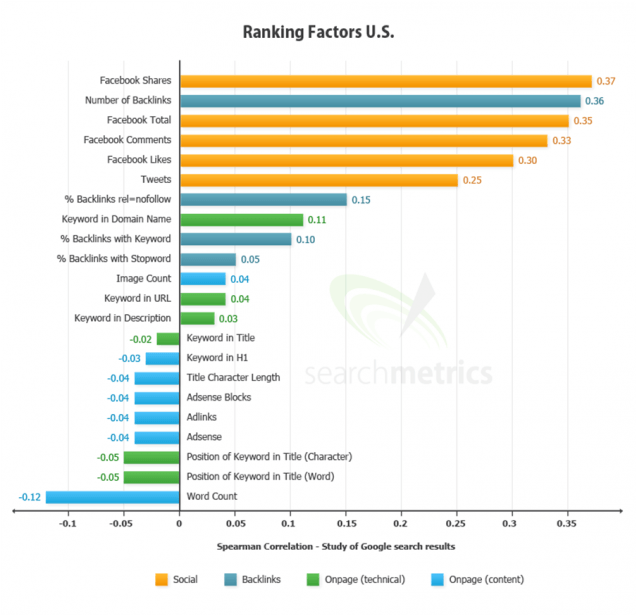
In June of 2012, SearchMetrics put out research showing the correlation between social activity’s and search rankings in Google. The study showed that activity from Facebook and Twitter correlates very strongly with high rankings in Google. The study looked at Google+, but at the time Google+ was less than a year old. Since then, Google has placed significant emphasis on their homegrown social network, and I’m sure this year’s study will reflect that.

New Picture

From those findings, and our own intuition, we conclude there are four social networks search engines rely on for their signals: Google+, Facebook, Twitter, and YouTube.

Insight 2: Why YouTube?

Most people think Google+ is simply a social network like Facebook. What they don’t realize is that Google+ is actually of a system for collecting and displaying social data across all of Google’s products, including their social network.

At the core of most of the products that Google creates is a search bar: Chrome, Android, Google Maps, Gmail, YouTube—you name it. Search is the factor that makes Google’s products better than their competitors. Google+ is important, because it’s a layer of social Google wants to incorporate across its entire portfolio.

For example, let’s say I’m planning a road trip across the United States. I start mapping out my route using Google Maps. Wouldn’t it be great if I could see the routes my friends have taken on their road trips, landmarks they’ve stopped at, and restaurants they’ve enjoyed eating at? Google+ was designed to deliver that social experience to Google Maps. But in order to deliver that personalized experience, Google needs to know who you are, who your friends are and what things you like.

Google+ goes beyond just displaying a personalized experience within its suite of products; it also collects data from them.

For example, let’s say you like Rainn Wilson’s videos on YouTube so much that you decide to subscribe to his SoulPancake channel. By subscribing, you are joining a group of others who share a common interest: SoulPancake videos. This informal grouping is a signal to Google that you have something in common with others in that group. Google may use that signal to recommend web results it may think you’ll like, based on the fact that others in that group liked it.

Among Google products, YouTube’s popularity and levels of engagement (e.g., 800 million monthly unique visitors, more than 4 billion daily video views, etc.) make it a particularly important source of signal generation, which can then be tied back to your profile and social graph through Google+.

Insight 3: A New Strategy and New Team Roles

New signals require new tactics, and new tactics require new strategies.

Managers who plan on adding a social element to their SEO campaign should evaluate their current resources and team makeup.

A skilled technical SEO may not be the best-suited person to execute a relationship-building campaign. Likewise, a community manager may not enjoy keyword research and data analysis.

There are only a small number of individuals who contain a deep understanding of both SEO and Social. If you have such a person on staff, they should develop and lead your new Social SEO strategy, while specialists in their respective fields execute the tactics.

Insight 4: Adjusted KPIs

Rankings matter very little in a world where everyone sees different search results.

Like traditional SEO campaigns, Social SEO still uses conversions and organic traffic as primary KPIs, but their affinity for rankings has diminished.

Secondary KPIs such as social follower growth, influence scores, and content engagement metrics can act as indicators that the campaign is moving in the right direction, but shouldn’t be given much weight individually.

New Picture (1)

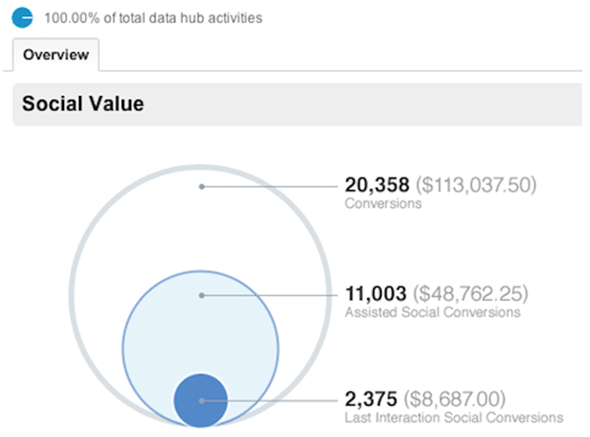
Google and other analytics providers are starting to recognize the importance of measuring social activities, and have begun to offer reports such as Google Analytics’ Social Assisted Conversions in an effort to tie ROI to social actions.

Rankings, in aggregate, can be useful as another directional measurement, but it means very little on an individual keyword level, especially since Google is hiding a great deal of keyword referral data. However, certain objectives, such as reputation management, may make rank tracking a more important KPI for some.

Insight 5: New Tools of the Trade

Social is a high-touch environment, and requires constant attention. Since attention isn’t scalable, we need technology to scale for us. Here are a few useful tools for your Social SEO campaigns:

  • HootSuite: One of the most popular social management platforms, HootSuit allows a team to monitor, analyze, and engage with audiences across multiple social networks simultaneously. The scheduled tweets lets campaign managers queue up messages to be sent automatically at scheduled times.
  • IFTTT: A unique, rule-based platform where you can automate activities based on social actions. For example, you can create a rule to email the team whenever someone mentions your brand in a tweet.
  • Triberr: A content curation and sharing platform. A team can search for and join relevant industry groups to access a constant stream of fresh content that can be automatically shared with social audiences. Likewise, teams can create and share their own content with their social networks.

Additional Research

The insights listed above are from a newly published eBook from Catalyst, “The Art of Social SEO: Mastering the Art of Social SEO.” I was one of several SEOs who contributed to the project. For additional Social SEO insights, download a free copy of the publication here.

In Closing

There once was a day when SEOs could make a few tweaks to a website, and rankings would improve. Now, we need to tweak the website, create new content, ask others to link to the content, share the content, and comment on it. It is a combined effort from Web development, copywriting, design, PR, influencer marketing, social, and in some cases, paid media (if you need to drive traffic to content for additional engagement).

We can no longer go off to do SEO research, strategy, and tactical execution in a silo. Search engine algorithms are more holistic than ever, and SEOs need to be as well. This is our role in Google’s new kingdom. It’s time we embrace the change, because like King Belshazzar, the writing is on the wall.

Daniel Cristo

Daniel Cristo

Catalyst
Dan Cristo is the director of SEO Innovation at Catalyst Search Marketing, a thought leader in the organic, paid and social space. Dan has been doing SEO since 2002, when he started his first company at age 20. An avid programmer and entrepreneur, Dan's latest project is the social media tool for bloggers, Triberr. Look for him on Twitter: @DanCristo.
Daniel Cristo

@dancristo

Follow @dancristo
Daniel Cristo

+Daniel Cristo

Daniel Cristo

Latest posts by Daniel Cristo (see all)

  • Social SEO Insights for the New Age of Search - February 28, 2013
  • Squeeze More Out of Your No. 1 Results Rank - September 6, 2011

london search engine optimisation london search engine optimization

SPONSOR MESSAGE: A Marketing Analytics Framework for CMOs

This Gartner report provides:

  • Nine measurement areas your CMO needs to understand
  • Metrics your web analyst can use to inform the CMO
  • Ways to align measurement technology with business needs

Download now »

internet search engine optimization internet search engine placement

SearchCap: The Day In Search, February 28, 2013

Below is what happened in search today, as reported on Search Engine Land and from other places across the Web.

From Search Engine Land:

  • Bing Maps Adds Variety Of Hi-Res Image Improvements Bing Maps has announced a series of updates to its high-resolution imagery, including expanded coverage, better mapping of ocean floors, cloud filtering and more. The prime features that Bing is touting involve what it calls “top of the world” imagery — those hi-res, top-down images. Improvements there include: Cloud cover filtering: Bing processes its base [...]
  • The Real Reason Why Google Is Dropping The Tablet vs. Desktop Distinction? It’s The User Context, Stupid! There’s been some grumbling among PPC marketers over the last few weeks about a few specific changes in Enhanced Campaigns – in particular, the loss of tablet vs. desktop segmentation, which was previously a best practice for mobile advertising strategy. One of my well-respected colleagues put it bluntly: Now, if you’ll forgive my attention-grabbing headline [...]
  • In Another “Right to Be Forgotten” Case, UK Officials Threaten Legal Action Against People Posting Pictures Of Convicted Killer Although slightly different than the Spanish case discussed yesterday, the “right to be forgotten” has reared its head again — this time in the UK.” UK Attorney General Dominic Grieve has threatened legal action against anyone posting pictures of convicted killer Jon Venables online. TechDirt offers a short summary of the underlying facts of the [...]
  • Google Testing Android/Chromebook-Like Navigation Element For Web Site Google is testing yet another navigation method to find all the various Google services and products, one that potentially serves to unify Google’s website with behavior on Android and Chromebooks. Google Operating System spotted this new test where you click on a box and it expands to show you more search options from Google. Here [...]
  • Facebook Shares How People Are Using Graph Search: Finding Friends Tops List Today, Facebook has shared information that “hundreds of thousands” of people are using its Facebook Graph Search service, highlighting that people still use it like “old’ Facebook search — to find friends. Facebook then suggests some ways to go beyond that, for those who have the new search feature. New Ways To Find Friends From [...]
  • Have You Considered Privacy Issues When Using Robots.txt & The Robots Meta Tag? Understanding the difference between the robots.txt file and Robots <META> Tag is critical for search engine optimization and security. It can have a profound impact on the privacy of your website and customers as well. The first thing to know is what robots.txt files and Robots <META> Tags are. Robots.txt Robots.txt is a file you place in your [...]
  • Majestic SEO Now Supports 9 Languages Majestic SEO announced that their SEO toolset is now supported in 9 different languages. The languages they currently support include English, Chinese, German, Spanish, French, Italian, Polish, Brazilian Portuguese and Russian. Who helped translate the popular SEO tool? The Majestic SEO ambassadors including Branko Rihtman, Dixon Jones, Alberto AndrĂ©, Francois Goube, Miguel Lopez, Sante J. [...]
  • Live @ SMX West: Converting The Mobile Customer As many pundits predicted, the number of people accessing the internet via mobile devices has exploded. It’s not hope or hype any longer: Both comScore and Nielsen released reports this week conclusively demonstrating that 2012 was the tipping-point year in which all doubts about the disruptive impact of mobile should have been brushed aside. [...]

Recent Headlines From Marketing Land, Our Sister Site Dedicated To Internet Marketing:

Search News From Around The Web:

Applications & Portal Features

Business Issues

Local Search & Maps

Link Building

SEM Industry

SEO & SEM

  • 5 Myths About Google’s Algorithms, internetmarketingninjas.com
  • Enhanced campaigns in AdWords Editor 10.0, Inside AdWords
  • How to Use Google Authorship to Improve Your Local SEO Efforts, Ethical SEO Blog
  • Is Your PPC Campaign Passive or Active?, Wordtracker
  • SEO for WordPress Blogs: Getting the Basics Right, Search Engine Journal
  • Social SEO Insights for the New Age of Search, Search Engine Journal
  • The Poetry of SEO, iAcquire Blog
  • What is SEO Cocitation?, Search Engine Watch
  • What Makes a Great SEO Proposal?, quicksprout.com
  • You Must Choose a Winning PPC Ad, Certified Knowledge

search engine marketing sem search engine marketing service

Thursday, 28 February 2013

Five Steps to SEO-Friendly Site URL Structure

Screen1 (SEJ)Some people say there is no such thing as SEO-friendly URL structure. They claim that search engines are perfectly capable of making sense of any type of URL and pretty much any URL structure. In most cases, the people who say this are web developers (just so you know, I love Web devs).
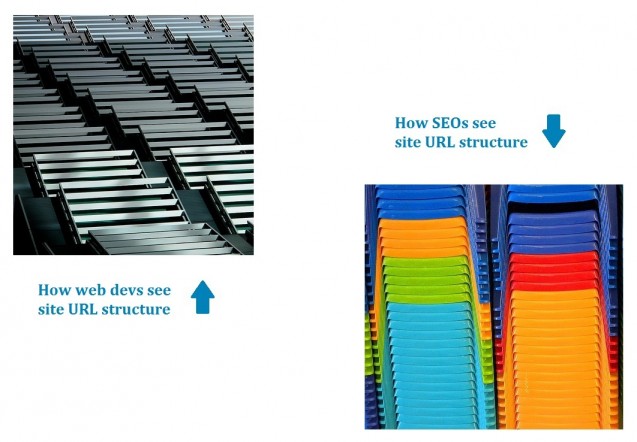

I’ve noticed that sometimes web developers and SEOs live in two parallel universes, each with its own center of gravity. While web developers basically care about crawlability, site speed, and other technical things, SEOs are mostly focused on what constitutes their sacred grail: website rankings and ROI.

Hence, what may be an OK site URL structure to a web dev, could be a totally SEO-unfriendly URL architecture to an SEO manager:
Screen2 (SEJ)

What is an SEO-friendly URL structure?

First of all, let me start by saying that it is always better to call in an SEO manager early in the development stage, so that there is no need to make sometimes hard-to-implement tweaks afterwards.

From an SEO point of view, a site’s URL structure should be:

  • Straightforward: URLs with duplicate content should have canonical URLs specified for them; there should be no confusing redirects on the site, etc.
  • Meaningful: URL names should have keywords in them, not gibbering numbers and punctuation marks.
  • With emphasis on the right URLs: SEO-wise, not all URLs on a site are of equal importance as a rule. Some even should be concealed from the search engines. At the same time, it is important to check that the pages that ought to be accessible to the search engines are actually open for crawling and indexing.

So, here is what one can do to achieve an SEO-friendly site URL structure:

1. Consolidate your www and the non-www domain versions

As a rule, there are two major versions of your domain indexed in the search engines, the www and the non-www version of it. These can be consolidated in more than one way, but I’d mention the most widely accepted practice.

Most SEOs (in my experience) use the 301 redirect to point one version of their site to the other (or vice versa).

Alternatively (for instance, when you can’t do a redirect), you can specify your preferred version in Google Webmaster Tools in Configuration >> Settings >> Preferred Domain. However,this has certain drawbacks:

  • This takes care of Google only.
  • This option is restricted to root domains only. If you have an example.wordpress.com site, this method is not for you.

But why worry about the www vs non-www issue in the first place? Thing is, some of your backlinks may be pointing to your www version, while some could be going to the non-www version.

So, to make sure that both versions’ SEO value is consolidated, it’s better to explicitly establish this link between the two (either via the 301 redirect, or in Google Webmaster Tools, or by using a canonical tag – I’ll talk about that one a bit further).

2. Avoid dynamic and relative URLs

Depending on your content management system, the URLs it generates may be “pretty” like this one:

www.example.com/topic-name

or “ugly” like this one:

www.example.com/?p=578544

As I said earlier, search engines have no problem with either variant, but for certain reasons it’s better to use static (prettier) URLs rather than dynamic (uglier) ones. Thing is, static URLs contain your keywords and are more user-friendly, since one can figure out what the page is about just by looking at the static URL’s name.

Besides, Google recommends using hyphens (-) instead of underscores (_) in URL names, since a phrase in which the words are connected using underscores is treated by Google as one single word, e.g. one_single_word is onesingleword to Google.

And, to check what other elements of your page should have the same keywords as your URLs, have a look at the screenshot 3 of the “On-Page SEO for 2013: Optimize Pages to Rank and Perform” guide that we released recently.

Besides, some web devs make use of relative URLs. The problem with relative URLs is that they are dependent on the context in which they occur. Once the context changes, the URL may not work. SEO-wise, it is better to use absolute URLs instead of relative ones, since the former are what search engines prefer.

Now, sometimes different parameters can be added to the URL for analytics tracking or other reasons (such as sid, utm, etc.) To make sure that these parameters don’t make the number of URLs with duplicate content grow over the top, you can do either of the following:

  • Ask Google to disregard certain URL parameters in Google Webmaster Tools in Configuration > URL Parameters.
  • See if your content management system allows you to solidify URLs with additional parameters with their shorter counterparts.

3. Create an XML Sitemap

An XML Sitemap is not to be confused with the HTML sitemap. The former is for the search engines, while the latter is mostly designed for human users.

What is an XML Sitemap? In plain words, it’s a list of your site’s URLs that you submit to the search engines. This serves two purposes:

  1. This helps search engines find your site’s pages more easily;
  2. Search engines can use the Sitemap as a reference when choosing canonical URLs on your site.

The word “canonical” simply means “preferred” in this case. Picking a preferred (canonical) URL becomes necessary when search engines see duplicate pages on your site.

So, as they don’t want any duplicates in the search results, search engines use a special algorithm to identify duplicate pages and pick just one URL to represent the group in the search results. Other webpages just get filtered out.

Now, back to sitemaps … One of the criteria search engines may use to pick a canonical URL for the group of webpages is whether this URL is mentioned in the website’s Sitemap.

So, what webpages should be included into your sitemap, all of your site’s pages or not? In fact, for SEO-reasons, it’s recommended to include only the webpages you’d like to show up in search.

4. Close off irrelevant pages with robots.txt

There may be pages on your site that should be concealed from the search engines. These could be your “Terms and conditions” page, pages with sensitive information, etc. It’s better not to let these get indexed, since they usually don’t contain your target keywords and only dilute the semantic whole of your site.

The robotx.txt file contains instructions for the search engines as to what pages of your site should be ignored during the crawl. Such pages get a noindex attribute and do not show up in the search results.

Sometimes, however, unsavvy webmasters use noindex on the pages it should not be used. Hence, whenever you start doing SEO for a site, it is important to make sure that no pages that should be ranking in search have the noindex attribute. Or else you may end up like this guy here:

5. Specify canonical URLs using a special tag

Another way to highlight canonical URLs on your site is by using the so-called canonical tag. In geek speek, it’s not the tag itself that is canonical, but the tag’s parameter, but we’ll just call it the canonical tag by metonymy.

Note: the canonical tag should be applied only with the purpose of helping search engines decide on your canonical ULR. For redirection of site pages, use redirects. And, for paginated content, it makes sense to employ rel=”next” and rel=”prev” tags in most cases.

For example, on Macy’s website, I can go to the Quilts & Bedspreads page directly, or I can take different routes from the homepage:

  • I can go to Homepage >>Bed& Bath >> Quilts & Bedspreads. The following URL with my pass recorded is generated:

http://www1.macys.com/shop/bed-bath/quilts-bedspreads?id=22748&edge=hybrid&cm_sp=us_catsplash_bed-%26-bath-_-row6-_-quilts-%26-bedspreads

  • Or I can go to Homepage >> For the Home >> Bed & Bath >> Bedding >> Quilts & Bedspreads. The following URL is generated:

http://www1.macys.com/shop/bed-bath/quilts-bedspreads?id=22748&edge=hybrid

Now, all three URLs lead to the same content. And, if you look into the code of each page, you’ll see the following tag in the head element:
Screen3 (SEJ)

As you see, for each of these URLs, a canonical URL is specified, which is the cleanest version of all the URLs in the group:

http://www1.macys.com/shop/bed-bath/quilts-bedspreads?id=22748

What this does is, it funnels down the SEO value each of these three URLs might have to one single URL that should be displayed in the search results (the canonical URL). Normally search engines do a pretty good job identifying canonical URLs themselves, but, as Susan Moskwa once wrote at Google Webmaster Central:

“If we aren’t able to detect all the duplicates of a particular page, we won’t be able to consolidate all of their properties. This may dilute the strength of that content’s ranking signals by splitting them across multiple URLs.”

Conclusion

Having SEO-friendly URL structure on a site means having the URL structure that helps the site rank higher in the search results. While, from the point of view of web development, a particular site’s architecture may seem crystal-clear and error-free, for an SEO manager this could mean missing on certain ranking opportunities.

Image credits: skyfish81via Flickr; Arbyreed via Flickr; Jo Dooher via Flickr

Alesia Krush

Alesia Krush

Alesia is an SEO and a digital marketer at Link-Assistant.Com, a major SEO software provider and the maker of SEO PowerSuite tools. Link-Assistant.Com is a group of SEO professionals with almost a decade of SEO experience. Based on their expertise, the company’s four-app SEO toolset was created, setting the industry’s benchmark for technology-driven Web promotion.
Alesia Krush

@AlesiaKrush

Follow @AlesiaKrush
Alesia Krush

+Alesia Krush

Alesia Krush

Latest posts by Alesia Krush (see all)

  • Five Steps to SEO-Friendly Site URL Structure - February 27, 2013
  • How to Promote Your Local Biz Using Social, Local and Mobile - May 3, 2012
  • On-Page SEO Factors: Which Ones Have the Most Impact on Rankings? - March 21, 2012

online marketing companies uk online marketing company uk